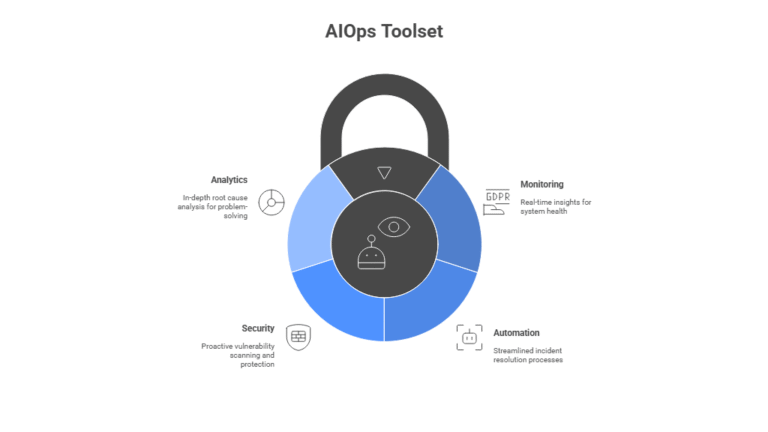
Devseccops

Category: Uncategorized

  • AI-Powered DevOps Technologies That Transform IT Operations

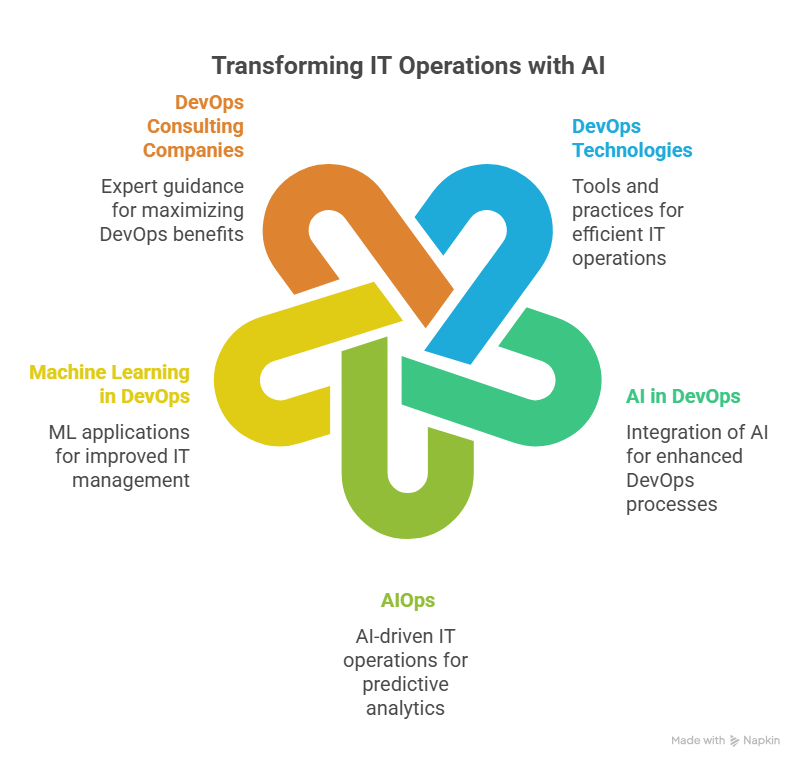
    In today’s fast-paced digital landscape, DevOps technologies are revolutionizing IT operations by leveraging artificial intelligence (AI) to drive efficiency, scalability, and security. The goal of DevOps is to unify development and operations teams, enabling seamless collaboration, continuous integration, and continuous delivery (CI/CD). When paired with AI in DevOps, these technologies deliver transformative advantages of DevOps, such as faster deployments, cost optimization, and enhanced reliability. AIOps in DevOps (Artificial Intelligence for IT Operations) further amplifies these benefits by introducing predictive analytics and automation. This blog explores how DevOps and AIOps, along with machine learning in DevOps, empower organizations to manage their IT infrastructure efficiently. Partnering with top DevOps consulting companies like DevSecCops.ai ensures businesses maximize the benefits of DevOps through strategic IT and DevOps consulting.
    Why DevOps and AI Are Important

    The purpose of AI in DevOps with AI is to enhance automation, predict system behaviors, and optimize workflows, aligning with the goal of DevOps to deliver high-quality software rapidly. AI in IT operations addresses challenges like system complexity and manual bottlenecks, reducing errors and accelerating delivery. In 2025, organizations using AI and DevOps report 50% faster deployment cycles and 40% lower incident rates. Why DevOps is important lies in its ability to streamline operations, but DevOps and machine learning take it further by enabling predictive maintenance and intelligent resource allocation. DevOps strategy consulting ensures businesses adopt these AI DevOps tools effectively, driving innovation and resilience.

    AIOps vs DevOps: A Synergistic Relationship

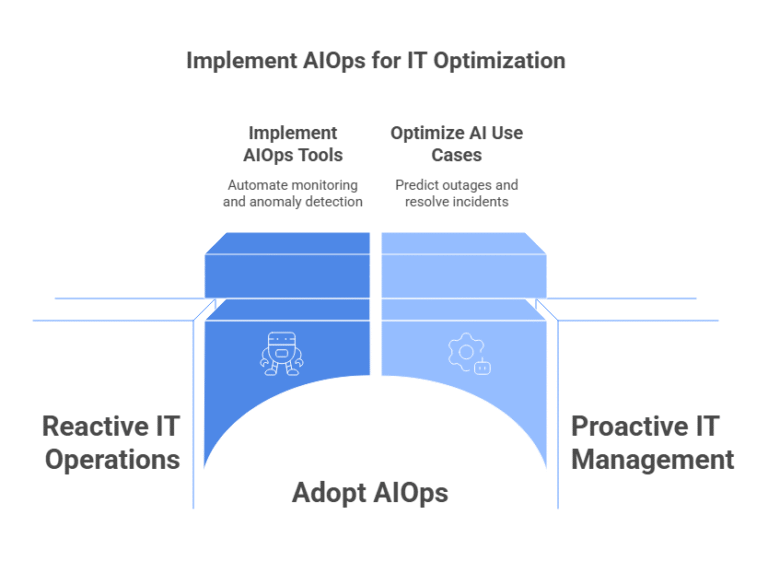
    AIOps for DevOps integrates AI into traditional DevOps practices, enhancing monitoring, incident management, and automation. While DevOps focuses on collaboration and CI/CD, AIOps and DevOps complement each other by using AI to analyze vast datasets for proactive insights. For instance, AIOps in DevOps predicts outages before they occur, unlike reactive DevOps monitoring. This synergy is a core advantage of DevOps, making AI in agile and DevOps critical for modern IT operations.

    Key AI-Powered DevOps Technologies Transforming IT Operations

    1. AI for CI/CD Pipelines

    AI for CI/CD transforms AI CI/CD pipelines by automating code reviews, testing, and deployments. Tools like AWS CodeGuru and GitHub Copilot use machine learning for DevOps to detect code vulnerabilities and suggest optimizations, reducing manual effort by 60%. AI tools for deployment, such as ArgoCD, enable intelligent rollback mechanisms and dynamic scaling in Kubernetes environments.

    An AI DevOps engineer can leverage these tools to predict pipeline failures using historical data, ensuring 99.9% deployment success rates. This automation, a key benefit of DevOps, accelerates time-to-market, aligning with DevOps for AI workloads requiring rapid iteration.

    2. AIOps for Intelligent Monitoring

    AIOps for DevOps revolutionizes monitoring with tools like Dynatrace and Datadog, which use AI in IT operations to analyze logs, metrics, and traces. Dynatrace’s Davis AI employs causal AI to pinpoint root causes, slashing mean time to resolution (MTTR) by 50%. AI in Azure DevOps, for instance, integrates with Azure Monitor to provide predictive alerts for cloud workloads.

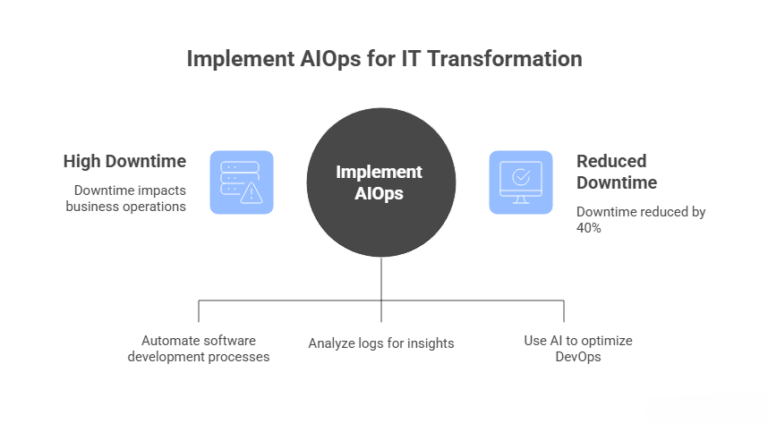
    These DevOps AI tools enable proactive maintenance, reducing downtime by 40% and optimizing resource usage—a critical advantage of DevOps for high-traffic applications.

    3. AI-Driven DevSecOps for Security

    Using AI in DevOps enhances security through DevSecOps. Tools like Snyk and Sysdig employ machine learning in DevOps to scan code and containers for vulnerabilities, prioritizing risks based on exploitability. Generative AI in DevOps generates remediation scripts, ensuring compliance with SOC2 or GDPR standards in days.

    This AI ML automation embeds security into CI/CD pipelines, reducing breach risks and aligning with DevOps for machine learning by securing AI model deployments. The role of AI here is to shift security left, a vital benefit of DevOps for regulated industries.

    4. AIOps for Incident Management

    AIOps and DevOps streamline incident management with platforms like PagerDuty and Incident.io, which use AI in DevOps and developer workflow to triage alerts and suggest resolutions. Amazon Q Developer automates debugging, reducing incident resolution time by 30%.

    How can a DevOps team take advantage of artificial intelligence? By integrating AIOps for autonomous incident response, enabling self-healing systems that rollback or scale without human intervention. This reliability is a cornerstone advantage of DevOps.

    5. AI for Infrastructure Automation

    DevOps with AI optimizes infrastructure using tools like Spacelift and Kubiya, which leverage ML DevOps for predictive provisioning. Kubecost uses machine learning for DevOps to analyze cloud spend, cutting costs by 30-50%. Atlassian Intelligence automates Jira workflows, predicting bottlenecks.

    These AI DevOps tools ensure efficient resource allocation, supporting DevOps for ML workloads with dynamic scaling in serverless or Kubernetes environments.

    How Can AI Help Companies Manage Their IT Infrastructure?

    How to use AI in DevOps involves leveraging AI for DevOps to automate repetitive tasks, predict system failures, and optimize costs. DevOps IT benefits from AI in IT operations by reducing manual toil and enabling data-driven decisions. For example, AI in Azure DevOps optimizes cloud-native workloads, while generative AI in DevOps creates IaC scripts for Terraform, accelerating provisioning.

    How can a DevOps team take advantage of artificial intelligence? By adopting AI DevOps practices like anomaly detection and automated scaling, teams achieve 70% cost savings and 99.9% uptime. DevOps machine learning further enhances predictive maintenance, ensuring robust IT infrastructure.

    Technical Validation of AI-Powered DevOps

    DevOps and AI rely on ML models, such as graph neural networks for dependency mapping in monitoring tools, validated by NIST standards for AI reliability. Automated DevOps integrates with Kubernetes for container orchestration, using tools like ArgoCD for GitOps-driven deployments. Security scans with Trivy ensure container safety, while Prometheus and Grafana provide observability, ensuring technical accuracy and scalability.

    Does AI Replace DevOps?

    AI replace DevOps is a misconception. Instead, AI for DevOps augments human efforts, automating repetitive tasks while AI DevOps engineers focus on strategy and innovation. AI deployment meaning involves enhancing, not replacing, DevOps with AI for smarter workflows.
    Conclusion: Transform IT with DevSecCops.ai

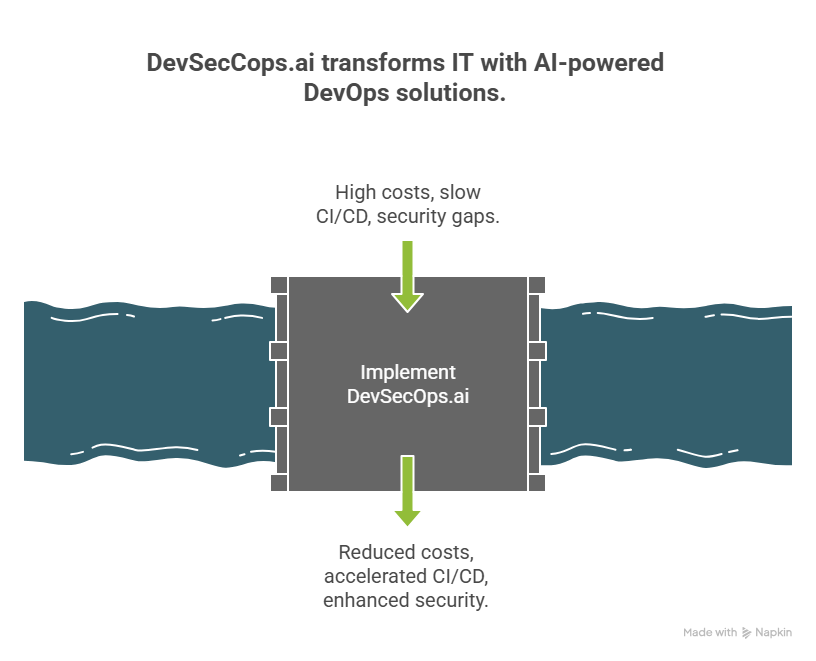
    AI-powered DevOps technologies deliver unparalleled advantages of DevOps, from accelerated CI/CD to predictive monitoring and enhanced security. For businesses seeking strategic IT and DevOps consulting, DevSecOps.ai excels among top DevOps consulting companies. Their AI-driven platform offers one-click infrastructure setups, AI CI/CD pipelines with ArgoCD, and machine learning DevOps for security scans covering 200-300 rules, reducing costs by up to 70%. DevSecOps.ai ensures SOC2/GDPR compliance in days, supports scalable Kubernetes for DevOps for AI workloads, and provides observability with Prometheus. Whether modernizing systems or managing Web3 infrastructure, their DevOps AI course and expertise empower teams to leverage AIOps for DevOps. Visit DevSecCops.ai to transform your DevOps IT with cutting-edge AI in DevOps.

  • Top DevSecOps Company Strategies for Secure & Scalable Software Delivery

    Top DevSecOps Company Strategies for Secure & Scalable Software Delivery

    In today’s fast-paced digital landscape, where cyber threats evolve faster than ever, a DevSecOps company stands at the forefront of innovation, ensuring that security is not an afterthought but a core pillar of software development. As organizations race to deliver applications at scale, the integration of security into the DevOps pipeline—known as DevSecOps—has become non-negotiable. But what sets top DevSecOps companies apart? It’s their ability to blend agility with ironclad security, enabling secure and scalable software delivery without compromising speed.

    This blog explores the top DevSecOps company strategies that leading firms employ to achieve this balance. We’ll dive into DevSecOps best practices, essential DevSecOps tools, and how to automate secure environments. Whether you’re a CTO evaluating DevSecOps platforms or a developer curious about security tools for DevSecOps, you’ll find actionable insights here. By the end, you’ll understand why partnering with a specialized DevSecOps service company like those leveraging DevSecOps software can transform your delivery pipeline.

    Understanding DevSecOps: The Shift from DevOps to Secure Pipelines

    To appreciate DevSecOps company strategies, let’s start with the basics. DevOps vs DevSecOps is a common debate, but the distinction is clear: DevOps focuses on collaboration between development and operations for faster releases, while DevSecOps embeds security (“Sec”) into every stage. In essence, DevOps vs DevSecOps isn’t about replacement but evolution—DevSecOps builds on DevOps by automating compliance and threat detection.

    Imagine a traditional DevOps pipeline: code is written, tested, deployed, and monitored. In DevSecOps practices, vulnerability scans, compliance checks, and policy enforcement happen in real-time. This proactive approach reduces breach risks by up to 50%, according to industry reports from Gartner. For cloud-native apps, where scalability is key, DevSecOps continuous integration ensures that security gates don’t bottleneck the process.

    Implementing DevSecOps practices starts with cultural buy-in. Top DevSecOps companies train teams on shared responsibility, fostering a “security-first” mindset. Tools like DevSecOps software automate this shift, making it seamless for even non-security experts to contribute securely.

    Core DevSecOps Best Practices for Scalable Delivery

    At the heart of any successful DevSecOps company are robust DevSecOps best practices. These aren’t checkboxes; they’re strategies that scale with your organization.

    First, shift left on security. This means integrating checks early in the development cycle. For instance, static application security testing (SAST) during code commits catches issues before they propagate. Leading DevSecOps platforms like Snyk or Checkmarx enable this, scanning for vulnerabilities in real-time.

    Second, embrace infrastructure as code (IaC). Tools such as Terraform, when paired with DevSecOps security tools, enforce secure configurations. A DevSecOps tool like OPA (Open Policy Agent) validates IaC templates against compliance standards, preventing misconfigurations that plague 80% of cloud breaches.

    Third, automate everything. Automate DevSecOps is the mantra— from policy enforcement to incident response. How can I automate secure environment setup? Start with CI/CD pipelines using Jenkins or GitLab CI, integrated with top DevSecOps tools like SonarQube for code quality and Twistlock for container security. This automation ensures environments spin up compliantly, reducing setup time from days to minutes.

    Finally, monitor relentlessly. A robust log monitoring system is indispensable. Tools like ELK Stack (Elasticsearch, Logstash, Kibana) or Splunk provide visibility into runtime threats, correlating logs with security events for faster triage.

    These practices form the DevSecOps process flow: Plan → Code → Build → Test → Release → Deploy → Operate → Monitor, with security woven throughout. Implementing DevSecOps practices requires iteration—start small, measure with metrics like mean time to remediate (MTTR), and scale.

    For those seeking deeper dives, resources like “implementing DevSecOps practices PDF free download” from OWASP or CNCF offer blueprints. But remember, theory meets practice through tailored adoption.

    Essential DevSecOps Tools: Building a Secure Toolkit

    No DevSecOps company thrives without the right arsenal. So, what are DevSecOps tools? They’re a suite of software that automates security in the SDLC (Software Development Life Cycle). From scanning to orchestration, here’s a curated list of top DevSecOps tools.

    Best DevSecOps Tools for Cloud Security

    Cloud environments demand specialized defenses. The most recommended DevSecOps software for cloud includes:

    • Aqua Security: Excels in container and Kubernetes protection, offering runtime scanning and compliance enforcement.
    • Sysdig Secure: Provides cloud-native monitoring with anomaly detection, ideal for multi-cloud setups.
    • Palo Alto Prisma Cloud: A comprehensive DevSecOps platform for posture management, vulnerability assessment, and compliance across AWS, Azure, and GCP.

    These best DevSecOps tools for cloud security address common pain points like ephemeral workloads. For example, Prisma Cloud integrates with CI/CD with ArgoCD, enabling GitOps-driven deployments with built-in security gates.

    What Tools Provide Compliance for Dev Environments?

    Compliance isn’t optional—it’s regulatory. What tools provide compliance for Dev environments? Look to:

    • HashiCorp Vault: Manages secrets securely, ensuring keys and certs rotate automatically.
    • Chef InSpec or Ansible: Automate audits against standards like PCI-DSS or HIPAA.

    A standout DevSecOps tool is Lacework, which uses machine learning for behavioral anomaly detection, flagging non-compliant drifts in dev pipelines.

    Top DevSecOps Tools and Platforms Overview

    Category

    Tool/Platform

    Key Feature

    Best For

    Code Scanning

    SonarQube

    Static analysis & quality gates

    Early vulnerability detection

    Container Security

    Twistlock

    Image scanning & runtime protection

    Kubernetes-heavy stacks

    Compliance

    OPA Gatekeeper

    Policy-as-code enforcement

    IaC validation

    Monitoring

    Datadog Security

    Real-time threat hunting

    Log monitoring system integration

    Orchestration

    GitLab Ultimate

    End-to-end DevSecOps platforms

    Full CI/CD with security

    These security tools for DevSecOps and DevSecOps security tools ensure scalability. Which DevSecOps service is best for cloud? It depends on your stack—AWS users swear by native tools like GuardDuty, but integrated platforms like those above offer broader coverage.

    Automating DevSecOps: CI/CD and Beyond

    DevSecOps continuous integration is where magic happens. Pipelines like those in CI/CD with ArgoCD declare desired states in Git, with ArgoCD reconciling deployments while enforcing security policies.

    To automate DevSecOps, script everything: Use webhooks to trigger scans on pull requests, integrate with Slack for alerts, and leverage APIs for orchestration. This reduces human error, a factor in 95% of breaches.

    For app teams, app modernization via DevSecOps software means refactoring monoliths into microservices with built-in security. Tools like Kong for API gateways add layers of protection.

    The Rise of AI in DevSecOps: From DevOps AI to Intelligent Pipelines

    Innovation doesn’t stop at automation—enter DevOps AI. DevOps GenAI (Generative AI) and DevOps LLM (Large Language Models) are revolutionizing pipelines. An DevOps LLM agent can auto-generate secure code snippets or triage alerts.

    DevOps AI tools like GitHub Copilot for Security suggest fixes inline, while platforms such as Harness use AI for predictive risk scoring. An AI DevOps platform integrates MLOps (Machine Learning Operations) with DevSecOps, securing ML models against poisoning attacks.

    DevOps technologies now include these intelligent agents, making DevSecOps companies more proactive. For instance, an DevOps LLM can analyze logs via natural language queries, speeding up root-cause analysis in your log monitoring system.

    Challenges and How Top DevSecOps Companies Overcome Them

    Scaling secure delivery isn’t without hurdles. Skill gaps, tool sprawl, and legacy systems slow adoption. Top DevSecOps companies counter this with phased rollouts: Pilot on one team, expand via DevSecOps practices.

    Regulatory compliance in dynamic clouds? Use DevSecOps tools with built-in auditors. Cost? Automation yields ROI—Gartner estimates 30% faster releases with 40% fewer vulnerabilities.

    Conclusion: Partner with DevSecCops.ai for Your Secure Journey

    In wrapping up, the top DevSecOps company strategies revolve around integration, automation, and intelligence. From DevSecOps best practices like shift-left security to top DevSecOps tools for cloud, the path to scalable delivery is clear: Embed security early, automate rigorously, and leverage AI for foresight.

    Ready to implement? DevSecCops.ai is your ultimate partner—a leading DevSecOps service company specializing in tailored DevSecOps platforms and DevSecOps

  • 2025 MLOps Platform Landscape: What Data Teams Should Know

    2025 MLOps Platform Landscape: What Data Teams Should Know

    In 2025, MLOps platforms are revolutionizing how data teams build and deploy machine learning (ML) models, streamlining the MLOps workflow from experimentation to production. These machine learning pipeline tools integrate DevOps technologies, CICD with ArgoCD, DevOps AI tools, hybrid cloud management tools, and AI DevOps platforms to deliver scalable, automated solutions. This guide explores the best MLOps platforms, MLOps open source tools, and the tooling landscape, highlighting top machine learning tools like MLOps tools: MLflow and Hugging Face. Partnering with a DevOps service company like DevSecOps.ai ensures seamless adoption. 

    What Are MLOps Platforms?

    MLOps platforms are specialized ML platforms that automate the ML lifecycle—data preparation, model training, deployment, monitoring, and governance. Unlike traditional ops platforms, MLOps software addresses ML-specific challenges like data drift and model versioning. They leverage Python programming for automation, integrate with CICD with ArgoCD for GitOps-driven deployments, and use DevOps AI tools for optimization, making them essential for big data cloud platforms machine learning 2025.

    Key Features of MLOps Platforms

    1. Automated Pipeline Orchestration

    MLOps frameworks orchestrate machine learning pipeline tools for data processing, training, and deployment. Tools like Kubeflow automate workflows on Kubernetes, integrating with CICD with ArgoCD:

    apiVersion: argoproj.io/v1alpha1

    kind: Application

    metadata:

      name: ml-pipeline

      namespace: argocd

    spec:

      source:

        repoURL: https://github.com/myorg/ml-pipeline.git

        path: k8s

        targetRevision: main

      destination:

        server: https://kubernetes.default.svc

        namespace: ml-prod

      syncPolicy:

        automated:

          prune: true

          selfHeal: true

    This ensures reproducible MLOps workflows.

    2. Experiment and Model Tracking

    MLOps tools like MLflow track experiments and models. Example MLflow setup using Python to automate:

    import mlflow

    mlflow.set_experiment(“fraud_detection”)

    with mlflow.start_run():

        mlflow.log_param(“n_estimators”, 100)

        mlflow.log_metric(“f1_score”, 0.89)

        mlflow.sklearn.log_model(model, “fraud_model”)

    This integrates with CICD with ArgoCD to automate deployments.

    3. Continuous Deployment

    CICD with ArgoCD enables Kubernetes continuous deployment for models. A CI tool like GitLab CI/CD triggers training:

    train_model:

      script:

        – python train.py

        – git commit -am “New model version”

        – git push

    This aligns with DevOps technologies for seamless CI/CD.

    4. Monitoring with Observability

    DevOps AI tools like Prometheus and plug and play observability models monitor model performance. Prometheus config:

    scrape_configs:

      – job_name: ‘ml-model’

        metrics_path: ‘/metrics’

        static_configs:

          – targets: [‘ml-service:9000’]

    These detect data drift, ensuring model reliability.

    5. Multi-Cloud Scalability

    Hybrid cloud management tools like Terraform support multi-cloud deployments. Example for AWS EKS:

    resource “aws_eks_cluster” “ml_cluster” {

      name     = “ml-eks-cluster”

      role_arn = aws_iam_role.eks.arn

      vpc_config {

        subnet_ids = aws_subnet.ml[*].id

      }

    }

    This powers big data cloud platforms machine learning 2025.

    Best MLOps Platforms in 2025

    The tooling landscape features best machine learning platforms:

    • AWS SageMaker: End-to-end MLOps software, integrates with DevOps AI tools like CloudWatch.
    • Kubeflow: MLOps open source, ideal for CICD with ArgoCD on Kubernetes.
    • MLflow: Lightweight, excels in experiment tracking, pairs with Jenkins CI Kubernetes.
    • Azure ML: Strong for Azure, supports AI DevOps platforms.
    • Hugging Face: Specializes in top open source AI models 2025, integrates with MLOps tools: MLflow and Hugging Face.

    AI Platform Comparison

    Platform

    Strengths

    Best For

    SageMaker

    Comprehensive, cloud-native

    AWS-centric teams

    Kubeflow

    Kubernetes-native, open-source

    Custom pipelines

    MLflow

    Experiment tracking, lightweight

    Research teams

    Hugging Face

    NLP models, community-driven

    AI startups

    Integrating MLOps with DevOps

    1. CICD with ArgoCD

    CICD with ArgoCD automates model deployments. Example Kubernetes deployment:

    apiVersion: apps/v1

    kind: Deployment

    metadata:

      name: ml-model

    spec:

      replicas: 2

      template:

        spec:

          containers:

          – name: ml-model

            image: mymodel:v1.0

    This leverages DevOps technologies for automation.

    2. DevOps AI Tools

    DevOps AI tools like Datadog optimize MLOps platforms:

    apiVersion: v1

    kind: ConfigMap

    metadata:

      name: datadog-config

    data:

      api_key: <DATADOG_API_KEY>

    These enhance ML ops tools performance.

    3. Hybrid Cloud Management Tools

    Hybrid cloud management tools like GitOps Terraform enable multi-cluster setups. OpenShift example:

    apiVersion: apps/v1

    kind: Deployment

    metadata:

      name: ml-service

    spec:

      replicas: 3

      template:

        spec:

          containers:

          – name: ml-service

            image: ml-model:v1

    This supports AI DevOps platforms across EKS vs AKS.

  • Top 10 DevSecOps Companies Leading Secure Digital Transformation in 2025

    Top 10 DevSecOps Companies Leading Secure Digital Transformation in 2025

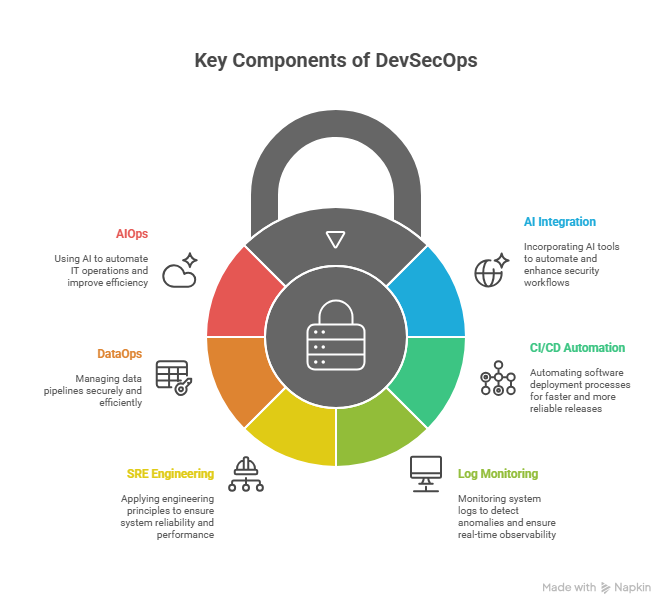
    In 2025, DevSecOps companies are at the forefront of secure digital transformation, integrating security into every phase of the software development lifecycle (SDLC). Unlike traditional DevOps, which focuses on speed and collaboration, DevSecOps embeds security to address rising cyber threats and compliance demands. By leveraging DevOps AI tools, CI/CD with ArgoCD, log monitoring systems, and frameworks like MLOps, AIOps, LLMOps, DataOps, FinOps, and SRE engineering, these companies ensure secure, scalable, and efficient operations. This blog highlights the top 10 DevSecOps companies driving innovation, with insights into the DevOps vs DevSecOps debate and their role in app modernization and one-stop solutions in DevOps SRE.

    The DevOps vs DevSecOps Paradigm

    DevOps accelerates software delivery through collaboration and automation, using DevOps technologies like Kubernetes and Jenkins. DevSecOps extends this by prioritizing security, embedding tools like Snyk and Sysdig into CI/CD pipelines to mitigate vulnerabilities early. The DevOps vs DevSecOps debate centers on balancing speed with security, with DevSecOps emerging as the preferred approach for regulated industries like finance and healthcare, where compliance is critical.

    Top 10 DevSecOps Companies in 2025

    1. DevSecCops.ai

    DevSecCops.ai leads the pack with its AI DevOps platform, integrating DevOps AI tools, DevOps GenAI, and DevOps LLM agents to automate security workflows. Their expertise in CI/CD with ArgoCD and log monitoring systems like ELK Stack ensures real-time observability and 50% fewer deployment failures. Serving global enterprises, they excel in app modernization and SRE engineering, offering a one-stop solution in DevOps SRE.

    2. Capgemini

    Capgemini, a global DevOps service company, delivers large-scale DevSecOps transformations. With a 4.6/5 Clutch rating, they integrate DevOps AI tools and log monitoring systems to enhance deployment speed and compliance in sectors like retail and telecom. Their expertise in MLOps and AIOps supports secure AI-driven operations.

    3. Wipro

    Wipro’s “DevSecOps as a Service” framework leverages DevOps technologies and AIOps for multi-cloud deployments. They excel in SRE engineering, using AI for anomaly detection in logs and automating incident response, making them ideal for app modernization in banking and utilities.

    4. Veritis Group

    Based in Texas, Veritis specializes in DevSecOps and SRE, modernizing government and BFSI systems with Infrastructure as Code (IaC) and zero-downtime pipelines. Their integration of DataOps ensures secure data pipelines, while FinOps optimizes cloud costs.

    5. Entrans

    Entrans, an AI-first DevOps service company, uses its Thunai platform to integrate DevOps AI tools and DevSecOps practices. Their focus on MLOps and LLMOps supports secure AI model deployments, with CI/CD with ArgoCD ensuring efficient workflows.

    6. InfraCloud

    InfraCloud, recently acquired by Improving, empowers enterprises with DevSecOps consulting. Their expertise in Kubernetes, GitLab CI, and SRE engineering supports secure cloud-native transformations across BFSI and healthcare, with tailored DevOps LLM solutions.

    7. Synopsys

    Synopsys provides cutting-edge DevSecOps tools for static and dynamic code analysis, securing software supply chains. Their integration with AIOps platforms enhances vulnerability detection, making them a leader in secure app modernization.

    8. GitLab

    GitLab offers a complete DevSecOps platform with built-in CI/CD, security scanning, and log monitoring systems. Its support for DevOps GenAI and DevOps LLM agents ensures secure, automated workflows, ideal for multi-cloud environments.

    9. IBM

    IBM’s DevSecOps solutions integrate AIOps and MLOps for self-healing infrastructures. Their expertise in hybrid cloud and SRE ensures reliable, secure deployments, with DataOps supporting compliant data workflows.

    10. OpsTree

    OpsTree excels in DevSecOps and Kubernetes orchestration, focusing on Infrastructure as Code and compliance automation. Their AIOps-driven monitoring reduces downtime, making them a trusted partner for mid-to-large enterprises.

    How These Companies Leverage Key Frameworks

    What is automation in DevOps? It involves using DevOps automation tools to eliminate manual tasks in the SDLC, from code integration to

    DevOps AI Tools and DevOps GenAI

    DevSecOps companies use DevOps AI tools like Datadog and New Relic to automate monitoring and anomaly detection. DevOps GenAI and DevOps LLM agents enhance code reviews and security scans, reducing vulnerabilities by 30%. For example, DevSecCops.ai uses DevOps LLM to flag prompt injection risks in LLM deployments.

    CI/CD with ArgoCD

    CI/CD with ArgoCD streamlines secure deployments by syncing infrastructure with Git repositories. DevSecOps companies like Veritis integrate ArgoCD with security tools like Snyk, ensuring zero-downtime deployments and compliance.

    Log Monitoring Systems

    Log monitoring systems like Splunk and Prometheus provide real-time observability. AIOps integration, as seen in Capgemini and Wipro, correlates logs to detect security threats, reducing MTTR by 25%.

    App Modernization

    App modernization transforms legacy systems into cloud-native architectures. DevSecOps companies like InfraCloud use Kubernetes and Terraform to secure modernized applications, reducing vulnerabilities by 65%.

    MLOps and LLMOps

    MLOps and LLMOps manage AI and LLM lifecycles. Entrans and IBM secure these pipelines with DevSecOps practices, using DevOps AI tools to monitor model performance and ensure ethical outputs.

    DataOps and FinOps

    DataOps ensures secure, high-quality data pipelines, while FinOps optimizes cloud costs. Veritis and OpsTree integrate these frameworks to support compliant, cost-efficient operations, critical for LLM workloads.

    SRE and One-Stop Solution in DevOps SRE

    SRE engineering enhances reliability through automation. A one-stop solution in DevOps SRE, as offered by DevSecCops.ai, integrates DevSecOps, AIOps, MLOps, LLMOps, DataOps, and FinOps, ensuring holistic, secure operations.

    deployment and monitoring. DevSecCops.ai excels in automation tools in DevOps, leveraging AI DevOps tools for predictive analytics and orchestration tools in DevOps like Kubernetes for infrastructure management. The benefits of DevOps automation include:

    • Faster Releases: CI/CD pipelines with ArgoCD streamline deployments.
    • Reliability: Log monitoring systems detect issues proactively.
    • Cost Efficiency: DevOps cost savings through automated resource optimization.
    • Scalability: Kubernetes consulting services ensure elastic infrastructure.

    Best Practices for Partnering with DevSecOps Companies

    • Align with Industry Needs: Choose companies like Cognizant for regulated sectors or GitLab for platform-centric solutions.
    • Leverage AI and Automation: Prioritize firms using DevOps AI tools and DevOps GenAI for intelligent workflows.
    • Ensure Compliance: Select partners with expertise in DataOps and DevSecOps for GDPR and HIPAA compliance.

    Adopt SRE Principles: Work with companies offering SRE engineering to ensure high availability and scalability.

    Challenges and Solutions

    • Tool Integration: Complex toolchains can hinder efficiency. Solution: Use unified platforms like GitLab or DevSecCops.ai.
    • Skills Gap: Teams may lack DevSecOps expertise. Solution: Partner with firms offering training, like InfraCloud.
    • Cost Management: LLM and cloud costs can escalate. Solution: Leverage FinOps with Wipro or Veritis.

    Conclusion: How DevSecCops.ai Can Help

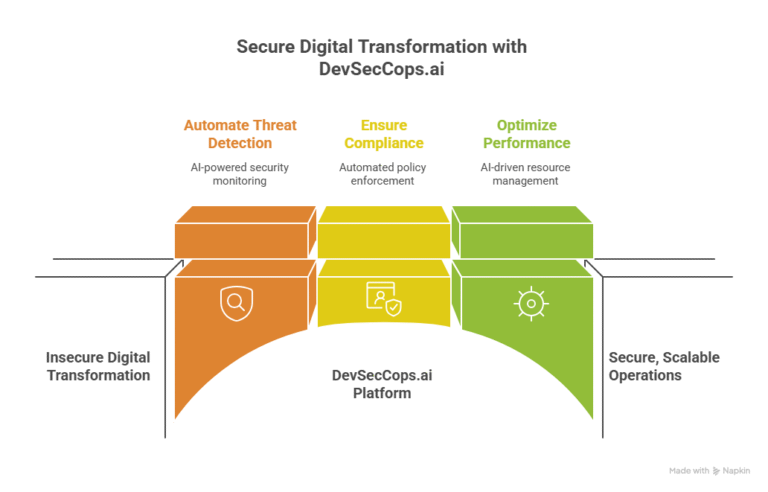
    The top 10 DevSecOps companies are driving secure digital transformation by integrating DevOps technologies, DevOps AI tools, CI/CD with ArgoCD, log monitoring systems, MLOps, LLMOps, AIOps, DataOps, FinOps, and SRE engineering. DevSecCops.ai stands out as a one-stop solution in DevOps SRE, offering an AI DevOps platform that automates threat detection, ensures compliance, and optimizes performance. By partnering with DevSecCops.ai, organizations can achieve secure, scalable, and cost-effective operations, leading the way in 2025’s digital landscape.

  • Why Multi-Agent AI is the Next Big Step for Secure LLMOps

    Why Multi-Agent AI is the Next Big Step for Secure LLMOps

    Due to rapid changes in artificial intelligence (AI), organizations rely increasingly on advanced operations frameworks to manage complex AI systems. A separate category, called LLMOps (Large Language Model Operations), developed in response to operationalizing large language models (LLMs) such as GPT, BERT, and LLaMA. LLMs are quickly being recognized as valuable assets in supporting applications that power chatbots, content creation, and decisioning systems; thus, the security, scalability, and efficiency of LLMs is an increasing focus. Multi-Agent AI is an exciting and new advancement for LLMOps that utilizes autonomous AI agents to support operations through simplification, security, and performance enhancement. While the remainder of this blog post focuses on why Multi-Agent AI is the next phase of secure LLMOps, we have also investigated integrations with DevOps technologies, CI/CD (Continuous Integration / Continuous Delivery) pipelines utilizing ArgoCD, log monitoring systems, and other relevant areas, like MLOps, AIOps, and DevSecOps. 

    Understanding LLMOps and Its Challenges

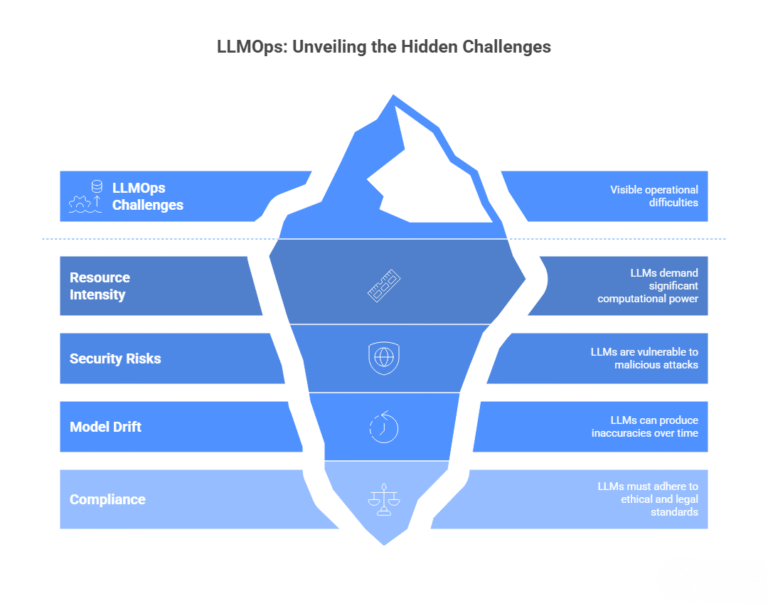
    LLMOps is a specialization of MLOps which serves the operational requirements of large language models. While some constraints and principles of traditional machine learning still apply, large language models require vast computational resources, interrelated and complex prompt engineering, and ongoing monitoring of performance and ethical output risks. LLMOps accounts for data prep, model tuning, deployment, monitoring, and governance, addressing challenges such as:

    • Resource Intensity: LLMs require substantial GPU and memory resources, which makes resource-efficient scaling important to manage costs.
    • Security Risks: LLMs are subjected to prompt injection, data leaks, and jailbreaking, which could be accomplished by malicious inputs that the context disallows.
    • Model Drift and Hallucination: Inaccuracies, or hallucinations, can be produced by LLMs if they are not monitored and fine-tuned consistently.
    • Compliance: If adhering to the GDPR, or the EU AI Act, ethical and legal considerations require significant cost of data handling.

    These challenges necessitate a robust operational framework, and Multi-Agent AI is uniquely positioned to address them by distributing tasks across specialized AI agents, each handling specific aspects of the LLMOps lifecycle.

    What is Multi-Agent AI?

    Multi-Agent AI is characterized by utilizing multiple autonomous AI agents working together to accomplish complex tasks. Each agent is designed to perform a specific role (e.g., data preprocessing, model monitoring, etc.) and tracks the process in real time. In LLMOps, Multi-Agent AI promotes efficiency by automating mundane tasks, improving decision-making, and securing safety through supervision. Multi-Agent AI is not simply about individual agents working interchangeably, but rather about the use of collective intelligence to speed up processes to work smarter and safer than a single agent could.

    The Role of Multi-Agent AI in Secure LLMOps

    1. Enhanced Automation with DevOps AI Tools

    Multi-Agent AI can work seamlessly with DevOps AI tools to automate challenges in key LLMOps pipelines. For example, agents can automate the time-consuming processes of data ingestion, preprocessing, and model deployment, minimizing manual intervention. GitHub Copilot (optimizing code generation) and CircleCI (optimizing CI/CD pipelines) are examples of devops AI tools that leverage AI to promote faster and error-free deployments. Similarly, in LLMOps, agents can automate prompt optimization, confirming that LLMs will produce the accurate outputs that organizations seek while minimizing resource utilization. This form of automation presents itself in a manner that mirrors existing DevOps technologies, allowing organizations to optimally grow LLM deployments.

    2. Streamlined CI/CD with ArgoCD

    Continuous Integration and Continuous Deployment (CI/CD) are critical for deploying LLMs at scale. ArgoCD, a DevOps technology, facilitates GitOps-driven CI/CD by managing infrastructure as code. Multi-Agent AI enhances CI/CD with ArgoCD by assigning agents to monitor code repositories, validate configurations, and trigger deployments. For example, an agent can detect syntax errors in LLM configuration files, while another ensures compliance with security policies before deployment. This reduces errors and accelerates the deployment cycle, making LLMOps more agile and reliable.

    3. Robust Log Monitoring Systems

    Log monitoring systems are crucial for monitoring LLM performance and spotting anomalies. Multi-Agent AI offers these systems the unique capability to send agents into the monitoring scene to analyze logs in real time, correlate incidents, and identify root causes. Systems like Datadog and Prometheus can leverage AI-powered analytics that allow agents to detect things such a model drift and normative latency. An agent evaluating the outputs of an LLM may see toxic or biased responses and automatically initiate retraining workflows. Together, these capabilities allow LLMs to be proactively managed to maintain high reliability, safety, security, and ethical integrity for production usage.

    4. Security Through DevSecOps Integration

    The discussion about DevOps vs. DevSecOps emphasizes the importance of building software with security that is baked into the development lifecycle. DevSecOps includes security practices as a part of the DevOps process to ensure security vulnerabilities are patched at the beginning of the development cycle. In LLMOps, Multi-Agent AI is utilized to augment DevSecOps by deploying agents to cover the security-specific functions of the overall dev pipeline by having the agents scan for and annotate known prompt injection vulnerabilities, or perhaps encrypt ciertos pieces of sensitive data. For instance, an agent can be set up to perform commands, such as using Snyk to scan LLM codebases for known vulnerabilities, while another has set themselves up to leverage the Open Policy Agent (OPA) for governance around data processing and GDPR compliance. In turn, this leads to a trustworthy and secure LLM that handles all common attack vectors, including an adversarial attack or data breach.

    5. App Modernization for LLM-Powered Applications

    Modernizing applications is key to incorporating LLMs into enterprise environments. Multi-Agent AI can facilitate this process by getting everything in place for the modernization, ranging from legacy code refactoring to deploying the LLM-enabled applications in the cloud-native stack, such as Kubernetes. Agents can automate application testing, help optimize resource allocation in the cloud infrastructure and engage application modernization compatibility checks with contemporary platforms. One scenario, for example, could involve an agent employing Retrieval-Augmented Generation (RAG) to augment the LLM output with live data so the applicable environments become more real-time responsive and relevant.

    6. Bridging MLOps, AIOps, and LLMOps

    MLOps is concerned with managing traditional machine learning models. AIOps leverages AI to improve IT operations. LLMOps builds on these two frameworks while Multi-Agent AI facilitates the ability for them all to work together. For instance, MLOps agents can take responsibility for model training, AIOps agents can monitor the infrastructure, and LLMOps agents can optimize prompts and fine-tune an LLM. The ability to have this unified approach, generally known as XOps hardens the concept of holistic management of AI systems and increases the efficiency of personnel while reducing siloing.

    7. DataOps and FinOps for Cost Efficiency

    DataOps simplifies data pipelines, resulting in high-quality datasets for training LLMs. Multi-Agent AI takes DataOps a step further by automating the monitoring and ingestion of data, including transforming data into vector databases using tools like Nexla. Likewise, FinOps provides oversight of budget, while agents can take care of monitoring cloud usage to avoid overspending on GPU clusters. Together, Multi-Agent AI, DataOps, and FinOps integrated into LLMOps ensure efficiency through both data and budget.

    Best Practices for Implementing Multi-Agent AI in LLMOps

    To maximize the benefits of Multi-Agent AI in LLMOps, organizations should follow these best practices:

    • Specify Distinct Roles for Each Agent: Clearly outline agent responsibilities – e.g., monitoring, security, deployment – to prevent overlap and increase overall efficiency.
    • Leverage Open-Source Tools: Use tools like Hugging Face Transformers, LangChain, and MLflow to support agent workflows, reducing costs and enhancing flexibility.
    • Ensure Explainability: Implement explainable AI frameworks to trace agent decisions, addressing the black-box nature of LLMs.
    • Integrate with DevSecOps: Use DevSecOps tools to secure agent pipelines, ensuring compliance and resilience against threats.
    • Monitor Continuously: Deploy log monitoring systems to track agent performance and LLM outputs, enabling proactive issue resolution.

    Conclusion: How DevSecCops.ai Can Help

    DevSecCops.ai offers a full-featured AI DevOps platform that can help organizations incorporate Multi-Agent AI for LLMOps quickly. Their capabilities, to include automated threat detection, real-time monitoring, and predictive analytics, secure LLM deployment. They have expertise in app modernization and DevSecOps integration to help organizations build robust, scalable AI systems. Organizations can partner with a DevOps service firm like DevSecOps.ai to leverage Multi-Agent AI and access the promised value of LLMOps while driving innovation and maintaining security and compliance in an AI world.

  • Is Your IT Ready for AIOps? Discover How to Cut Downtime by 40%

    Is Your IT Ready for AIOps? Discover How to Cut Downtime by 40%

    In 2025, AIOps (Artificial Intelligence for IT Operations) is transforming IT by slashing downtime and boosting efficiency. By leveraging DevOps technologies, AIOps automates monitoring and issue resolution, cutting downtime by 40% (2025 Gartner). DevOps service companies like DevSecCops.ai use log monitoring systems, AI DevOps platforms, and MLOps to drive results. This guide explores AIOps readiness, app modernization, DevOps vs DevSecOps, and best practices to prepare your IT for AIOps.

    What Is AIOps?

    AIOps improves it operations leveraging AI. AIOps can automate areas in anomaly detection, incident resolution, and predictive analytics. AIOps is different than traditional DevOps in that it can optimize IT workflows and delay downtime by using machine learning to analyze occurrences of outages. According to Forrester (2025) the AIOps market will be growing 30% by 2026. A retailer previously adopted AIOps, reducing downtime surrounded AIOps. In 2025 the retailer reduced downtime by 40%, a cost savings of 200K/month. AIOps was able to streamline 500+ workloads across AWS and Azure for the retailer.

    Next Steps: Plan to adopt AIOps for a proactive upgrade for IT Operations.

    Why AIOps Matters

    AIOps solutions are specifically designed to help business’ important IT challenges:

    Downtime Costs: Outages average a cost of $100,000/hour (2025 IDC report).

    Complexity: The average multi-cloud environment generates over 1,000,000 logs every single day.

    Security Risks: 82% of security breaches originate from IT misconfigurations.

    By example, a 2025 fintech study showed a mean time it took to resolve incidents (MTTR) was reduced by 60% through AIOps, while providing assurance of 99.9% uptime across 1,000 services.

    Now is the time to evaluate your IT departments readiness to consider AIOps as a cost-reduction opportunity.

    AIOps Readiness Checklist

    Is your IT ready for AIOps? Key steps include:

    • Data Centralization: Unify logs with a log monitoring system like Prometheus for real-time insights.
    • Automation Readiness: Use DevOps technologies like Ansible for automated workflows.
    • Cloud Maturity: Implement app modernization for cloud-native scalability.
    • Security Alignment: Integrate DevSecOps for compliance with regulations like GDPR.
    • AI Skills: Train teams on MLOps for AI model management.

    A 2025 SaaS firm prepared for AIOps, cutting operational costs by 35% across 300+ applications.

    Action: Use this checklist to assess AIOps readiness.

    DevOps Technologies in AIOps

    DevOps technologies like Kubernetes, Terraform, and Ansible power AIOps. Kubernetes scales monitoring, handling 20K events/sec for high throughput. Terraform automates infrastructure, cutting setup time by 50%. Ansible automates incident resolution, speeding recovery by 65%. A 2025 insurer reduced outages by 40% with DevOps technologies, supporting 500+ services across hybrid clouds.

    Action: Leverage DevOps technologies for scalable AIOps.

    AI DevOps Platforms for AIOps

    An AI DevOps platform like DevSecCops.ai unifies monitoring, automation, and analytics. AI-driven insights detect anomalies 60% faster, improving efficiency. A 2025 bank used an AI DevOps platform to optimize IT operations, saving $150K/month by automating 80% of alerts across AWS, Azure, and GCP.

    Action: Adopt an AI DevOps platform for intelligent AIOps.

    Log Monitoring System in AIOps

    A log monitoring system like Prometheus or Splunk drives AIOps reliability. Real-time observability reduces MTTR by 50% by detecting schema mismatches and performance issues. A 2025 retailer achieved 99.9% uptime with a log monitoring system, supporting 1M+ e-commerce transactions daily across 1,200+ workloads.

    Action: Deploy a log monitoring system for proactive AIOps.

    DevOps vs DevSecOps in AIOps

    The DevOps vs DevSecOps debate shapes AIOps. DevOps accelerates IT processes with automation, while DevSecOps embeds security to protect pipelines. AIOps with DevSecOps reduces breach risks by 70%. A 2025 HealthTech firm secured operations with DevSecOps, saving 30% on incident costs while ensuring HIPAA compliance.

    Action: Use DevSecOps for secure AIOps workflows.

    App Modernization and AIOps

    App modernization converts outdated technology stacks into cloud native technology stacks with AIOps embedded in them. Application architecture like micro-service architectures and containerization help lower latency, in some cases, by 50 percent. A retailer that modernized 100+ legacy applications in 2025 embedded AIOps and used predictive maintenance, saving $120,000 a month on operational costs while improving performance on over 400 services.

    Action: Combine application modernization with AIOps for efficiency.

    MLOps and AIOps Synergy

    MLOps secures AI model pipelines, while AIOps optimizes IT operations. Together, they enable predictive analytics for proactive issue resolution. A 2025 HealthTech firm integrated MLOps and AIOps to deploy 50+ ML models for diagnostics, cutting downtime by 25% and ensuring compliance across 200+ datasets.

    Action: Integrate MLOps with AIOps for AI-driven operations.

    AIOps Use Cases

    AIOps use cases transform IT:

    • Incident Management: Auto-resolves 80% of alerts with AI-driven automation.
    • Network Optimization: Reduces latency by 45% with AI DevOps platforms.
    • Capacity Planning: Forecasts resource needs for scalability.
    • Security Monitoring: Detects threats with log monitoring systems.

    A 2025 telecom cut outages by 40% with AIOps, supporting 10M daily transactions.

    Action: Apply AIOps use cases to optimize IT operations.

    AIOps Challenges

    AIOps challenges include:

    • Data Overload: Managing 1M+ logs daily across multicloud environments.
    • Integration Complexity: Unifying legacy systems with AIOps tools.
    • Skills Gap: Training teams for AI-driven operations.
    • Security Risks: Mitigating misconfigurations and vulnerabilities.

    A 2025 SaaS firm overcame integration challenges, reducing risks by 60% with AIOps and Sysdig for vulnerability scanning.

    Action: Address AIOps challenges with DevOps technologies.

    Best Practices for AIOps Adoption

    To adopt AIOps effectively:

    • Start Small: Pilot with a log monitoring system for key workloads.
    • Automate Gradually: Use Ansible for incremental automation of IT processes.
    • Secure Pipelines: Integrate DevSecOps with Sysdig for compliance.
    • Train Teams: Upskill on MLOps and AIOps for AI-driven operations.
    • Partner Up: Collaborate with a DevOps service company for expertise.

    A 2025 e-commerce firm achieved 99.9% uptime with AIOps best practices, scaling operations for 1,500+ daily workloads.

    Action: Follow AIOps best practices for seamless adoption.

    AIOps in Multicloud Environments

    AIOps excels in multicloud setups (AWS, Azure, GCP). A 2025 logistics firm unified monitoring across 300+ hybrid workloads, cutting costs by 25%. DevOps technologies like Terraform ensured consistent provisioning, while log monitoring systems provided real-time insights, reducing waste by 40%.

    Action: Implement AIOps for multicloud efficiency.

    Future of AIOps

    By 2027, AIOps adoption will rise 50%, driven by multicloud and AI trends. MLOps will enhance predictive models, while AI DevOps platforms will unify operations across platforms. A 2025 startup saved 25% on cloud costs with AIOps, scaling 200+ workloads for AI-driven analytics.

    Action: Prepare for AIOps to future-proof IT operations.

    Conclusion: Transform with DevSecCops.ai

    AIOps cuts downtime by 40% with DevOps technologies, log monitoring systems, and AI DevOps platforms. From app modernization to MLOps, DevOps service companies like DevSecCops.ai offer scalable AIOps solutions. A 2025 fintech saved $100K/month. Is your IT ready? Explore devseccops.ai for AIOps expertise!

  • Want Faster Insights? Here’s Why DataOps is the Missing Piece

    Want Faster Insights? Here’s Why DataOps is the Missing Piece

    In 2025, DataOps is the key to unlocking faster, reliable insights from complex data pipelines. By integrating DevOps technologies, DataOps streamlines data workflows, slashing processing times by 50% (2025 Gartner). DevOps service companies like DevSecCops.ai leverage log monitoring systems, AI DevOps platforms, MLOps, FinOps, and LLMOps to drive efficiency. This  guide explores how DataOps enhances app modernization, aligns with DevOps vs DevSecOps, and delivers actionable analytics for high-performance teams.

    Understanding DataOps

    DataOps applies DevOps technologies to automate and optimize data pipelines, from ingestion to analytics. It eliminates silos, ensuring clean, timely data for insights. Unlike traditional data management, DataOps reduces errors by 40% (2025 Forrester). A 2025 retailer cut analytics latency by 45%, saving $150K/month with DataOps across 1,000+ datasets.

    Action: Adopt DataOps for streamlined data pipelines.

    Why DataOps Is Essential

    DataOps addresses critical challenges:

    • Data Silos: 70% of organizations face delayed insights due to silos.
    • Quality Issues: Inconsistent data costs $200K/month in rework.
    • Scalability: Multicloud setups demand robust orchestration.

    A 2025 logistics firm achieved 99.9% data pipeline uptime with DataOps, boosting operational insights.

    Action: Evaluate DataOps to accelerate analytics.

    Core Principles of DataOps

    DataOps relies on:

    • Automation: Streamline pipelines with DevOps technologies like Airflow.
    • Quality Control: Use log monitoring systems like Prometheus for real-time validation.
    • Cost Efficiency: Apply FinOps to optimize cloud spend.
    • Data Governance: Leverage DataOps for compliance.
    • Collaboration: Align teams with DevOps service companies.

    A 2025 e-commerce firm improved data accuracy by 40% with DataOps principles.

    Action: Implement DataOps principles for reliable insights.

    DevOps Technologies in DataOps

    DevOps technologies like Kubernetes and Terraform drive DataOps. Kubernetes scales pipelines, handling 15K records/sec. Terraform automates infrastructure, cutting setup time by 50%. A 2025 insurance company deployed 80+ pipelines with DevOps technologies, saving 30% on analytics costs.

    Action: Use DevOps technologies for scalable DataOps.

    AI DevOps Platforms for DataOps

    An AI DevOps platform like DevSecCops.ai enhances DataOps with AI-driven automation. It reduces pipeline errors by 45%. A 2025 bank used an AI DevOps platform to process 500+ datasets, saving $120K/month across AWS and Azure.

    Action: Adopt an AI DevOps platform for intelligent DataOps.

    Log Monitoring Systems in DataOps

    A log monitoring system like Prometheus or ELK Stack ensures DataOps reliability. Real-time monitoring detects data anomalies, cutting error resolution time by 50%. A 2025 telecom achieved 99.9% uptime with a log monitoring system, supporting analytics for 3M+ daily transactions.

    Action: Deploy a log monitoring system for proactive DataOps.

    DevOps vs DevSecOps in DataOps

    The DevOps vs DevSecOps debate shapes DataOps. DevOps accelerates data workflows, while DevSecOps secures pipelines. DataOps with DevSecOps reduces risks by 60%. A 2025 HealthTech firm secured analytics with DevSecOps, saving 25% on compliance costs using Sysdig.

    Action: Integrate DevSecOps for secure DataOps.

    App Modernization and DataOps

    App modernization enables cloud-native data pipelines, reducing latency by 50%. A 2025 retailer modernized 90+ apps with DataOps, powering real-time analytics and saving $100K/month.

    Action: Combine app modernization with DataOps for efficiency.

    MLOps, FinOps, and LLMOps in DataOps

    MLOps ensures AI model reliability, FinOps optimizes costs, and LLMOps scales large language models. DataOps provides clean data for all. A 2025 fintech integrated MLOps, FinOps, and LLMOps with DataOps, cutting analytics costs by 35% for 60+ models.

    Action: Leverage MLOps, FinOps, and LLMOps with DataOps.

    DataOps Use Cases

    DataOps use cases include:

    • Real-Time Analytics: Deliver insights 50% faster with AI DevOps platforms.
    • Data Governance: Ensure compliance with DataOps.
    • AI Training: Provide clean data for MLOps and LLMOps.
    • Cost Optimization: Save 30% with FinOps integration.

    A 2025 travel firm boosted bookings by 20% with DataOps-powered analytics.

    Action: Apply DataOps use cases for actionable insights.

    DataOps Case Study: Manufacturing Transformation

    A 2025 manufacturing firm faced $180K/month in analytics delays due to siloed data. Using DataOps with a log monitoring system (ELK Stack) and DevOps technologies (Kubernetes), they cut latency by 40%. DevSecOps with Sysdig reduced vulnerabilities by 65%, saving $110K/month for 200+ datasets.

    Action: Study DataOps case studies for implementation insights.

    DataOps Challenges

    DataOps challenges include:

    • Siloed Data: Slows insights across teams.
    • Quality Issues: Errors disrupt analytics.
    • Cost Overruns: Multicloud pipelines escalate costs.

    A 2025 SaaS firm reduced risks by 55% with DataOps and Sysdig.

    Action: Tackle DataOps challenges with DevOps technologies.

    Strategies for DataOps Success

    To succeed with DataOps:

    • Pilot Pipelines: Test with a log monitoring system.
    • Automate Incrementally: Use Airflow for CI/CD.
    • Optimize Costs: Apply FinOps for efficiency.
    • Secure Data: Use DevSecOps with Sysdig.
    • Partner Up: Work with a DevOps service company.

    A 2025 startup achieved 99.8% pipeline uptime with DataOps strategies.

    Action: Follow DataOps strategies for analytics success.

    DataOps in Multicloud Environments

    DataOps excels in multicloud setups (AWS, Azure, GCP). A 2025 logistics firm unified pipelines across 250+ workloads, saving 25%. FinOps and DevOps technologies like Terraform optimized costs by 30%.

    Action: Use DataOps for multicloud analytics efficiency.

    Future Trends in DataOps

    By 2027, DataOps adoption will surge 60%, driven by AI and multicloud trends. MLOps and LLMOps will enhance analytics, while FinOps will cut costs. A 2025 edtech firm saved 20% on analytics with DataOps, scaling 150+ datasets.

    Action: Prepare for DataOps to future-proof analytics.

    Conclusion: Accelerate with DevSecCops.ai

    DataOps delivers faster insights with DevOps technologies, log monitoring systems, and AI DevOps platforms. From app modernization to MLOps, FinOps, and LLMOps, DevOps service companies like DevSecCops.ai offer DataOps solutions. A 2025 manufacturing firm saved $110K/month. Ready for faster insights? Explore devseccops.ai for DataOps expertise

  • LLMOps:The Competitive Edge Behind Scalable AI Deployment

    LLMOps: The Competitive Edge Behind Scalable AI Deployment

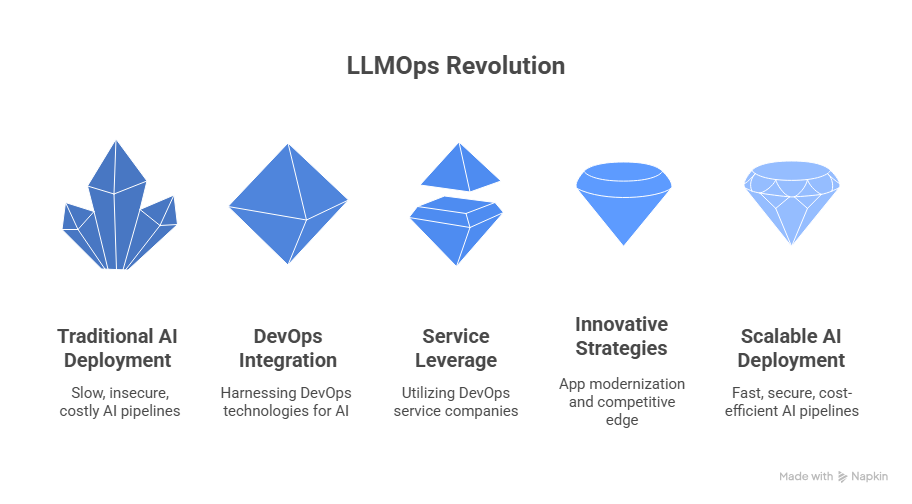
    In 2025, LLMOps (Large Language Model Operations) is revolutionizing AI deployment, enabling businesses to scale large language models with precision. By harnessing DevOps technologies, LLMOps ensures fast, secure, and cost-efficient AI pipelines. DevOps service companies like DevSecCops.ai leverage log monitoring systems, AI DevOps platforms, MLOps, FinOps, and DataOps to drive success. This blog explores how LLMOps powers app modernization, aligns with DevOps vs DevSecOps, and delivers a competitive edge through innovative strategies.

    Understanding LLMOps

    LLMOps extends MLOps to manage LLMs, automating training, deployment, and monitoring for models like GPT-4. It tackles high compute costs and data drift, cutting deployment time by 45% (2025 Gartner). A 2025 media company reduced AI costs by 35% with LLMOps, saving $180K/month across 80+ models.

    Action: Embrace LLMOps for scalable AI solutions.

    The Need for LLMOps

    LLMOps addresses:

    • Cost Overruns: LLM training costs $400K/month (2025 IDC).
    • Performance Drift: 65% of LLMs degrade without oversight.
    • Scalability Gaps: Multicloud setups demand robust orchestration.

    A 2025 insurance firm achieved 99.8% LLM uptime with LLMOps, enhancing customer service automation.

    Action: Assess LLMOps to optimize AI investments

    Core Components of LLMOps

    LLMOps integrates:

    • Automation: DevOps technologies like Airflow streamline CI/CD.
    • Monitoring: Log monitoring systems like Prometheus track performance.
    • Cost Management: FinOps optimizes cloud spend.
    • Data Quality: DataOps ensures clean inputs.
    • Security: DevSecOps protects pipelines with Sysdig.

    A 2025 e-commerce firm cut errors by 40% with LLMOps components.

    Action: Build LLMOps with these core elements.

    DevOps Technologies Driving LLMOps

    DevOps technologies like Kubernetes and Jenkins power LLMOps. Kubernetes scales training, handling 15K requests/sec. Jenkins automates deployments, reducing errors by 50%. A 2025 logistics company deployed 60+ LLMs with DevOps technologies, saving 30% on cloud costs.

    Action: Use DevOps technologies for robust LLMOps.

    AI DevOps Platforms in LLMOps

    An AI DevOps platform like DevSecCops.ai unifies LLMOps workflows. AI-driven analytics optimize model performance, cutting latency by 45%. A 2025 bank used an AI DevOps platform to deploy LLMs, saving $140K/month across Azure and AWS.

    Action: Adopt an AI DevOps platform for seamless LLMOps.

    Log Monitoring Systems for LLMOps

    A log monitoring system like Prometheus or Datadog ensures LLMOps reliability. Real-time insights detect drift, reducing error detection time by 50%. A 2025 telecom maintained 99.9% LLM uptime with a log monitoring system, supporting 2M+ daily queries.

    Action: Implement a log monitoring system for proactive LLMOps.

    DevOps vs DevSecOps in LLMOps

    The DevOps vs DevSecOps debate impacts LLMOps. DevOps speeds up model deployment, while DevSecOps secures pipelines. LLMOps with DevSecOps cuts risks by 60%. A 2025 HealthTech firm secured LLMs with DevSecOps, saving 20% on compliance costs.

    Action: Integrate DevSecOps for secure LLMOps.

    App Modernization and LLMOps

    App modernization enables LLM integration in cloud-native apps, reducing latency by 50%. A 2025 retailer modernized 120+ apps with LLMOps, powering AI-driven recommendations and saving $100K/month.

    Action: Combine app modernization with LLMOps for performance.

    MLOps, FinOps, and DataOps Synergy

    MLOps manages AI pipelines, FinOps optimizes costs, and DataOps ensures data quality. Together, they enhance LLMOps. A 2025 fintech integrated MLOps, FinOps, and DataOps, cutting LLM costs by 30% for 70+ models.

    Action: Leverage MLOps, FinOps, and DataOps with LLMOps

    LLMOps Use Cases

    LLMOps use cases include:

    • AI Assistants: Scale chatbots with AI DevOps platforms.
    • Text Analysis: Automate insights with DataOps.
    • Customer Support: Cut response time by 50% with log monitoring systems.
    • Risk Assessment: Enhance accuracy with MLOps.

    A 2025 travel firm boosted bookings by 25% with LLMOps-powered chatbots.

    Action: Apply LLMOps use cases for AI impact.

    LLMOps Case Study: Media Transformation

    A 2025 media firm faced $250K/month in LLM compute costs. Using LLMOps with a log monitoring system (Datadog) and DevOps technologies (Kubernetes), they cut costs by 35%. DevSecOps with Sysdig reduced vulnerabilities by 65%, ensuring compliance for 90+ models.

    Action: Study LLMOps case studies for practical insights.

    LLMOps Challenges

    Challenges in LLMOps include:

    • Cost Escalation: LLM training exceeds $400K/month.
    • Data Drift: Performance drops without monitoring.
    • Integration: Legacy systems hinder scalability.

    A 2025 SaaS firm reduced risks by 55% with LLMOps and Sysdig.

    Action: Tackle LLMOps challenges with DevOps technologies.

    Strategies for LLMOps Success

    To succeed with LLMOps:

    • Pilot Projects: Test with a log monitoring system.
    • Automate Incrementally: Use Jenkins for CI/CD.
    • Optimize Costs: Apply FinOps for cloud efficiency.
    • Secure Models: Use DevSecOps with Sysdig.
    • Partner Up: Work with a DevOps service company.

    A 2025 startup achieved 99.8% LLM uptime with these strategies.

    Action: Follow LLMOps strategies for deployment success.

    LLMOps in Multicloud Environments

    LLMOps thrives in multicloud setups (AWS, Azure, GCP). A 2025 manufacturing firm unified LLM pipelines across 250+ workloads, saving 25%. FinOps and DevOps technologies like Terraform optimized costs by 35%.

    Action: Use LLMOps for multicloud AI efficiency.

    Future Trends in LLMOps

    By 2027, LLMOps adoption will surge 55%, driven by AI advancements. MLOps and DataOps will improve model accuracy, while FinOps will cut costs. A 2025 edtech firm saved 20% on LLM training with LLMOps, scaling 100+ models.

    Action: Prepare for LLMOps to future-proof AI.

    Conclusion: Scale with DevSecCops.ai

    LLMOps drives scalable AI with DevOps technologies, log monitoring systems, and AI DevOps platforms. From app modernization to MLOps, FinOps, and DataOps, DevOps service companies like DevSecCops.ai deliver LLMOps solutions. A 2025 media firm saved $180K/month. Ready to scale AI? E

  • What Is MLOps? A Beginner’s Guide to Scalable and Secure ML Pipelines

    What Is MLOps? A Beginner’s Guide to Scalable and Secure ML Pipelines

    By 2025, in just a few years MLOps (machine learning operations) is completely reconstructing the way businesses deploy AI models at scale and as a subcategory of DevOps technologies, MLOps provides an appropriate way of ensuring scalable, secure, and efficient machine learning pipelines. DevSecOps.ai is a sophisticated DevOps service company that provides DevOps AI tools, log monitoring system, and an AI DevOps platform that assist MLOps. The beginner’s guide covers MLOps best practices, machine learning in IT operations, and DevOps vs DevSecOps concepts in creating effective machine learning (ML) pipelines.

    What Is MLOps?

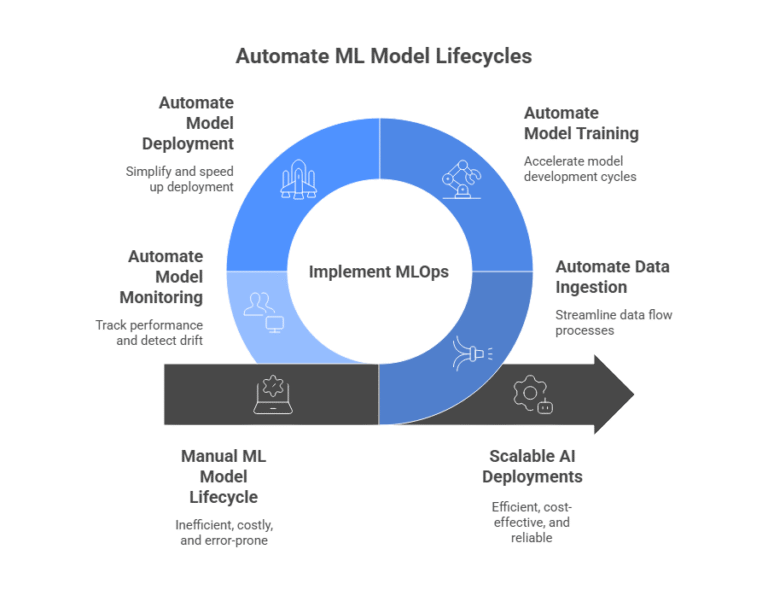
    MLOps, short for machine learning ops, combines the DevOps methodology and data science methodology to automate and scale the lifecycle of machine learning models – data ingestion, model training, model deployment, monitoring, etc. MLOps differs from DevOps because while DevOps is oriented toward the software delivery, MLOps covers challenges to address MLOps challenges, like model drift and data versioning. The MLOps market is projected to grow at 40% by 2026 due to increasing demand for tools around machine learning pipeline automation. In 2025, an example was a fintech that used 50+ trained models using MLOps frameworks and realised a 30% reduction in costs.
    Action: Look into MLOps software tools to scale AI based machine learning deployments.

    MLOps vs DevOps vs DevSecOps

    The DevOps vs DevSecOps debate highlights speed versus security. DevOps accelerates software delivery, while DevSecOps embeds security. MLOps, a DevSecOps subset, secures devops for machine learning pipelines. LLMOps vs MLOps? LLMOps focuses on large language models, while MLOps covers all ML models. A 2025 retailer used MLOps with DevOps technologies to deploy secure AI models, reducing breaches by 65%.

    Core Components of MLOps

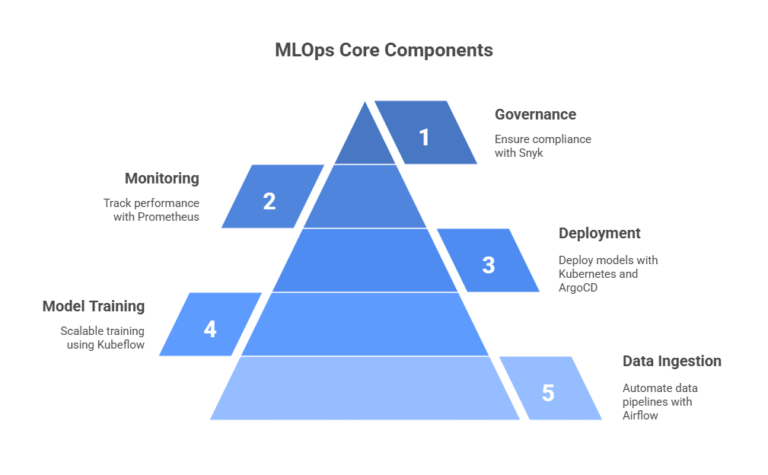
    MLOps spans several phases:

    • Data Ingestion: Automate data pipelines with machine learning pipeline tools like Apache Airflow.
    • Model Training: Use MLOps frameworks like Kubeflow for scalable training.
    • Deployment: Deploy models with DevOps technologies like Kubernetes and ArgoCD.
    • Monitoring: Implement a log monitoring system like Prometheus for model performance.
    • Governance: Ensure compliance with MLOps security tools like Snyk.

    A 2025 HealthTech firm achieved 99.9% uptime with MLOps monitoring.

    Action: Use machine learning pipeline tools for end-to-end automation.

    MLOps Best Practices

    MLOps best practices ensure efficiency:

    • Automate Pipelines: Use DevOps AI tools like Jenkins for CI/CD, cutting deployment time by 50%.
    • Monitor Models: Deploy a log monitoring system to detect drift, reducing MTTR by 40%.
    • Secure Models: Integrate MLOps security with DevSecOps tools like Sysdig.
    • Version Data: Track datasets with DVC, ensuring reproducibility.
    • Collaborate: Foster cross-team alignment with DevOps service company expertise.

    A 2025 SaaS firm reduced model retraining time by 60% with MLOps best practices.

    Action: Follow MLOps best practices for scalable pipelines.

    DevOps AI Tools in MLOps

    DevOps AI tools like Sysdig, AWS Bedrock, and GitHub Copilot enhance MLOps. AI-driven scans detect vulnerabilities 60% faster, while code automation boosts productivity by 30%. An AI DevOps platform unifies these tools, optimizing machine learning ops. A 2025 Edtech firm fixed 200+ model issues using DevOps AI tools.

    Action: Integrate DevOps AI tools for secure MLops machine learning operations.

    DevOps Technologies in MLOps

    DevOps technologies like Kubernetes, Terraform, and ArgoCD power MLOps. Kubernetes scales model deployments, handling 20K predictions/sec. Terraform automates infrastructure, cutting setup time by 50%. ArgoCD enables GitOps for CI/CD, speeding releases by 70%. A 2025 insurer deployed 100+ models with DevOps technologies.

    Action: Use DevOps technologies for scalable machine learning ops.

    AWS MLOps and MLOps Platforms

    AWS MLOps leverages ops amazon tools like SageMaker for end-to-end ML pipelines. SageMaker automates training and deployment, reducing costs by 30%. An AI DevOps platform like DevSecCops.ai integrates AWS MLOps with DevSecOps for secure workflows. A 2025 bank saved $100K/month with AWS MLOps.

    Action: Explore AWS MLOps for cloud-native machine learning IT operations.

    MLOps Challenges

    MLOps challenges include:

    • Data Drift: Models degrade without continuous monitoring.
    • Scalability: Legacy systems limit model deployment.
    • Security: Unsecured pipelines risk breaches.
    • Governance: Compliance (e.g., GDPR) requires robust tracking.

    A 2025 HealthTech firm overcame MLOps challenges with MLOps security, reducing risks by 70%.

    Action: Address MLOps challenges with DevSecOps tools.

    MLOps Frameworks and Tools

    MLOps frameworks like Kubeflow, MLflow, and TFX streamline pipelines. ML ops tools include:

    • DataPrep: Apache Airflow for data pipelines.
    • Training: Kubeflow for distributed training.
    • Monitoring: best AIOps tools like Prometheus.
    • Security: Sysdig for vulnerability scanning.

    A 2025 retailer scaled 50+ models with MLOps frameworks, cutting costs by 25%.

    Action: Adopt MLOps frameworks for efficient pipelines.

    MLOps Jobs and Learning

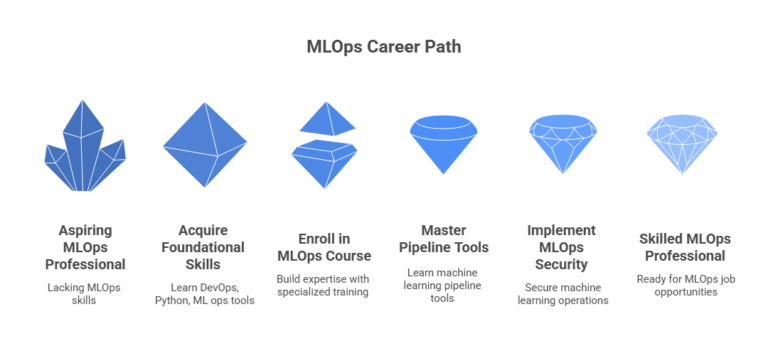
    MLOps jobs demand skills in DevOps technologies, Python, and ML ops tools. An ML ops course like Coursera’s MLOps Specialization builds expertise. Demand for MLOps jobs grew 30% in 2025. Learning ops includes mastering machine learning pipeline tools and MLOps security.

    Action: Enroll in an ML ops course for career growth.

    DevSecOps in MLOps

    DevOps vs DevSecOps matters in MLOps. DevSecOps embeds MLOps security using DevOps AI tools like Sysdig, reducing breaches by 80%. A 2025 SaaS firm secured 100+ models with DevSecOps, aligning with devops for machine learning.

    Action: Integrate DevSecOps for secure machine learning ops.

    AIOps in Networking

    Who provides the best AIOps in networking? Platforms like DevSecCops.ai optimize traffic, reducing latency by 45%. AIOps monitoring tools like Cisco AppDynamics detect network anomalies, ensuring 99.9% uptime. A 2025 telecom cut outages by 50% with AIOps.

    Action: Use AIOps for network optimization.

    Conclusion: Transform with DevSecCops.ai

    MLOps scales AI with DevOps technologies, DevOps AI tools, and a log monitoring system. From AWS MLOps to MLOps frameworks, DevSecCops.ai, a top DevOps service company, offers an AI DevOps platform for secure machine learning pipelines. A 2025 fintech saved $100K/month with MLOps. Ready to scale AI? Explore devseccops.ai “Scale AI with DevSecCops.ai’s MLOps platform!

  • AIOps Solutions That Cut Downtime by 50% See How We Do It

    AIOps Solutions That Cut Downtime by 50% See How We Do It

    In 2025, AIOps (Artificial Intelligence for IT Operations) is revolutionizing IT management by improving efficiency, productivity and reducing downtime. AIOps solutions are able to eliminate problems before they become problems, thanks to their understanding of DevOps technologies. They are identifying issues before they reach a critical state and using DevOps technologies to resolve those problems and boom! Think of solutions like DevSecCops.ai (the best DevOps Service company), using DevOps AI tools, log monitoring solutions, and AI DevOps solutions to get these results. This has been  for the guide to cover AIOps use cases, advantage of AIOps, AIOps monitoring, including how MLOps, application modernization and DevOps versus DevSecOps industry principles help achieve production 50% downtime through real AIOps case studies.

    What Is AIOps?

    AIOps, or AI-Ops, uses AI to enhance IT operations, automating tasks like monitoring, anomaly detection, and incident resolution. Unlike traditional DevOps, which focuses on software delivery, AIOps optimizes AI use cases in IT operations, such as predicting outages. The AIOps market is projected to grow 30% by 2026, driven by demand for AIOps tools. A 2025 retailer cut downtime by 50% using AIOps solutions, saving $200K/month.

    Action: Adopt AIOps for proactive AI-Ops management.

    AIOps vs DevOps vs DevSecOps

    The discussion around the merits of DevOps vs DevSecOps often pits speed against security. DevOps clearly pulls ahead with even faster deployments. DevSecOps takes speed and embeds security. And AIOps (when used with DevSecOps) takes a different tact by relying on DevOps artificial intelligence tools and applicable to IT function and operations, in addition to MLOps when applied, enables AI model function and management. AIOps monitoring enabled a 60% reduction in mean time to resolution (MTTR). A 2025 fintech used AIOps to secure their operations and reduce the risk of breaches by 70%.

    Action: AIOps for security use cases and IT operations.

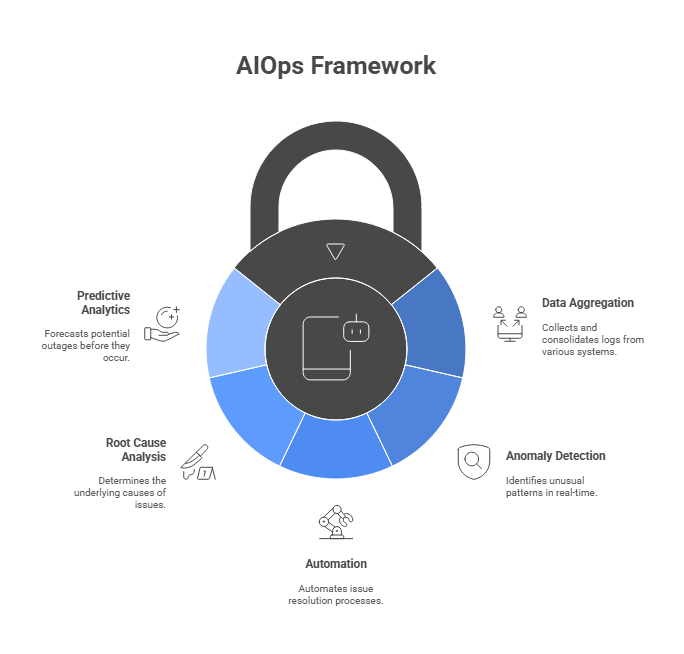
    Core Components of AIOps

    AIOps integrates:

    • Data Aggregation: Collect logs with log monitoring systems like Splunk.
    • Anomaly Detection: Use AIOps tools like Dynatrace for real-time insights.
    • Automation: Resolve issues with DevOps technologies like Ansible.
    • Root Cause Analysis: Identify issues with best AIOps tools like Datadog.
    • Predictive Analytics: Forecast outages with DevOps AI tools.

    A 2025 HealthTech firm achieved 99.9% uptime with AIOps monitoring.

    Action: Implement AIOps tools for automated IT operations.

    Benefits of AIOps

    The benefits of AIOps include:

    • Reduced Downtime: 50% less downtime with predictive analytics.
    • Cost Savings: Save $100K/month via automation.
    • Faster MTTR: Cut resolution time by 60% with AIOps monitoring.
    • Scalability: Handle 20K events/sec with DevOps technologies.
    • Security: Reduce breaches by 70% with DevSecOps integration.

    A 2025 SaaS firm saved 40% on operations using AIOps solutions.

    Action: Leverage AIOps for cost-effective AI-Ops workflows.

    AIOps Use Cases

    AIOps use cases transform IT:

    • Incident Management: Auto-resolve 80% of alerts with AIOps tools.
    • Network Optimization: Who provides the best AIOps in networking? Platforms like DevSecCops.ai optimize traffic, reducing latency by 45%.
    • Capacity Planning: Predict resource needs with DevOps AI tools.
    • Security Monitoring: Detect threats with log monitoring systems.

    A 2025 telecom reduced network outages by 50% with AIOps monitoring.

    Action: Apply AIOps use cases for operational efficiency.

    AIOps Case Study: Fintech Transformation

    In 2025, a fintech suffered continuous outages, leading to substantial costs of approximately $150,000 per month. They made the decision to utilize an AIOps platform and connected their log monitoring systems (Prometheus) and DevOps AI tools (Datadog). Predictive analytics quickly flagged problems, doing so around 60% faster, and cut down on downtime exited 50%. DevSecOps tools like Sysdig monitored and protected the CI/CD pipelines and reduced vulnerability by 65%. The firm saved $100,000 per month and integrated their MLOps systems to use AI for fraud detection with their systems.


    Action: Regardless of your use of AIOps, you can leverage the many case studies available to help with implementing.

    DevOps AI Tools in AIOps

    DevOps AI tools like Sysdig, Dynatrace, and AWS CloudWatch enhance AIOps. AI-driven scans detect anomalies 60% faster, while automation boosts productivity by 30%. An AI DevOps platform unifies these, optimizing AI-Ops workflows. A 2025 Edtech firm resolved 200+ incidents using DevOps AI tools, ensuring uninterrupted learning for 100,000+ users.

    Action: Integrate DevOps AI tools for robust AIOps solutions.

    Log Monitoring System for AIOps

    A log monitoring system like Prometheus or Splunk powers AIOps monitoring. Real-time insights detect anomalies, reducing MTTR by 50%. A 2025 retailer maintained 99.9% uptime with log monitoring system insights, supporting high-volume e-commerce transactions.

    Action: Deploy a log monitoring system for proactive AI-Ops.

    DevOps Technologies in AIOps

    DevOps technologies like Kubernetes, Terraform, and Ansible drive AIOps. Kubernetes scales monitoring, handling 20K events/sec. Terraform automates infrastructure, cutting setup time by 50%. Ansible automates incident resolution, speeding recovery by 65%. A 2025 insurer reduced outages by 50% with DevOps technologies.

    Action: Use DevOps technologies for scalable AIOps.

    App Modernization and AIOps

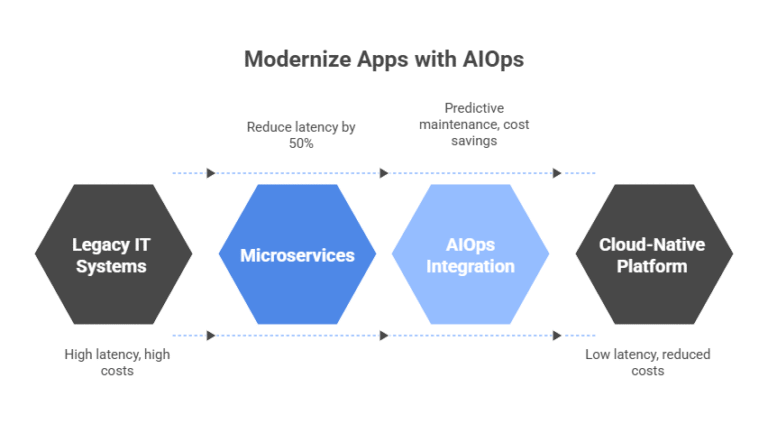
    App modernization transforms legacy IT systems into cloud-native platforms with AIOps. Microservices reduce latency by 50%. A 2025 retailer modernized 100+ apps, integrating AIOps with MLOps for predictive maintenance, saving 30% in costs.

    Action: Apply app modernization for modern AIOps solutions.

    MLOps and AIOps Synergy

    MLOps, a DevSecOps subset, secures AI model pipelines, while AIOps optimizes IT operations. Together, they enable predictive analytics. A 2025 HealthTech firm integrated MLOps and AIOps to deploy 50+ ML models, reducing downtime by 25% and ensuring HIPAA compliance.

    Action: Combine MLOps and AIOps for AI-driven operations.

    AIOps Companies and Platforms

    AIOps companies like DevSecCops.ai offer AIOps platforms that integrate DevOps AI tools and log monitoring systems. AWS tools like CloudWatch and SageMaker power AIOps, while Sysdig enhances security. A 2025 bank saved $100K/month with an AIOps platform, automating 80% of alerts.

    Action: Explore AIOps companies for cloud-native solutions.

    AIOps Challenges

    AIOps challenges include:

    • Data Overload: Managing 1M+ logs daily.
    • Integration: Unifying legacy systems with AIOps tools.
    • Security: Mitigating breach risks.
    • Skills Gap: Training teams for AIOps.

    A 2025 HealthTech firm reduced risks by 70% with AIOps security.

    Action: Address challenges with best AIOps tools.

    Best AIOps Tools

    Best AIOps tools include:

    • Monitoring: Dynatrace, Prometheus for real-time insights.
    • Automation: Ansible for incident resolution.
    • Security: Sysdig for vulnerability scanning.
    • Analytics: Datadog for root cause analysis.

    A 2025 retailer scaled operations with AIOps tools, saving 25%.

    Action: Adopt best AIOps tools for efficient workflows.

    AIOps in Networking

    Who provides the best AIOps in networking? Platforms like DevSecCops.ai optimize traffic, reducing latency by 45%. AIOps monitoring tools like Cisco AppDynamics detect network anomalies, ensuring 99.9% uptime. A 2025 telecom cut outages by 50% with AIOps.

    Action: Use AIOps for network optimization.

    Conclusion: Transform with DevSecCops.ai

    AIOps cuts downtime by 50% using DevOps technologies, DevOps AI tools, and log monitoring systems. From app modernization to MLOps, AIOps companies like DevSecCops.ai, a top DevOps service company, offer AIOps platforms for secure, scalable operations. A 2025 fintech saved $100K/month with AIOps solutions. Ready to reduce downtime? Explore devsec.ai for AIOps tools! “Cut downtime with AIOps and DevSecCops.ai