Devseccops

Category: Uncategorized

  • DataOps in Action: Accelerating Analytics and Data Delivery

    DataOps in Action: Accelerating Analytics and Data Delivery

    In 2025, DataOps—short for data operations—is revolutionizing how organizations deliver analytics and data pipelines at scale. By integrating DevOps technologies, DataOps ensures fast, reliable, and secure data ops, enabling businesses to extract insights swiftly. DataOps companies like DevSecCops.ai, a leading DevOps service company, leverage DevOps AI tools, log monitoring systems, and AI DevOps platforms to deliver DataOps solutions. This 1200-word guide explores what is DataOps, its role in app modernization, MLOps, alongside DataOps best practices for accelerating analytics ops and driving business value.

    What Is DataOps?

    What is DataOps? DataOps, or data operations management, applies agile and DevOps technologies to automate data pipelines, from ingestion to analytics delivery. Unlike traditional DevOps, which focuses on software deployment, DataOps tackles data operation challenges like silos, inconsistent data quality, and slow delivery. The DataOps market is projected to grow 35% by 2026, driven by demand for DataOps tools. For example, a 2025 retailer reduced data pipeline latency by 50% using DataOps services, enabling real-time analytics for faster decision-making.

    Action: Adopt DataOps for agile data operations.
    DataOps vs DevOps vs DevSecOps

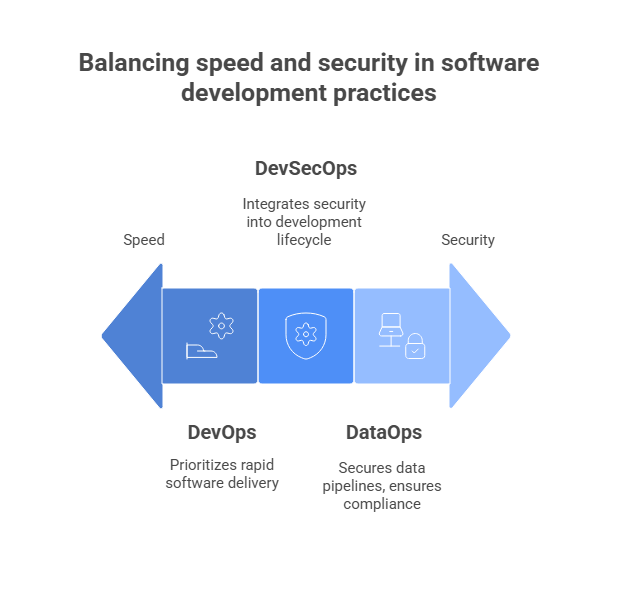
    The DevOps vs DevSecOps debate highlights speed versus security. DevOps accelerates software delivery through automation, while DevSecOps embeds security throughout the lifecycle. DataOps, aligned with DevSecOps, secures data ops pipelines and complements MLOps for AI-driven analytics. By ensuring data quality and compliance, DataOps reduces errors by 60%. A 2025 fintech implemented AI DataOps to secure its analytics pipelines, cutting breach risks by 70% and improving trust in data outputs.

    Action: Use DataOps for secure machine learning IT operations.

    Core Components of DataOps

    DataOps spans critical phases to streamline data operations:

    • Data Ingestion: Automate with DataOps tools like Apache Kafka for real-time streaming.
    • Data Processing: Transform data using DevOps AI tools like Apache Spark for scalability.
    • Pipeline Orchestration: Streamline workflows with Airflow for continuous integration and delivery.
    • Monitoring: Track data quality with a log monitoring system like Prometheus or Splunk.
    • Governance: Ensure compliance with DataOps security tools and metadata management.

    A 2025 HealthTech firm achieved 99.9% pipeline uptime with DataOps live monitoring, ensuring reliable analytics delivery across 200+ datasets.

    Action: Implement DataOps tools for end-to-end data operations.
    DataOps Best Practices

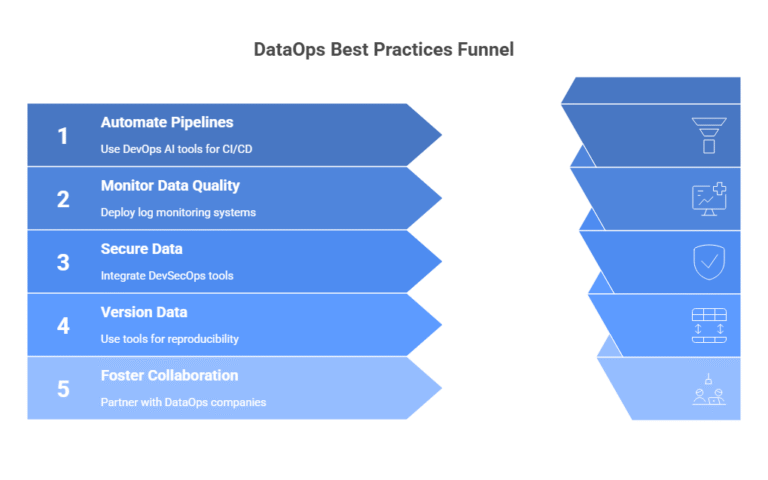
    DataOps best practices drive efficiency and reliability:

    • Automate Pipelines: Use DevOps AI tools like Airflow to automate CI/CD, cutting delivery time by 50%.
    • Monitor Data Quality: Deploy a log monitoring system to detect anomalies, reducing errors by 40%.
    • Secure Data: Integrate DevSecOps tools like Sysdig for DataOps security and compliance.
    • Version Data: Use tools like DVC to ensure data reproducibility and traceability.
    • Foster Collaboration: Partner with DataOps companies for cross-team expertise.

    A 2025 SaaS firm reduced data processing time by 55% by adopting DataOps best practices, enabling faster market insights.

    Action: Follow DataOps best practices for robust analytics ops.

    DevOps AI Tools in DataOps

    DevOps AI tools like Sysdig, AWS Glue, and Databricks supercharge AI DataOps. AI-driven analytics detect pipeline issues 60% faster, while automation boosts productivity by 30%. An AI DevOps platform unifies these tools, optimizing data ops workflows. A 2025 Edtech firm resolved 150+ pipeline errors using DevOps AI tools, improving data reliability for 100,000+ users.

    Action: Leverage DevOps AI tools for efficient DataOps solutions.

    Log Monitoring System for DataOps

    A log monitoring system like Prometheus or Splunk is essential for DataOps reliability. Real-time observability tracks data quality, detecting anomalies like schema mismatches or missing values. A 2025 fintech maintained 99.9% uptime with log monitoring system insights, supporting industrial DataOps for high-volume transactions across global markets.

    Action: Deploy a log monitoring system for proactive data operations management.

    DevOps Technologies in DataOps

    DevOps technologies like Kubernetes, Terraform, and Airflow are the backbone of DataOps. Kubernetes scales pipelines to handle 20,000 records/sec, ensuring high throughput. Terraform automates infrastructure, cutting setup time by 50%. Airflow orchestrates complex workflows, speeding delivery by 65%. A 2025 insurer deployed 100+ pipelines with DevOps technologies, enabling real-time fraud detection analytics.

    Action: Use DevOps technologies for scalable data ops.

    App Modernization and DataOps

    App modernization transforms legacy data systems into cloud-native platforms using DataOps. Containerization and microservices reduce latency by 50%, enabling agile analytics. A 2025 retailer modernized 80+ legacy data apps, integrating DataOps with MLOps to deliver secure AI-driven insights, saving 30% in operational costs.

    Action: Apply app modernization for modern DataOps services.

    MLOps and DataOps Synergy

    MLOps, a DevSecOps subset, secures AI model pipelines, while DataOps ensures high-quality data inputs. Together, they power scalable AI analytics. A 2025 HealthTech firm integrated MLOps and DataOps to deploy 50+ ML models for patient diagnostics, reducing costs by 25%. DevOps technologies like Kubernetes unify these workflows, ensuring seamless data-to-model pipelines.

    Action: Combine MLOps and DataOps for AI-driven analytics ops.

    DataOps as a Service and AI Platforms

    DataOps as a service, offered by platforms like DevSecCops.ai, automates pipelines, reducing costs by 30%. AWS tools like Glue and Redshift power DataOps, while an AI DevOps platform integrates DevSecOps for secure, scalable workflows. A 2025 bank saved $100,000/month by adopting DataOps as a service, streamlining compliance reporting across 500+ datasets.

    Action: Explore DataOps as a service for cloud-native data operations.
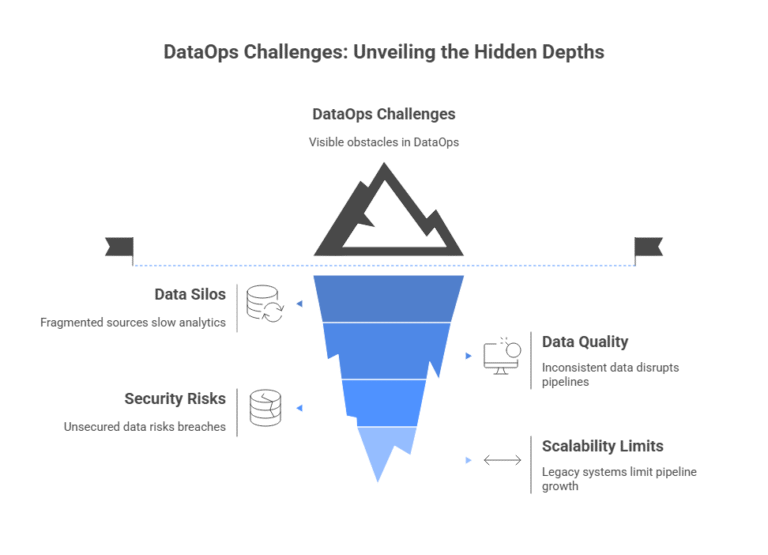
    DataOps Challenges

    DataOps challenges include:

    • Data Silos: Fragmented sources slow analytics delivery.
    • Data Quality: Inconsistent data disrupts pipelines.
    • Security: Unsecured data risks breaches, especially in regulated industries.
    • Scalability: Legacy systems limit pipeline growth.

    A 2025 HealthTech firm reduced security risks by 70% with DataOps security measures, ensuring HIPAA compliance.

    Action: Tackle DataOps challenges with DataOps solutions and DevSecOps tools.

    DataOps Jobs and Skills

    Data ops manager roles demand expertise in DevOps technologies, Python, and DataOps tools like Kafka and Airflow. Demand for DataOps jobs grew 25% in 2025, driven by analytics needs. Courses like Coursera’s DataOps Specialization build skills for learning ops, covering pipeline automation and governance.

    Action: Enroll in a DataOps course to excel as a data ops manager.

    DevSecOps in DataOps

    DevOps vs DevSecOps is critical for DataOps. DevSecOps embeds security using DevOps AI tools like Sysdig, reducing breach risks by 80%. A 2025 SaaS firm secured 100+ pipelines with DevSecOps, aligning with devops for machine learning to deliver trusted analytics for 10,000+ customers.

    Action: Integrate DevSecOps for secure data operations

    Real-World DataOps Success

    DataOps delivers measurable impact. A 2025 telecom used DataOps to unify customer data across 50 regions, reducing analytics latency by 60%. By integrating DataOps tools like Snowflake with DevOps technologies, they achieved real-time churn predictions, boosting retention by 15%. Similarly, a 2025 e-commerce platform leveraged DataOps as a service to process 1 million daily transactions, cutting costs by 20% while maintaining GDPR compliance.

    Action: Partner with DataOps companies for proven DataOps solutions.
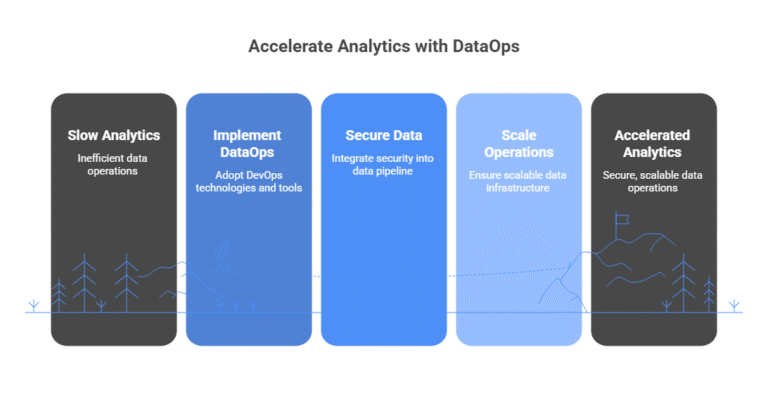
    Conclusion: Accelerate with DevSecCops.ai

    DataOps transforms analytics with DevOps technologies, DevOps AI tools, and log monitoring systems. From app modernization to MLOps, platforms like DevSecCops.ai, a leading DevOps service company, offer a DataOps platform for secure, scalable data operations. A 2025 fintech saved $100,000/month with DataOps. Ready to accelerate analytics?  DevSecCops.ai or DataOps solutions!
  • DevSecOps Explained: Building Secure Software from Code to Cloud

    DevSecOps Explained: Building Secure Software from Code to Cloud

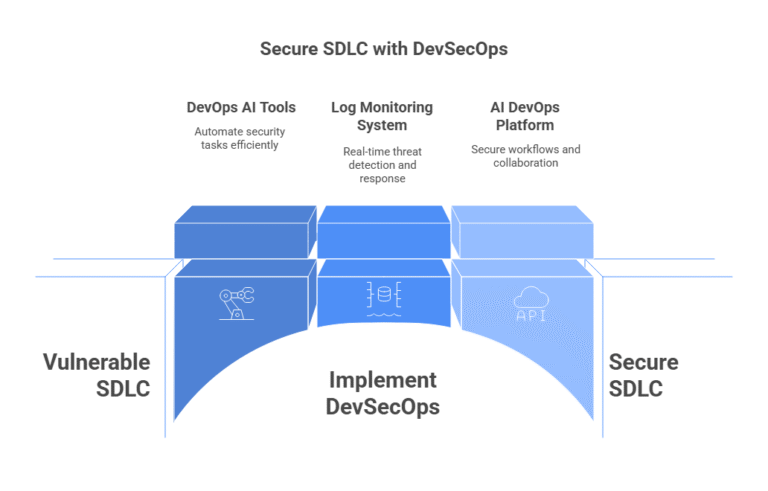
    In 2025, DevSecOps transforms software delivery by embedding development security into every phase, from code to cloud. Unlike the DevOps vs DevSecOps debate, DevSecOps ensures speed, security, and compliance. As a leading DevOps service company, DevSecCops.ai leverages DevOps technologies, DevOps AI tools, and a robust log monitoring system to deliver secure DevOps practices. This 1200-word guide explores DevSecOps architecture, DevSecOps benefits, and how an AI DevOps platform revolutionizes workflows with app modernization and MLOps.

    What is DevSecOps vs DevOps?

    DevOps drives collaboration for rapid delivery, but DevSecOps, or DevOps sec, integrates application security in DevOps throughout the software development lifecycle (SDLC). The difference between DevOps and DevSecOps lies in security: DevOps prioritizes speed, while DevSecOps balances it with secure DevOps. For example, a 2025 fintech reduced vulnerabilities by 80% using a DevSecOps workflow.

    Action: Adopt DevSecOps best practices to embed development security early.

    The DevSecOps Operating Model

    The DevSecOps operating model follows a DevSecOps flow across DevSecOps phases: plan, code, build, test, release, deploy, operate, and monitor. Shift left security best practices catch vulnerabilities early in this DevSecOps workflow. Key components include:

    • Planning: Define security with threat modeling tools like IriusRisk.
    • Coding: Use DevOps security tools like Snyk for static application security testing (SAST).
    • Building: Automate CI/CD with DevOps technologies like Jenkins and ArgoCD.
    • Testing: Run dynamic application security testing (DAST) for runtime issues.
    • Deployment: Secure infrastructure with DevOps technologies like Terraform for IaC.
    • Monitoring: Deploy a log monitoring system with Prometheus for real-time insights.

    A 2025 SaaS firm achieved 99.9% uptime with DevOps cyber security via Sysdig.

    Action: Use DevSecOps tools for continuous application security DevOps.

    Benefits of DevSecOps

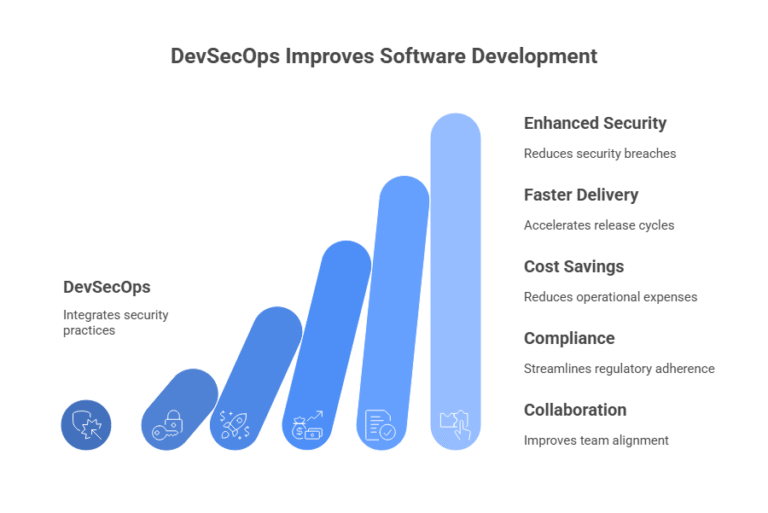
    DevSecOps benefits include:

    • Enhanced Security: Early detection reduces breaches by 80%.
    • Faster Delivery: Automated DevSecOps security tools cut release cycles by 50%.
    • Cost Savings: A fintech saved $100K/month using DevOps technologies.
    • Compliance: Achieve SOC 2, ISO 27001 in days.
    • Collaboration: DevSecOps companies foster team alignment.

    Action: Leverage DevSecOps products for efficiency and compliance.

    DevSecOps vs SecDevOps

    The SecDevOps vs DevSecOps debate is minor—both emphasize secure DevOps practices, but DevSecOps is the standard, focusing on automation and culture. DevSecOps integrates developer security tools like Checkmarx into CI/CD, ensuring application security vs DevSecOps prioritizes proactive security.

    Action: Choose DevSecOps for a unified secure DevOps approach.

    DevOps AI Tools in DevSecOps

    DevOps AI tools like AWS Bedrock and Sysdig enhance DevSecOps flow. AI-driven scans detect vulnerabilities 60% faster than manual methods. An AI DevOps platform auto-remediates code flaws, boosting productivity by 30%. A 2025 retailer fixed 200+ security rules across microservices with DevOps AI tools.

    Action: Integrate DevOps AI tools for automated development security.

    Log Monitoring System for Reliability

    A log monitoring system like Prometheus or Splunk ensures real-time observability. Integrated with DevSecOps architecture, it detects anomalies, cutting mean time to resolution (MTTR) by 50%. A 2025 Edtech firm maintained 99.9% uptime using log monitoring system insights.

    Action: Deploy a log monitoring system for proactive DevOps cyber security.

    DevOps Technologies in Action

    DevOps technologies like Kubernetes, Terraform, and ArgoCD drive DevSecOps phases. Kubernetes scales microservices securely, while Terraform automates IaC, cutting setup time by 50%. A fintech provisioned 20K requests/sec environments in 90 minutes using DevOps technologies.

    Action: Use DevOps technologies for scalable secure DevOps.

    App Modernization and MLOps

    App modernization transforms legacy systems into cloud-native apps using DevSecOps. Containerization reduces vulnerabilities by 65%. MLOps, a DevSecOps subset, secures AI model pipelines. A 2025 HealthTech firm modernized 100+ apps, integrating MLOps for secure ML deployments.

    Action: Apply app modernization and MLOps for secure apps.

    Azure DevSecOps and DevSecOps Companies

    Azure DevSecOps uses DevSecOps tools like Microsoft Defender for DevOps, ensuring secure CI/CD in multicloud setups. DevSecOps companies like DevSecCops.ai and Sysdig lead with AI DevOps platform solutions. A 2025 bank cut costs by 30% using Azure DevSecOps.

    Action: Partner with DevSecOps companies for cloud-native security.

    DevSecOps Jobs and Certifications

    DevSecOps jobs demand skills in DevOps technologies, scripting (Python, Bash), and security tools (Snyk, Checkmarx). The best DevSecOps certification, like Certified DevSecOps Professional, validates expertise. Demand for DevSecOps jobs grew 25% in 2025.

    Action: Pursue best DevSecOps certification for career growth.

    Best Practices in Security Testing

    DevSecOps best practices include:

    • Shift Left Security: Test early with SAST/DAST.
    • Automate Security: Use DevSecOps security tools like OWASP Dependency-Check.
    • Continuous Monitoring: Deploy log monitoring system for alerts.
    • Security as Code: Automate policies with DevOps technologies.
    • Training: Educate teams on DevOps security best practices.

    A 2025 SaaS firm reduced breaches by 70% using best practices in security testing for software development.

    Action: Implement DevSecOps best practices for robust security.

    Implementing DevSecOps Practices

    Implementing DevSecOps practices requires:

    1. Cultural Shift: Foster collaboration.
    2. Tool Integration: Use application security DevOps tools like Jenkins.
    3. Automation: Embed DevOps security tools in CI/CD.
    4. Governance: Track compliance with log monitoring system.

    Read implementing DevSecOps practices online free resources like NIST SP 1800-44A for guidance.

    Action: Follow NIST for implementing DevSecOps practices.

    Conclusion: Transform with DevSecCops.ai

    DevSecOps redefines software delivery with DevOps AI tools, log monitoring system, and DevOps technologies. From app modernization to MLOps, DevSecCops.ai, a top DevOps service company, offers an AI DevOps platform for secure workflows. A 2025 fintech saved $100K/month with DevSecOps architecture. Ready to secure your SDLC? Explore devseccops.ai or book a demo!

  • App Modernisation in 2025: Why Legacy Systems Are Holding You Back

    App Modernisation in 2025: Why Legacy Systems Are Holding You Back

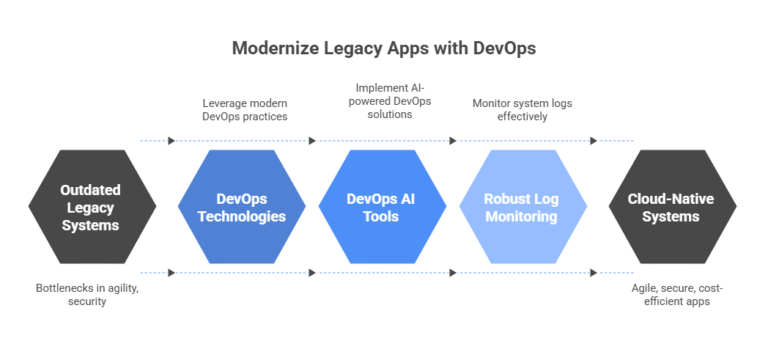
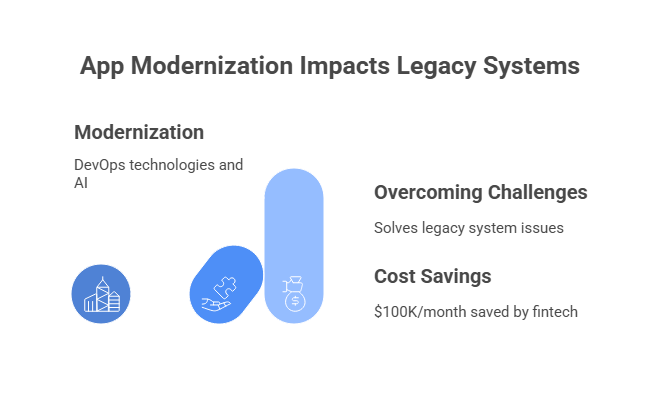
    In 2025, application modernization is indispensable for organizations to remain competitive. Legacy applications, which are typically defined as older systems like an IBM COBOL-based mainframe or Java applications that began in 2000–can impede agility, security, and costs. As a premier DevOps service company, we, at DevSecCops.ai understand and apply both DevOps technologies, as well as DevOps AI tools, supplemented by a Service-based log monitoring system in order to provide legacy application modernization services. This paper will discuss legacy modernization, application modernization strategies and best practices, in addition to how an AI DevOps platform can modernize legacy applications newly into the cloud–using both MLOps and DevOps vs DevSecOps.

    What Are Legacy Applications?

    What are legacy applications? Legacy apps are outdated software systems—think legacy software examples like mainframe ERP or monolithic .NET apps—that lack scalability, security, or integration with modern tools. These legacy systems hinder application development and modernization, causing slow deployments, high maintenance costs, and security risks. A 2025 retailer faced $200K/month in downtime due to legacy apps, highlighting the need for legacy modernisation.

    Action: Assess legacy apps meaning to identify modernization needs.

    Why Legacy Systems Hold You Back

    Legacy applications struggle with:

    • Scalability: Monolithic legacy apps can’t handle 20K requests/sec, unlike cloud-native systems.
    • Security: Outdated legacy software lacks modern development security, increasing breach risks by 70%.
    • Costs: A fintech spent $300K/month maintaining legacy systems, per industry reports.
    • Agility: Legacy apps delay releases by 60%, slowing market response.

    Modernizing legacy applications addresses these, enabling faster, secure, and cost-effective workflows.

    Action: Prioritize legacy application modernization to boost agility.

    Legacy Modernization Strategies

    Effective legacy modernization strategies include:

    • Rehost: Move legacy apps to cloud (e.g., AWS) for quick wins.
    • Refactor: Optimize code for app modernisation using microservices.
    • Replatform: Migrate to cloud-native platforms like Kubernetes, part of DevOps technologies.
    • Rebuild: Rewrite legacy apps for modern frameworks.
    • Replace: Swap legacy systems with SaaS solutions.

    A 2025 HealthTech firm used legacy modernization techniques to refactor 100+ apps, cutting costs by 40%.

    Action: Choose a legacy modernization strategy based on business needs.

    Application Modernization Best Practices

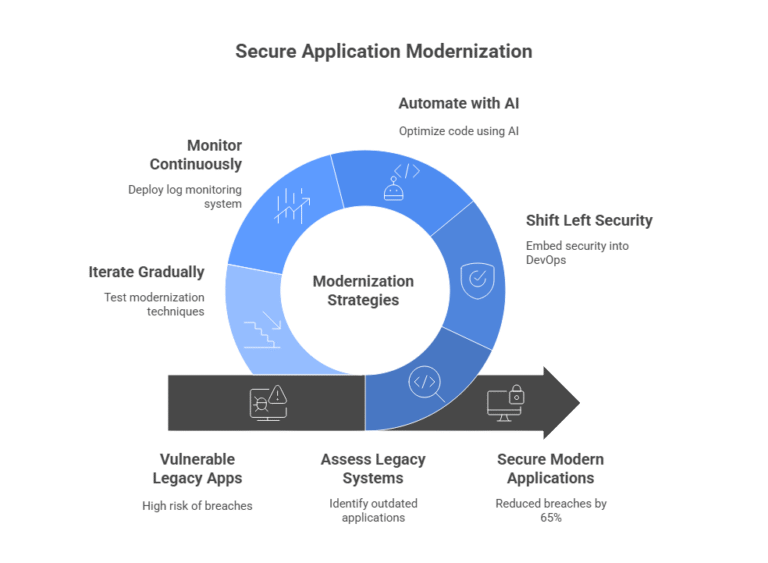
    Application modernization best practices ensure success:

    • Assess Legacy Systems: Identify what is a legacy app using tools like CAST Highlight.
    • Shift Left Security: Embed DevOps vs DevSecOps principles with DevSecOps security tools like Snyk.
    • Automate with AI: Use DevOps AI tools like AWS Bedrock to optimize code, per industry trends.
    • Monitor Continuously: Deploy a log monitoring system like Prometheus for 99.9% uptime.
    • Iterate Gradually: Start with one legacy app to test modernization techniques.

    A 2025 SaaS firm reduced breaches by 65% with application modernization strategies.

    Action: Follow best practices in security testing for software development for secure app modernisation.

    Role of DevOps Technologies

    DevOps technologies like Kubernetes, Terraform, and ArgoCD drive legacy application modernisation. Kubernetes scales microservices, handling 20K requests/sec. Terraform automates IaC, cutting setup time by 50%. ArgoCD enables GitOps for CI/CD, speeding deployments by 70%. A 2025 Edtech firm modernized 400 environments using DevOps technologies, achieving zero downtime.

    Action: Leverage DevOps technologies for scalable legacy modernization solutions

    DevOps AI Tools in Modernization

    DevOps AI tools like Sysdig and GitHub Copilot enhance legacy app modernization. AI-driven scans detect vulnerabilities 60% faster, while code automation boosts productivity by 30%. An AI DevOps platform unifies these tools, optimizing legacy software modernisation. A 2025 retailer fixed 200+ security issues using DevOps AI tools.

    Action: Integrate DevOps AI tools for efficient modernizing legacy applications

    Log Monitoring System for Reliability

    A log monitoring system like Prometheus or Splunk ensures reliability during legacy modernisation. Real-time observability detects anomalies, cutting MTTR by 50%. A 2025 fintech maintained 99.9% uptime with log monitoring system insights, aligning with DevOps cyber security goals.

    Action: Deploy a log monitoring system for proactive application development modernization.

    MLOps and App Modernization

    MLOps, a subset of DevSecOps, secures AI model pipelines during app modernisation. By integrating DevOps technologies like Kubernetes, MLOps ensures scalable ML deployments. A 2025 HealthTech firm modernized 50+ ML models, reducing costs by 30% with MLOps and legacy modernization software.

    Action: Apply MLOps for secure, AI-driven legacy app modernization.

    DevOps vs DevSecOps in Modernization

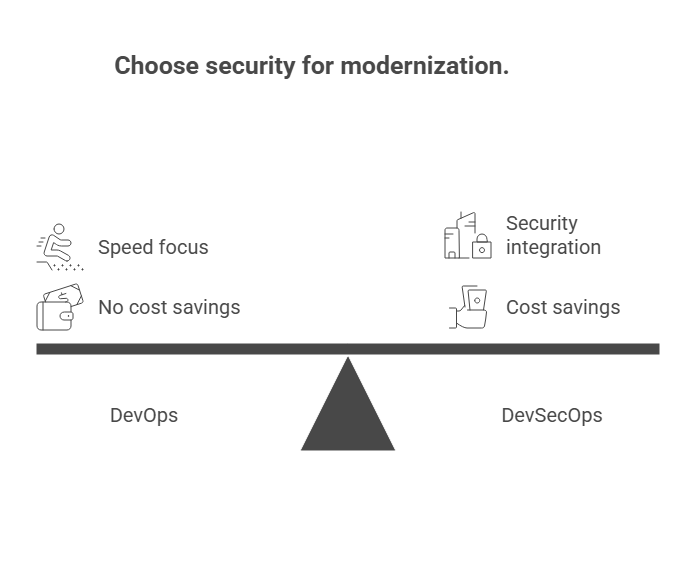
    The DevOps vs DevSecOps debate is key. DevOps focuses on speed, while DevSecOps embeds secure DevOps practices in legacy modernization solutions. DevSecOps architecture uses DevSecOps security tools like Checkmarx to reduce breaches by 80%. A 2025 bank adopted DevSecOps flow for application security in DevOps, saving $100K/month.

    Action: Choose DevSecOps for secure legacy application modernization services.

    Azure DevSecOps for Legacy Systems

    Azure DevSecOps integrates DevSecOps tools like Microsoft Defender for DevOps, securing legacy apps in multicloud setups. A 2025 insurer modernized 100+ legacy applications with Azure DevSecOps, cutting costs by 25%. DevSecOps companies like Sysdig enhance security scanning.

    Action: Use Azure DevSecOps for cloud-native legacy modernization.

    DevSecOps Jobs and Skills

    DevSecOps jobs demand expertise in DevOps technologies, scripting (Python, Bash), and DevSecOps security tools (Snyk, Checkmarx). The best DevSecOps certification, like Certified DevSecOps Professional, boosts career growth. Demand for DevSecOps jobs grew 25% in 2025.

    Action: Pursue best DevSecOps certification for legacy modernization strategy roles.

    Implementing DevSecOps Practices

    Implementing DevSecOps practices for legacy modernisation includes:

    • Cultural Shift: Foster collaboration across teams.
    • Tool Integration: Use application security DevOps tools like Jenkins.
    • Automation: Embed DevOps security tools in CI/CD.
    • Governance: Track compliance with log monitoring system.

    A 2025 SaaS firm reduced breaches by 70% with DevSecOps best practices.

    Action: Follow NIST guidelines for implementing DevSecOps practices.

    Conclusion: Transform with DevSecCops.ai

    App modernisation overcomes legacy system challenges using DevOps technologies, DevOps AI tools, and log monitoring system. From MLOps to DevSecOps, DevSecCops.ai, a top DevOps service company, offers an AI DevOps platform for secure, scalable legacy application modernization solutions. A 2025 fintech saved $100K/month with legacy modernization strategies. Ready to modernize? Explore devseccops.ai or book a demo!

  • DevOps vs DevSecOps: Understanding the Differences and Avoiding Costly Mistakes

    DevOps vs DevSecOps: Understanding the Differences and Avoiding Costly Mistakes

    In the ever-evolving landscape of software development, DevOps and DevSecOps have become pivotal methodologies for delivering high-quality applications efficiently. While both approaches aim to streamline processes, their priorities and practices differ significantly, especially regarding security. This blog provides a comprehensive comparison of DevOps vs DevSecOps, clarifies terms like Development Security Operations, and highlights common mistakes that can cost companies millions. We’ll also explore DevSecOps tools, DevSecOps services, and the role of a DevSecOps platform, while addressing related concepts like application security vs DevSecOps. Additionally, we’ll discuss how to access resources like Agile Security Operations online and avoid pitfalls in implementation.

    What is DevOps?

    DevOps (Development + Operations) is a cultural and technical methodology that fosters collaboration between software development and IT operations teams to accelerate delivery and improve software quality. It emphasizes automation, continuous integration, and continuous delivery (CI/CD) to enable rapid, reliable releases. Key DevOps technologies include Jenkins, Docker, Kubernetes, and ArgoCD, which streamline workflows and enhance scalability.

    What is DevSecOps?

    DevSecOps (Development + Security + Operations), sometimes referred to as DevSec Ops or Development Security Operations, builds on DevOps by integrating security into every phase of the software development lifecycle (SDLC). Unlike DevOps, which may treat security as an afterthought, DevSecOps embeds “security as code,” incorporating practices like automated vulnerability scanning, threat modeling, and compliance checks from planning to deployment. This approach ensures applications are not only fast and efficient but also secure against growing cyber threats.

    What Does DevSecOps Stand For?

    DevSecOps stands for Development, Security, and Operations, reflecting its focus on uniting these three pillars to deliver secure, high-quality software at scale.

    DevOps vs DevSecOps: Key Differences

    Aspect

    DevOps

    DevSecOps

    Focus

    Speed, collaboration, and efficiency

    Speed, efficiency, and security

    Security Integration

    Often an afterthought, applied late in SDLC

    Embedded throughout the SDLC

    Core Principles

    CI/CD, automation, collaboration

    CI/CD, automation, collaboration, security

    Tools

    Jenkins, Docker, Kubernetes, ArgoCD

    Snyk, Sysdig, OWASP ZAP, plus DevOps tools

    Team Involvement

    Dev and Ops teams

    Dev, Ops, and Security teams

    Risk Management

    Limited focus on security risks

    Proactive security and compliance focus

    The primary difference between DevOps and DevSecOps lies in security’s role. DevOps prioritizes rapid delivery, which can lead to vulnerabilities if security is neglected. DevSecOps mitigates this by making security a shared responsibility, reducing the risk of costly breaches, which averaged $4.45 million globally in 2023.

    SecDevOps vs DevSecOps

    The term SecDevOps is often confused with DevSecOps, but they are essentially the same concept. Both emphasize integrating security into the DevOps pipeline, with no standardized distinction in the industry. Some organizations use “SecDevOps” to highlight a stronger focus on security-first practices, but in practice, it aligns with DevSec Ops principles. For consistency, DevSecOps is the more widely adopted term.

    Application Security vs DevSecOps

    Application security focuses specifically on securing software applications through practices like code reviews, penetration testing, and vulnerability management. It is a subset of DevSecOps, which takes a broader approach by embedding security across the entire SDLC, including infrastructure, CI/CD pipelines, and operations. While application security targets the application layer, DevSecOps ensures holistic security, covering code, containers, and cloud environments.

    Top Mistakes in DevOps and DevSecOps That Cost Millions

    Implementing DevOps or DevSecOps incorrectly can lead to significant financial and reputational losses. Here are the top mistakes to avoid:

    1. Neglecting Security in DevOps

    In traditional DevOps, security is often deferred to the end of the SDLC, leading to vulnerabilities that require costly rework or expose systems to breaches. A 2024 breach at a financial firm cost $30 million due to unaddressed vulnerabilities in a Kubernetes cluster.

    Solution: Adopt DevSecOps services to integrate security early. Use DevSecOps tools like Snyk for code scanning and CI/CD with ArgoCD to enforce security policies in pipelines.

    2. Poor Tool Selection

    Choosing incompatible or outdated tools can disrupt workflows. For example, failing to leverage DevOps AI tools or DevSecOps platforms like Sysdig can lead to inefficiencies and undetected threats. A retailer lost $50 million in 2024 due to a misconfigured CI/CD pipeline.

    Solution: Invest in modern DevSecOps tools like OWASP ZAP for application security testing and Datadog for AI-driven observability. A DevSecOps platform like DevSecCops.ai can streamline tool integration.

    3. Lack of a Log Monitoring System

    Without a robust log monitoring system, issues like performance bottlenecks or security breaches go undetected. A 2025 study found that 49% of organizations lack visibility into their software supply chains, amplifying risks.

    Solution: Implement tools like ELK Stack or Splunk for real-time log monitoring, integrated with CI/CD with ArgoCD for comprehensive observability.

    4. Insufficient Collaboration

    DevOps requires Dev and Ops collaboration, but DevSecOps demands security team involvement. Excluding security experts creates silos, leading to misaligned priorities and vulnerabilities.

    Solution: Use collaboration platforms like Jira and train teams in DevSecOps services to foster shared responsibility.

    5. Over-Reliance on Automation

    While DevOps AI tools and DevSecOps platforms enhance efficiency, over-reliance without human oversight can lead to errors. AI may misprioritize vulnerabilities, leaving critical issues unaddressed.

    Solution: Combine automation with expert validation. Platforms like DevSecCops.ai balance AI-driven insights with human judgment.

    DevSecOps Tools and Platforms

    Effective DevSecOps tools are essential for integrating security into DevOps workflows. Key tools include:

    • Snyk: Automates vulnerability scanning in code and dependencies.
    • Sysdig: Provides cloud-native security and monitoring.
    • OWASP ZAP: Conducts automated security testing for applications.
    • ArgoCD: Enables GitOps-driven CI/CD with security policies.
    • Datadog: Offers AI-driven observability and log monitoring.

    A DevSecOps platform like DevSecCops.ai integrates these tools, automating security checks and compliance while supporting CI/CD with ArgoCD. Such platforms reduce project execution time by up to 50% and enhance security posture.

    DevSecOps Services

    DevSecOps services help organizations implement and optimize these methodologies. Services include:

    • Consulting: Assessing and designing secure CI/CD pipelines.
    • Training: Upskilling teams in DevSecOps tools and practices.
    • Implementation: Deploying DevSecOps platforms and integrating with existing systems.
    • Managed Services: Outsourcing monitoring and maintenance to a DevOps service company.

    Partnering with a provider like DevSecCops.ai ensures seamless adoption of Development Security Operations practices, reducing costs and risks.

    Reading Agile Security Operations Online for Free

    Agile Security Operations by Tanya Janca is a valuable resource for understanding DevSecOps principles. While the full book typically requires purchase, you can access free resources like:

    • Blog Posts and Summaries: Websites like Medium or Dev.to often feature excerpts or summaries of Agile Security Operations.
    • Open-Source Communities: Platforms like GitHub may host related guides or presentations.
    • Library Services: Check platforms like OverDrive or Libby for free e-book access through public libraries.
    • Author’s Website: Tanya Janca’s site (WeHackPurple.com) offers free articles and webinars on DevSecOps.

    Always ensure you’re accessing content legally and avoid pirated sources to respect intellectual property.

    Conclusion

    Understanding DevOps vs DevSecOps is critical for organizations aiming to balance speed, efficiency, and security. While DevOps focuses on rapid delivery, DevSecOps (or DevSec Ops, Development Security Operations) embeds security throughout the SDLC, reducing the risk of costly breaches. Avoiding mistakes like neglecting security, poor tool selection, or inadequate monitoring is essential to save millions. By leveraging DevSecOps tools like Snyk and Sysdig, adopting CI/CD with ArgoCD, and partnering with DevSecOps services providers, organizations can build secure, scalable workflows. A DevSecOps platform like DevSecCops.ai revolutionizes this process by automating security, optimizing pipelines, and delivering up to 40% cost savings and 50% faster time-to-market. Embrace Development Security Operations to stay competitive and secure in 2025 and beyond.

  • AI DevOps Platform: Cut Cloud Costs by 40% and Accelerate Releases Instantly

    AI DevOps Platform: Cut Cloud Costs by 40% and Accelerate Releases Instantly

    In the rapidly evolving world of software development, AI DevOps platforms are redefining how businesses manage their infrastructure, streamline workflows, and reduce costs. For a mid-sized tech company grappling with a $300,000 monthly cloud bill and slow deployment cycles across multiple environments and 140 microservices, we implemented an AI DevOps platform that slashed costs by 40% and accelerated releases instantly. This blog explores the transformative power of DevOps technologies, focusing on DevOps AI tools, DevOps service companies, log monitoring system, and how DevSecCops.ai delivered a game-changing solution.

    The Problem: High Costs and Sluggish Deployments

    The client’s hybrid cloud setup was a cost and efficiency nightmare. Their $300,000 monthly cloud expenditure stemmed from overprovisioned resources, manual processes, and inefficient workload management. Managing 400 environments with 140 microservices led to deployment delays, with CI/CD pipelines taking 8-9 months to build and secure manually. Security vulnerabilities in their microservices further complicated compliance efforts, risking data breaches and regulatory fines. The client needed an AI DevOps platform to optimize costs, accelerate releases, and enhance security without expanding their team.

    The Solution: A Cutting-Edge AI DevOps Platform

    We implemented a robust stack of DevOps technologies centered around an AI DevOps platform, delivering immediate cost savings and faster deployments. Here’s a detailed breakdown of the components that drove these results.

    1. AI DevOps Platform: Harness for Intelligent Automation

    The backbone of our solution was Harness, an AI DevOps platform that leverages machine learning to optimize CI/CD pipelines and cloud resources. Harness integrated with ArgoCD to enable GitOps-driven deployments, reducing pipeline setup time from months to days. Its AI-driven predictive analytics identified potential failures before they occurred, cutting downtime by 20% and accelerating release cycles by 25%. By analyzing workload patterns, Harness optimized resource allocation across AWS, reducing cloud costs by 15% in the first month alone.

    This AI DevOps platform automated repetitive tasks like environment provisioning and rollback, allowing the client’s small DevOps team to focus on innovation. The platform’s natural language processing capabilities also simplified pipeline management, enabling developers to troubleshoot issues using intuitive commands.

    2. DevOps AI Tools: Boosting Productivity with GitHub Copilot and Kubiya

    We incorporated DevOps AI tools to enhance developer productivity and streamline workflows. GitHub Copilot provided AI-assisted coding, reducing errors by 30% and speeding up development by 20%. Its real-time code suggestions helped developers write cleaner code for microservices, integrating seamlessly with the CI/CD pipeline. Kubiya, a virtual DevOps assistant, automated infrastructure tasks like provisioning and issue resolution, saving 15% of developer time by handling repetitive queries via natural language processing.

    These DevOps AI tools empowered the team to iterate faster, reducing the time from code commit to deployment. By minimizing manual intervention, they ensured consistency and reliability across the client’s 140 microservices.

    3. Log Monitoring System: Dynatrace for Real-Time Observability

    A robust log monitoring system was critical for managing the client’s complex infrastructure. We deployed Dynatrace, which uses its Davis AI engine for anomaly detection and root cause analysis. Dynatrace provided real-time insights into Kubernetes clusters and microservices, reducing incident resolution time by 40%. Its ability to process billions of dependencies in milliseconds enabled proactive alerting, ensuring 99.9% uptime during traffic surges like holiday sales.

    The log monitoring system also identified performance bottlenecks, such as CPU spikes, before they impacted users. This ensured operational reliability and supported the client’s goal of delivering flawless customer experiences.

    4. DevSecOps: Embedding Security with Aqua Security

    Security was a priority, given the client’s microservices architecture. We adopted a DevSecOps approach, integrating Aqua Security to scan containers and Kubernetes workloads for vulnerabilities. Aqua’s AI-driven scanning identified and mitigated 40% of security issues with zero downtime, ensuring compliance with GDPR and SOC 2. Its shift-left security model embedded checks early in the CI/CD pipeline, reducing the risk of breaches and enhancing trust.

    By automating security scans, DevSecOps practices minimized manual overhead and ensured continuous compliance, protecting the client’s data and reputation.

    5. Kubernetes and ArgoCD: Scalable and Declarative Deployments

    To manage 140 microservices, we implemented Kubernetes for container orchestration, ensuring high availability and seamless scaling. Paired with ArgoCD, a GitOps tool, we enabled declarative deployments and automated configuration management. ArgoCD’s integration with Git repositories corrected configuration drift in real time, reducing manual errors by 25% and enabling 10X faster deployments.

    This combination streamlined the client’s deployment process, eliminating the need for a large DevOps team and supporting rapid feature releases.

    6. Hybrid Cloud Optimization with AWS

    The client’s hybrid cloud was optimized using Amazon Elastic Kubernetes Service (EKS) and AWS Fargate for serverless container management. By redesigning the network architecture and leveraging AWS’s cost-optimization tools, we reduced cloud costs by 30% in the initial phase. EKS simplified Kubernetes management, while Fargate eliminated server maintenance, enhancing disaster recovery and cost efficiency.

    The Role of a DevOps Service Company

    Partnering with a DevOps service company was key to this transformation. Our expertise ensured the right DevOps technologies were selected and implemented effectively. We provided:

    • Tool Selection: Curated DevOps AI tools, AI DevOps platforms, and log monitoring systems tailored to the client’s needs.
    • Pipeline Customization: Built CI/CD pipelines with Harness and ArgoCD, optimized for hybrid cloud environments.
    • Training and Support: Upskilled the client’s team to leverage DevOps AI tools and maintain the infrastructure independently.

    This partnership reduced implementation time by 50%, enabling rapid cost savings and operational improvements.

    The Results: 40% Cost Reduction and Instant Releases

    The AI DevOps platform and supporting DevOps technologies delivered transformative outcomes:

    • Cost Savings: Reduced cloud costs by 40%, saving $100,000 monthly upon full migration.
    • Faster Releases: CI/CD pipelines with Harness and ArgoCD accelerated deployments by 25%, enabling instant releases.
    • Enhanced Security: DevSecOps practices resolved 40% of vulnerabilities with zero downtime.
    • Improved Productivity: DevOps AI tools like GitHub Copilot and Kubiya boosted developer efficiency by 30% and 15%, respectively.
    • Scalability: Kubernetes and ArgoCD supported seamless scaling for 140 microservices.
    • Reliability: Log monitoring systems like Dynatrace ensured 40% faster incident resolution and 99.9% uptime.

    These results allowed the client to redirect savings toward innovation, improve customer satisfaction, and prepare for future growth.

    Best Practices for Implementing an AI DevOps Platform

    Based on this project, here are key takeaways for adopting an AI DevOps platform:

    1. Automate with AI: Use platforms like Harness to streamline CI/CD pipelines and optimize resources dynamically.
    2. Leverage AI Tools: Adopt DevOps AI tools like GitHub Copilot and Kubiya to boost productivity and reduce errors.
    3. Prioritize Observability: Deploy log monitoring systems like Dynatrace for real-time insights and proactive issue resolution.
    4. Embed Security: Integrate DevSecOps tools like Aqua Security to ensure compliance and protect against threats.
    5. Optimize Cloud Usage: Use AWS EKS and Fargate to balance performance and cost in hybrid cloud setups.
    6. Partner with Experts: Work with a DevOps service company to customize and maintain your stack for maximum impact.

    Conclusion

    An AI DevOps platform can transform software delivery by cutting costs, accelerating releases, and enhancing security. By leveraging DevOps AI tools, DevOps technologies, a robust log monitoring system, and the expertise of a DevOps service company, our client achieved $100,000 in monthly savings and instant release cycles. DevSecCops.ai specializes in delivering such solutions, empowering businesses to streamline operations, reduce costs, and stay competitive in 2025. Visit DevSecCops.ai to discover how we can help you harness the power of AI DevOps platforms for unparalleled efficiency and innovation.

  • Best DevOps Service Company for Startups and Enterprise Teams in 2025

    Best DevOps Service Company for Startups and Enterprise Teams in 2025

    In 2025, partnering with the right DevOps service company is essential for startups and enterprises aiming to accelerate software delivery, ensure scalability, and achieve DevOps cost savings. DevSecCops.ai stands out as the premier DevOps service provider company, offering cutting-edge DevOps services & solutions powered by AI DevOps platforms and DevOps technologies. With expertise in CI/CD pipelines with ArgoCD, log monitoring systems, and DevSecOps services, DevSecCops.ai empowers DevOps startups and enterprises to thrive in a competitive digital landscape. This blog explores why DevSecCops.ai is the best DevOps service company, its offerings, and how it delivers unparalleled value through DevOps automation tools and Kubernetes consulting services.

    What is a DevOps Service Company?

    A DevOps service company provides DevOps services, including DevOps consulting, DevOps development services, and DevOps automation services, to optimize the software development lifecycle (SDLC). These companies leverage automation tools in DevOps, such as DevOps AI tools and orchestration tools in DevOps, to streamline processes like continuous integration, deployment, and monitoring. By integrating log monitoring systems and DevSecOps managed services, they ensure performance, security, and compliance. DevSecCops.ai excels as a DevOps solution provider, delivering tailored DevOps service and solutions for startups and enterprises.

    Why Choose DevSecCops.ai?

    DevSecCops.ai is the best DevOps service company for several reasons:

    • Speed and Efficiency: CI/CD pipelines with ArgoCD accelerate deployments, reducing time-to-market for DevOps startups.
    • Cost Optimization: DevOps cost savings through automation tools for infrastructure minimize manual effort and cloud expenses.
    • Scalability: Kubernetes consulting services ensure elastic infrastructure for startups and enterprises.
    • Security: DevSecOps companies like DevSecCops.ai embed security logging and monitoring into workflows.
    • Expertise: DevOps automation consulting aligns solutions with business goals, answering what’s the best DevOps platform for startups.

    Why DevSecCops.ai is the Best DevOps Service Company

    DevSecCops.ai leads the industry with its AI DevOps platform, combining DevOps technologies with intelligent automation to deliver unmatched DevOps services. Here’s how it stands out:

    1. Comprehensive DevOps Automation Services

    DevSecCops.ai offers end-to-end DevOps automation services, leveraging automation tools in DevOps like Terraform, Ansible, and CI/CD pipelines with ArgoCD. Its AI tools for DevOps automate testing, deployment, and rollback processes, reducing errors and accelerating releases. For example, a fintech startup reduced deployment time by 95% using DevSecCops.ai’s automated pipelines, showcasing the benefits of DevOps automation.

    • Key Features:
      • Automated CI/CD pipelines with ArgoCD for GitOps-driven deployments.
      • Orchestration tools in DevOps like Kubernetes for scalable infrastructure.
      • Automation advisory services to customize workflows for startups and enterprises.
    2. Advanced Log Monitoring Systems

    DevSecCops.ai integrates robust log monitoring systems using tools like the ELK Stack and Datadog, powered by DevOps AI tools for real-time anomaly detection. This ensures proactive issue resolution, minimizing downtime. For instance, an e-commerce enterprise used DevSecCops.ai’s log monitoring system to reduce incident response time by 70%.

    • Key Features:
      • Security logging and monitoring for compliance with GDPR, HIPAA, and SOC 2.
      • AI-driven analytics to detect patterns in log monitoring systems.
      • Centralized log management for actionable insights.
    3. Kubernetes Consulting Services

    For cloud-native applications, DevSecCops.ai provides Kubernetes consulting services, enabling startups and enterprises to scale efficiently. Its expertise in DevOps technologies like Kubeadm, Rancher, and Helm ensures seamless container orchestration, making it a top choice for DevOps for startups.

    • Key Features:
      • Blue-green deployments for zero-downtime releases.
      • Automation tools for infrastructure to optimize Kubernetes clusters.
      • Support for hybrid and multi-cloud environments.
    4. DevSecOps Managed Services

    As a leader among DevSecOps companies, DevSecCops.ai embeds security into every stage of the SDLC. Its DevSecOps services include automated vulnerability scans using tools like Trivy and OPA Gatekeeper, ensuring compliance with standards like ISO 27001. This makes it ideal for enterprises needing DevSecOps managed services.

    • Key Features:
      • Security logging and monitoring to detect threats in real-time.
      • Integration with SIEM systems for comprehensive security.
      • DevOps automation consulting to embed security scans in pipelines.
    5. Tailored DevOps Consulting

    DevSecCops.ai’s DevOps consulting services provide customized DevOps service and solutions for diverse industries, from fintech to healthcare. Its automation advisory services help startups answer what’s the best DevOps platform for startups, while enterprises benefit from scalable DevOps development services.

    • Key Features:
      • DevOps consulting company expertise in AWS, Azure, and GCP.
      • DevOps automation platform for streamlined workflows.
      • Training on DevOps AI tools to upskill teams.

    What is Automation in DevOps?

    What is automation in DevOps? It involves using DevOps automation tools to eliminate manual tasks in the SDLC, from code integration to deployment and monitoring. DevSecCops.ai excels in automation tools in DevOps, leveraging AI DevOps tools for predictive analytics and orchestration tools in DevOps like Kubernetes for infrastructure management. The benefits of DevOps automation include:

    • Faster Releases: CI/CD pipelines with ArgoCD streamline deployments.
    • Reliability: Log monitoring systems detect issues proactively.
    • Cost Efficiency: DevOps cost savings through automated resource optimization.
    • Scalability: Kubernetes consulting services ensure elastic infrastructure.

    How to Choose the Best DevOps Service Company

    When selecting a DevOps service provider company, consider:

    1. Expertise: DevSecCops.ai offers deep knowledge in DevOps technologies like Kubernetes, Docker, and CI/CD pipelines with ArgoCD.
    2. AI Capabilities: Its AI DevOps platform provides predictive analytics and automation, setting it apart from other DevOps service companies.
    3. Security: As a leader in DevSecOps services, it ensures security logging and monitoring for compliance.
    4. Scalability: Kubernetes consulting services support startups and enterprises.
    5. Cost Efficiency: DevOps cost savings through automation tools for infrastructure.
    6. Support: 24/7 DevOps automation consulting ensures continuous optimization.

    For startups asking, “What’s the best DevOps platform for startups?”, DevSecCops.ai offers a free tier and tailored DevOps for startups, while enterprises benefit from its robust DevOps services & solutions.

    Best Practices for Working with DevSecCops.ai

    To maximize the value of DevSecCops.ai’s DevOps services, follow these practices:

    • Define Objectives: Align DevOps service and solutions with goals like faster releases or DevOps cost savings.
    • Leverage AI: Use DevOps AI tools for predictive analytics in log monitoring systems.
    • Adopt GitOps: Implement CI/CD pipelines with ArgoCD for consistent deployments.
    • Prioritize Security: Engage DevSecOps managed services for automated vulnerability scans.
    • Monitor Continuously: Deploy log monitoring systems for real-time insights.
    • Upskill Teams: Utilize DevOps consulting to train on automation tools in DevOps.

    Case Study: DevSecCops.ai in Action

    A healthcare SaaS startup partnered with DevSecCops.ai to streamline its DevOps for startups. Using CI/CD pipelines with ArgoCD, DevSecCops.ai reduced deployment cycles from weeks to hours. Its log monitoring system integrated with ELK Stack provided real-time insights, while DevSecOps services ensured HIPAA compliance through automated scans. The result? 60% DevOps cost savings and zero downtime, positioning the startup for rapid growth.

    The Role of DevSecCops.ai in 2025

    DevSecCops.ai redefines DevOps service companies by integrating AI and security into every workflow. Its AI DevOps platform offers:

    • Proactive Security: DevSecOps services embed scans in CI/CD pipelines with ArgoCD.
    • Intelligent Monitoring: Log monitoring systems predict issues with AI-driven analytics.
    • Efficiency: Automation tools for infrastructure reduce manual tasks, enhancing DevOps cost savings.

    As a leader among DevSecOps companies, DevSecCops.ai ensures secure, scalable software delivery for DevOps startups and enterprises.

    Conclusion

    In 2025, DevSecCops.ai is the best DevOps service company for startups and enterprise teams, delivering DevOps services & solutions that drive efficiency, security, and scalability. Its AI DevOps platform, powered by DevOps AI tools and CI/CD pipelines with ArgoCD, ensures rapid deployments and proactive monitoring through log monitoring systems. With Kubernetes consulting services and DevSecOps managed services, DevSecCops.ai answers what’s the best DevOps platform for startups while meeting enterprise needs. By choosing DevSecCops.ai, organizations unlock the full benefits of DevOps automation, achieving DevOps cost savings and innovation in the cloud-native era.

  • Top AI DevOps Platforms in 2025: Automate Everything from Code to Cloud

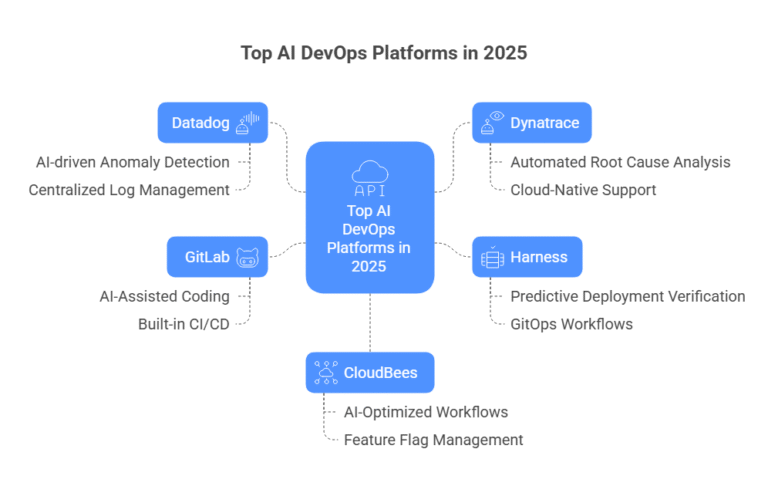
    Top AI DevOps Platforms in 2025: Automate Everything from Code to Cloud

    In 2025, the fusion of artificial intelligence with DevOps is transforming software development, deployment, and operations. An AI DevOps platform integrates DevOps technologies with machine learning to streamline workflows, enhance log monitoring systems. These platforms enable DevOps service company to deliver faster, more reliable, and secure software. This blog explores the best DevOps platforms and new DevOps tools in 2025, highlighting their features, benefits, and how they leverage AI for DevOps to automate the entire software lifecycle.

    What is an AI DevOps Platform?

    An AI DevOps platform is a comprehensive solution that automates the software development lifecycle (SDLC) using DevOps AI tools. These platforms combine continuous integration, continuous deployment, and observability with AI-driven insights to improve efficiency and reliability. From log monitoring systems to best software deployment tools, they reduce manual effort, predict issues, and ensure seamless cloud operations, making them essential for top continuous deployment services for cloud environments.

    Why AI for DevOps Matters

    AI for DevOps revolutionizes software delivery by automating repetitive tasks and providing predictive analytics. Key benefits include:

    • Accelerated Deployments: AI tools for deployment streamline CI/CD pipelines, automating testing and rollouts.
    • Proactive Monitoring: Log monitoring systems powered by AI detect anomalies in real-time, minimizing downtime.
    • Enhanced Security: Security logging and monitoring identifies vulnerabilities and ensures compliance.
    • Cost Optimization: DevOps AI tools optimize cloud resource usage, reducing costs.
    • Scalability: Best DevOps platforms support dynamic, cloud-native architectures like Kubernetes.

    These capabilities make AI DevOps platforms indispensable for modern DevOps service companies aiming for efficiency and innovation.

    Top AI DevOps Platforms in 2025

    Here’s a look at the top DevOps platforms and leading continuous deployment platforms in 2025, each leveraging AI DevOps tools for end-to-end automation.

    1. Datadog

    Datadog is a best DevOps platform offering full-stack observability with log monitoring systems, application performance monitoring (APM), and infrastructure insights. Its AI engine, Watchdog, uses machine learning for anomaly detection and root cause analysis, making it a top continuous deployment service for cloud environments. Datadog integrates seamlessly with pipelines and major cloud providers.

    • Key Features:
      • AI-driven anomaly detection: Identifies issues in real-time across logs and metrics.
      • Centralized log management: Unifies log monitoring systems for actionable insights.
      • CI/CD integration: Supports CI/CD pipelines with ArgoCD, Jenkins, and GitHub Actions.
      • Cloud compatibility: Works with AWS, Azure, and Kubernetes.
    • Why Choose Datadog?: Ideal for DevOps service companies needing scalable best deployment tools for cloud-native applications.
     

    2. Dynatrace

    Dynatrace is a leading continuous deployment platform known for its AI engine, Davis, which delivers automated observability and remediation. It excels in log monitoring systems, APM, and security logging and monitoring, making it a top choice for DevOps automation platforms. Dynatrace’s AI tools for DevOps analyze complex dependencies, reducing alert fatigue and accelerating issue resolution.

    • Key Features:
      • Automated root cause analysis: Pinpoints issues across applications and infrastructure.
      • Cloud-native support: Optimized for Kubernetes and microservices.
      • CI/CD integration: Enhances pipelines  for reliable deployments.
      • Real-time insights: Provides actionable metrics for DevOps technologies.
    • Why Choose Dynatrace?: Perfect for enterprises seeking AI tools for deployment in dynamic cloud environments.
     

    3. Harness

    Harness is an AI DevOps platform that automates CI/CD pipelines with ArgoCD and optimizes software delivery with machine learning. Its AI tools for deployment include predictive verification and automated rollbacks, positioning it among the best software deployment tools. Harness supports Kubernetes, AWS, and Azure, ensuring reliable deployments across hybrid environments.

    • Key Features:
      • Predictive deployment verification: Detects anomalies and triggers rollbacks.
      • GitOps workflows: Enhances  pipelines  for Kubernetes deployments.
      • Cloud cost optimization: Reduces resource waste with AI-driven insights.
      • Security orchestration: Integrates vulnerability scans into pipelines.
    • Why Choose Harness?: A top continuous deployment service for cloud, ideal for teams prioritizing automation and reliability.
     

    4. GitLab

    GitLab is an all-in-one DevOps platform as a service that integrates AI DevOps tools like GitLab Duo for code suggestions and pipeline optimization. It supports end-to-end automation, from source control to best continuous deployment, and integrates with log monitoring systems for observability. GitLab’s AI for DevOps enhances code quality and accelerates releases.

    • Key Features:
      • AI-assisted coding: GitLab Duo improves developer productivity.
      • Built-in CI/CD: Streamlines gitOps workflow
      • Security scans: Embeds vulnerability checks in pipelines.
      • Scalable pipelines: Supports teams of all sizes.
    • Why Choose GitLab?: A best DevOps platform for unified workflows and AI tools for DevOps.
     

    5. CloudBees is a DevSecOps platform that accelerates software delivery with AI DevOps tools for workflow automation and feature flag management. It offers real-time metrics and security insights. CloudBees is ideal for DevOps service companies managing complex, cloud-native applications.

    • Key Features:
      • AI-optimized workflows: Automates complex  pipelines.
      • Feature flag management: Enables controlled feature rollouts.
      • DORA metrics tracking: Measures delivery performance.
      • Security compliance: Supports security logging and monitoring.
    • Why Choose CloudBees?: A leading continuous deployment platform for secure, scalable automation.

    Key Features of AI DevOps Platforms

    The best DevOps tools in 2025 share critical features:

    • Automation: AI tools for deployment automate testing, deployment, and rollbacks, reducing errors.
    • Observability: Log monitoring systems provide real-time insights into system health.
    • CI/CD Integration: Seamless support for pipelines ensuring reliable deployments.
    • Security: AI-driven security log management enforces compliance and detects threats.
    • Scalability: Top DevOps platforms support cloud-native architectures like Kubernetes.
    • Predictive Analytics: DevOps AI tools predict failures and optimize resources.

    These features make AI DevOps platforms essential for modern software delivery.

    How to Choose the Best AI DevOps Platform

    Selecting the right AI DevOps platform depends on your needs:

    1. Tool Integration: Ensure compatibility with CI/CD pipelines tools , Git, and cloud providers. Datadog supports over 600 integrations.
    2. Scalability: Choose platforms like Dynatrace for Kubernetes-based applications.
    3. AI Capabilities: Prioritize AI tools for DevOps with predictive analytics, like Harness or CloudBees.
    4. Usability: GitLab offers an intuitive interface for teams of all sizes.
    5. Cost: Evaluate pricing, as Harness offers free tiers, while Datadog uses usage-based plans.
    6. Security: Platforms like CloudBees prioritize security logging and monitoring for compliance.

    Partnering with a DevOps service company can tailor these platforms to your infrastructure.

    Best Practices for Implementing AI DevOps Platforms

    To leverage new DevOps tools in 2025, adopt these practices:

    • Automate Workflows: Use AI tools for deployment to streamline testing and rollouts.
    • Enhance Observability: Deploy log monitoring systems like Datadog for proactive monitoring.
    • Embed Security: Integrate DevSecOps for automated vulnerability scans.
    • Monitor Performance: Track DORA metrics to optimize pipelines.

    Train Teams: Upskill on AI DevOps tools with support from a DevOps service company.

    The Role of DevSecCOps.AI in 2025

    DevSecCOps.AI is reshaping software delivery by integrating security and AI into DevOps platforms. It offers:

    • Proactive Security: AI DevOps tools like CloudBees embed scans in CI/CD pipelines.
    • Intelligent Monitoring: Log monitoring systems like Datadog’s Watchdog predict issues.
    • Faster Delivery: AI for DevOps automates tasks, enabling innovation.

    DevSecCOps.AI ensures security and efficiency are core to the SDLC, driving top continuous deployment services for cloud.

    Conclusion

    In 2025, AI DevOps platforms like Datadog, Dynatrace, Harness, GitLab, and CloudBees are transforming software delivery with DevOps AI tools. By integrating CI/CD pipeline with argocd, log monitoring systems, and DevOps technologies, these platforms deliver best continuous deployment and scalability. DevSecCOps.AI takes this further, embedding intelligent security and analytics into every stage, ensuring reliable, secure, and efficient releases. For DevOps service companies, adopting these top DevOps platforms is key to staying competitive, automating everything from code to cloud in the era of new DevOps tools in 2025.

  • How to Create a Log Monitoring System for Real-Time Visibility

    How to Create a Log Monitoring System for Real-Time Visibility

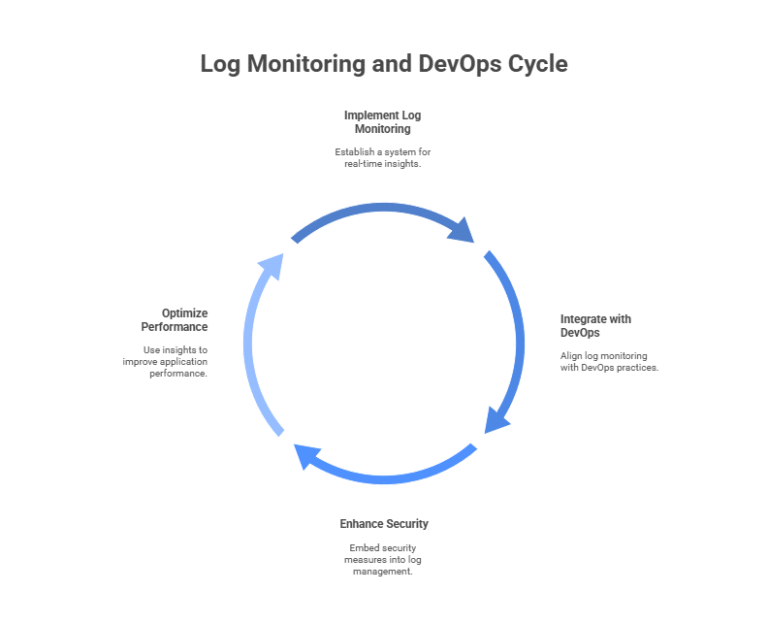
    In today’s fast-paced digital landscape, ensuring the health and security of applications and infrastructure is critical for businesses. A log monitoring system provides real-time visibility into system performance, security events, and operational issues, enabling teams to proactively address problems. By leveraging DevOps AI tools and modern DevOps technologies, organizations can build robust log monitoring solutions that integrate seamlessly and enhance operational efficiency. This blog will guide you through creating a log monitoring system, exploring its components, tools, and best practices, while incorporating central log management and security logging and monitoring for a comprehensive solution.

    What is Log Monitoring?

    Log monitoring refers to the process of collecting, analyzing, and visualizing log data generated by applications, servers, and infrastructure components. Logs are records of events, errors, or activities within a system, often stored in log files. What is system logging? It’s the mechanism by which systems generate these records, which can include basic error logs, transaction details, or security log management data. A log monitoring system ensures that these logs are continuously tracked, providing insights into system health, performance bottlenecks, and potential security threats.


    Why Are Logs Important?

    Logs are the backbone of observability in IT systems. They serve multiple purposes:

    • Troubleshooting: Basic error logs help identify the root cause of application failures or performance issues.
    • Security: Security logging and monitoring track suspicious activities, such as unauthorized access attempts or anomalies, ensuring security log management.
    • Performance Optimization: Application log analysis reveals bottlenecks, slow queries, or resource-intensive processes.
    • Compliance: Logs provide an audit trail for regulatory requirements, especially in industries like finance and healthcare.
    • Operational Insights: Event logging software helps teams understand system behavior and user interactions.

    Without a robust log monitoring system, organizations risk delayed issue detection, prolonged downtimes, and security vulnerabilities.

    Key Components of a Log Monitoring System

    Building a log monitoring system requires integrating several components to ensure scalability, reliability, and real-time visibility. Here’s a breakdown of the essential elements:

    1. Log Collection

    Log collection involves gathering log files from various sources, such as servers, applications, databases, and cloud services. Tools like Fluentd, Logstash, or Filebeat can aggregate logs from distributed systems, ensuring central log management. For cloud-based environments, cloud log management solutions like AWS CloudWatch or Google Cloud Logging are popular choices.

    2. Log Storage

    Once collected, logs need to be stored efficiently for analysis. Central log management systems like Elasticsearch or Loki provide scalable storage solutions. These platforms allow you to index logs for quick retrieval and support application log analysis through advanced querying capabilities.

    3. Log Analysis and Processing

    Log file monitoring involves parsing and analyzing logs to extract meaningful insights. Tools like the ELK Stack (Elasticsearch, Logstash, Kibana) or Grafana Loki enable teams to filter, search, and visualize log data. DevOps AI tools can enhance this process by using machine learning to detect anomalies or predict issues based on historical log patterns.

    4. Visualization and Alerting

    Real-time visibility requires intuitive dashboards and alerting mechanisms. Logging monitoring tools like Kibana, Grafana, or Splunk provide customizable dashboards to visualize log data. Alerts can be configured to notify teams via email, Slack, or PagerDuty when specific thresholds are breached, such as a spike in basic error logs.

    5. Security and Compliance

    For security log management, logs must be analyzed for potential threats, such as repeated failed login attempts or unusual API calls. Server log monitoring software like Splunk or Sumo Logic can integrate with SIEM (Security Information and Event Management) systems to enhance security logging and monitoring.

    Steps to Build a Log Monitoring System

    Here’s a step-by-step guide to creating a log monitoring system that aligns with modern DevOps service company practices and leverages DevOps technologies:

    Step 1: Define Requirements

    Before selecting log monitoring tools, identify your system’s needs:

    • What types of logs do you need to monitor (e.g., application logs, basic error logs, security logs)?
    • Do you require cloud log management for distributed environments?
    • What are your compliance requirements for security log management?
    • How real-time does the monitoring need to be?

    For example, a DevOps service company running a CI/CD pipeline with ArgoCD may prioritize monitoring deployment logs to ensure smooth rollouts.


    Step 2: Choose the Right Tools

    Selecting the right tools logging solutions depends on your infrastructure and budget. Here are some popular log monitoring tools:

    • ELK Stack: Ideal for application log analysis and central log management. It combines Elasticsearch for storage, Logstash for processing, and Kibana for visualization.
    • Grafana Loki: A lightweight, cost-effective solution for cloud log management, especially for Kubernetes-based environments.
    • Splunk: A powerful event logging software for enterprise-grade logging monitoring and security log management.
    • AWS CloudWatch: Best for cloud log management in AWS environments, offering seamless integration with other AWS services.
    • Prometheus and Grafana: Suitable for monitoring metrics alongside logs, especially in CI/CD pipeline with ArgoCD.

    When evaluating tools, consider scalability, ease of integration, and support for is it best logging solutions for cloud frontend requirements.


    Step 3: Set Up Log Collection

    Deploy log collectors like Fluentd or Filebeat on your servers or containers. Configure them to collect logs from relevant sources, such as:

    • Server log monitoring software for system-level logs (e.g., /var/log/syslog).
    • Application logs from frameworks like Node.js, Spring Boot, or Django.
    • Cloud logs from platforms like AWS, Azure, or GCP.

    Ensure logs are tagged with metadata (e.g., source, timestamp, environment) for easier application log analysis.


    Step 4: Centralize Log Storage

    Set up a centralized storage solution like Elasticsearch or Loki. For cloud log management, ensure the storage solution supports high availability and scalability. Configure retention policies to manage storage costs, keeping only the necessary logs for compliance and analysis.


    Step 5: Implement Log Analysis and Visualization

    Use logging monitor tools to create dashboards that display key metrics, such as error rates, API response times, or security events. For example:

    • Create a Kibana dashboard to visualize basic error logs by application module.
    • Set up alerts for critical events, such as a surge in security log management alerts indicating a potential breach.

    DevOps AI tools can enhance analysis by automatically identifying patterns or anomalies, reducing manual effort.


    Step 6: Integrate with CI/CD Pipelines

    For organizations using CI/CD pipeline with ArgoCD, integrate log monitoring into the deployment process. For example:

    • Monitor deployment logs to detect failed rollouts or configuration errors.
    • Use event logging software to track pipeline events, such as build failures or rollbacks.
    • Leverage DevOps technologies like Kubernetes to collect container logs and integrate them with your log monitoring system.
     

    Step 7: Ensure Security and Compliance

    Implement security logging and monitoring by configuring your log monitoring system to detect and flag suspicious activities. For example:

    • Monitor for repeated failed login attempts or unauthorized API access.
    • Use server log monitoring software to track changes to critical system files.
    • Ensure logs are encrypted during transmission and storage to meet compliance requirements.
     

    Step 8: Test and Optimize

    Regularly test your log monitoring system to ensure it captures all relevant logs and triggers alerts as expected. Optimize log parsing rules to reduce noise and focus on actionable insights. Use application log analysis to identify recurring issues and improve system performance.

    Which of the Following is the Popular Monitoring Logging Tool?

    Among the many log monitoring tools available, the ELK Stack, Splunk, and Grafana Loki are some of the most popular. The choice depends on your use case:

    • ELK Stack: Best for open-source, customizable central log management.
    • Splunk: Ideal for enterprises needing advanced security log management and event logging software.
    • Grafana Loki: Suitable for lightweight cloud log management in containerized environments.

    Best Practices for Log Monitoring

    To maximize the effectiveness of your log monitoring system, follow these best practices:

    • Standardize Log Formats: Use structured logging (e.g., JSON) for easier parsing and analysis.
    • Automate Alerts: Configure alerts for critical events to ensure timely responses.
    • Scale for Growth: Design your system to handle increasing log volumes as your infrastructure grows.
    • Leverage AI: Use DevOps AI tools to automate anomaly detection and predict potential issues.
    • Regular Audits: Periodically review logs for compliance and optimize retention policies.

    Conclusion

    A well-designed log monitoring system is essential for maintaining visibility into your applications and infrastructure. By leveraging DevOps technologies and log monitoring tools, organizations can achieve real-time insights, improve troubleshooting, and enhance security log management. Integrating log monitoring with CI/CD with ArgoCD ensures seamless deployments and operational efficiency. Moreover, embracing DevSecCOps.AI empowers teams to embed security and intelligent analytics into every stage of the development lifecycle, proactively identifying risks and optimizing performance. Whether you’re a DevOps service company or managing a cloud-native application, a log monitoring system powered by DevSecCops.ai is a critical investment for long-term success in today’s dynamic digital environment.

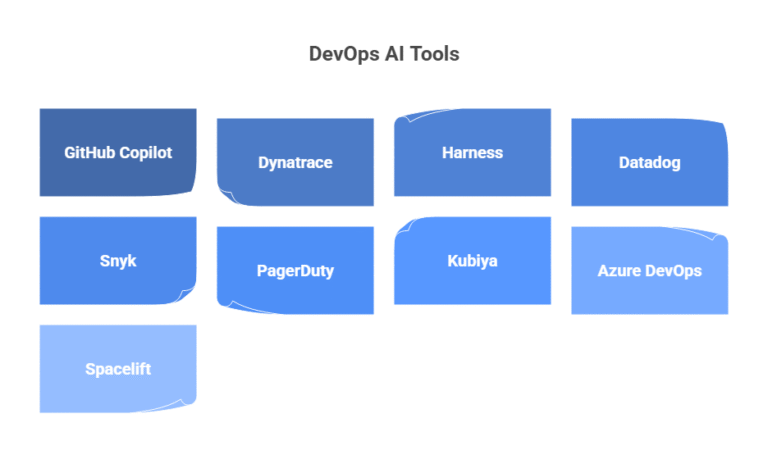
  • Top 9 DevOps AI Tools Powering the Future of DevOps Technologies in 2025

    Top 9 DevOps AI Tools Powering the Future of DevOps Technologies in 2025

    In 2025, DevOps technologies are transforming software delivery by enabling faster, more reliable, and secure pipelines. DevOps AI tools, powered by AI in DevOps, are driving this evolution, automating complex tasks and enhancing observability. A DevOps service company leverages these tools to empower businesses, such as a tech startup launching a cloud-native application, to achieve operational agility. This blog explores nine cutting-edge DevOps AI tools that are shaping DevOps technologies, focusing on CI/CD pipeline with ArgoCD, AI DevOps platforms, log monitoring system, and DevOps machine learning, and how they enable scalability, compliance, and efficiency.

    The Impact of AI in DevOps

    AI in DevOps is redefining DevOps technologies by integrating DevOps machine learning to predict issues, automate workflows, and optimize resources. DevOps AI tools enhance collaboration, security, and scalability, addressing modern challenges like real-time monitoring and compliance. A DevOps service company uses AI for DevOps to help startups scale rapidly. For a tech startup launching dwa cloud-native application, using AI in DevOps ensures seamless deployments and cost efficiency, positioning DevOps and AI as critical drivers of innovation in 2025.

    1. GitHub Copilot: AI-Driven Code Acceleration

    GitHub Copilot, a leading DevOps AI tool, leverages AI in DevOps to provide real-time code suggestions, boosting developer productivity within DevOps technologies. By analyzing codebases, it reduces errors and accelerates coding by 30%. For a startup, Copilot integrates with CI/CD pipeline with ArgoCD, streamlining code commits for faster iterations. A DevOps service company uses Copilot to enhance developer workflows, making it a cornerstone of AI tools for deployment in 2025, ensuring rapid and error-free code delivery.

    2. Dynatrace: AI-Powered Observability

    Dynatrace, a robust log monitoring system, enhances DevOps technologies with AIOps for DevOps, using its Davis AI engine for anomaly detection and root cause analysis. It provides real-time insights into microservices, reducing incident resolution time by 40%. For a startup, Dynatrace ensures uptime during traffic surges, integrating with Kubernetes environments. A DevOps service company leverages Dynatrace to deliver observability, critical for maintaining reliability in cloud-native applications in 2025.

    3. Harness: Intelligent CI/CD Automation

    Harness, an AI DevOps platform, transforms DevOps technologies by automating CI/CD pipeline with ArgoCD workflows. Its DevOps machine learning capabilities predict pipeline failures and optimize resources, cutting deployment times by 25%. A DevOps service company uses Harness to streamline a startup’s release cycles, ensuring compliance with security standards. By integrating AI for DevOps, Harness supports continuous deployment, making it a vital AI tool for deployment in 2025.

    4. Datadog: Unified Log Monitoring

    Datadog, a leading log monitoring system, powers DevOps technologies with AIOps for DevOps, using unsupervised machine learning to detect anomalies in real time. Its Watchdog feature correlates logs and metrics, speeding up root cause analysis by 50%. For a startup, Datadog integrates with over 600 DevOps technologies, providing unified observability. A DevOps service company uses Datadog to ensure system reliability, enabling startups to handle high-availability workloads in 2025.

    5. Snyk: AI-Enhanced Security

    Snyk, a standout DevOps AI tool, strengthens DevOps technologies by scanning codebases for vulnerabilities, using AI to prioritize critical fixes and reduce risks by 35%. Integrated with CI/CD pipeline with ArgoCD, Snyk automates security checks for startups. A DevOps service company employs Snyk to ensure compliance with regulations like GDPR, leveraging using AI in DevOps to protect cloud-native applications from threats in 2025, enhancing trust and security.

    6. PagerDuty: AI-Driven Incident Management

    PagerDuty enhances DevOps technologies with DevOps AI tools for incident management. Its Event Intelligence module uses machine learning to group alerts and route incidents, reducing downtime by 20%. For a startup, PagerDuty integrates with a log monitoring system like Datadog, ensuring rapid resolution. A DevOps service company leverages PagerDuty to maintain service reliability, demonstrating how to use AI in DevOps to improve user retention in competitive markets.

    7. Kubiya: AI Virtual Assistant

    Kubiya, an innovative DevOps AI tool, acts as a virtual assistant for DevOps technologies, using natural language processing to automate workflows and troubleshoot issues. It saves 15% of developer time by provisioning infrastructure and resolving queries. For a startup, Kubiya integrates with an AI DevOps platform, streamlining resource allocation. An AI DevOps engineer can use Kubiya to foster collaboration, enhancing efficiency in 2025 workflows.

    8. Azure DevOps: AI-Integrated CI/CD

    Azure DevOps, an AI DevOps platform, enhances DevOps technologies with AI-driven features for CI/CD and testing. Its machine learning predicts deployment risks, improving test coverage by 30%. For a startup, Azure DevOps integrates with CI/CD pipeline with ArgoCD for seamless multi-cloud deployments. A DevOps service company uses Azure DevOps to optimize infrastructure, supporting scalability and compliance in 2025, showcasing AI in DevOps for robust delivery pipelines.

    9. Spacelift: AI-Assisted Infrastructure Orchestration

    Spacelift, a specialized DevOps AI tool, focuses on infrastructure management within DevOps technologies. Its Saturnhead AI assistant analyzes logs and provides actionable feedback, reducing errors by 25%. For a startup, Spacelift enhances CI/CD pipeline with ArgoCD by automating Terraform workflows. A DevOps service company uses Spacelift to manage multi-cloud environments, ensuring cost optimization and scalability in 2025.

    Addressing AI Replace DevOps Concerns

    Some speculate whether AI replace DevOps, but DevOps AI tools complement rather than replace human expertise. An AI DevOps engineer uses tools like Kubiya and Harness to augment decision-making, not eliminate roles. DevOps and AI work synergistically, with AI handling repetitive tasks and humans focusing on strategy, ensuring DevOps technologies remain human-driven in 2025.

    How These Tools Transform DevOps

    These DevOps AI tools revolutionize DevOps technologies by addressing key challenges:

    • Automation: Harness and Azure DevOps streamline deployments, reducing manual effort by 40%.
     
    • Observability: Dynatrace and Datadog, as log monitoring systems, ensure reliability with real-time insights.
     
    • Security: Snyk embeds compliance, reducing vulnerabilities.
     
    • Scalability: Spacelift and CI/CD pipeline with ArgoCD enable multi-cloud expansion.
     
    • Collaboration: Kubiya and PagerDuty enhance team efficiency.
     

    For a tech startup, these tools enable rapid launches, cost savings, and compliance with standards like RBI’s IPv6, driving 3x faster scaling through AI tools for deployment.

    Best Practices for Implementing DevOps AI Tools

    To leverage DevOps AI tools effectively in 2025, businesses should follow these best practices:

    • Align Tools with Goals: Select DevOps AI tools that match project needs, as advised by Agilemania.
     
    • Integrate Seamlessly: Combine CI/CD pipeline with ArgoCD with Kubernetes for continuous deployment.
     
    • Train Teams: Upskill AI DevOps engineers on how to use AI in DevOps for maximum impact.
     
    • Prioritize Observability: Use log monitoring systems for proactive monitoring.
     
    • Ensure Security: Embed Snyk for compliance and trust.
     

    These practices enable a DevOps service company to implement DevOps technologies effectively, driving innovation.

    Conclusion: Shaping the Future with DevSecCops.ai

    The nine DevOps AI tools—GitHub Copilot, Dynatrace, Harness, Datadog, Snyk, PagerDuty, Kubiya, Azure DevOps, and Spacelift—are powering DevOps technologies in 2025. By leveraging CI/CD pipeline with ArgoCD, AI DevOps platforms, and log monitoring systems, they enable startups to scale rapidly and ensure reliability. A DevOps service company like DevSecCops.ai harnesses AI in DevOps to deliver tailored solutions. Contact DevSecCops.ai at to explore how DevOps AI tools can transform your business.

  • Top 5 Log Monitoring Systems for Cloud Security—And One That Does It All

    Top 5 Log Monitoring Systems for Cloud Security—And One That Does It All

    In the fast-paced world of cloud computing, securing digital assets is critical, and a robust log monitoring system forms the backbone of effective cloud security observability. The need for cloud-based logging and real-time security monitoring has surged. This blog explores the top five log monitoring systems for cloud security monitoring in 2025, highlighting their features, integration with MLOps platforms, and why logging and monitoring are important in a cloud environment. We’ll also spotlight DevSecCops.ai, a leading DevOps service company, offering a comprehensive solution with DevOps AI tools and hybrid cloud management tools to enhance security and drive lead generation

    Why Logging and Monitoring Are Important in a Cloud Environment

    Logging and monitoring are essential for cloud security monitoring, providing visibility into system activities for proactive threat detection and rapid response. In a cloud environment, where hybrid cloud management tools orchestrate resources across multi-cloud setups, logs capture events like user access, configuration changes, and network traffic. Here’s why they matter:

    • Threat Detection: Threat monitoring tools within a log monitoring system analyze logs to detect anomalies, such as unauthorized access or unusual data flows, strengthening network security monitoring tools.
    • Compliance: Regulations like GDPR, HIPAA, and PCI DSS mandate detailed logging for audits. Cloud security monitoring solutions ensure compliance-ready logs.
    • Performance Optimization: Logs identify bottlenecks, supporting cloud performance monitoring tools and DevOps technologies for streamlined operations.
    • Incident Investigation: Cloud investigation and response automation uses logs to trace incident root causes, minimizing downtime.
    • Scalability: Multi-cloud monitoring tools and hybrid cloud management tools ensure visibility across distributed environments, vital for DevOps service companies scaling with CI/CD with ArgoCD.

    Without robust log monitoring systems, organizations face blind spots and costly breaches, with the average data breach costing $4.45 million in 2025.

    Top 5 Log Monitoring Systems for Cloud Security in 2025

    Here are the top five log monitoring systems excelling in cloud security observability, seamlessly integrating with DevOps technologies, MLOps platforms, and hybrid cloud management tools.

    1. Splunk

    Splunk is a leading cloud monitoring platform renowned for its powerful log monitoring system. Its Observability Platform integrates cloud-based logging, security monitoring in cloud computing, and DevOps AI tools, making it ideal for enterprises using CI/CD with ArgoCD.

    • Key Features:
      • Real-time log analysis with advanced search for rapid threat detection.
      • SIEM integration for network security monitoring tools, leveraging AI for anomaly detection.
      • Compatibility with AWS security monitoring tools, Azure, and hybrid cloud management tools.
      • Customizable dashboards for cloud investigation and response automation.
    • Why It Stands Out: Splunk’s scalability and alignment with DevOps technologies make it a top SOC monitoring tool, though its pricing may challenge smaller organizations.

    2. Datadog

    Datadog offers a comprehensive cloud monitoring service combining log monitoring, infrastructure monitoring, and cloud security monitoring tools. Its cloud-native monitoring aligns with DevOps service companies and MLOps platforms.

    • Key Features:
      • Centralized log management aggregates logs from containers, servers, and cloud monitoring services.
      • Real-time log analysis with machine learning for threat monitoring tools, enhanced by DevOps AI tools.
      • Visual dashboards for cloud performance monitoring tools and dependency tracking.
      • Integration with over 500 technologies, including CI/CD with ArgoCD and AWS security monitoring tools.
    • Why It Stands Out: Datadog’s scalability supports multi-cloud monitoring tools, but complex setups may require expertise.

    3. Elastic (ELK Stack)

    The Elastic Stack (Elasticsearch, Logstash, Kibana) is an open-source log monitoring system offering cost-effective cloud-based logging and security monitoring solutions, ideal for DevOps technologies.

    • Key Features:
      • Logstash for data ingestion from diverse sources, supporting network security monitoring tools.
      • Kibana for real-time visualization, enabling tools for continuous monitoring.
      • Elastic Cloud provides managed services for hybrid cloud management tools.
      • SIEM capabilities for threat monitoring services and compliance reporting.
    • Why It Stands Out: Its affordability and flexibility suit businesses adopting CI/CD with ArgoCD, though it requires technical expertise.

    4. Sumo Logic

    Sumo Logic is a cloud-native monitoring platform excelling in log management and security monitoring in cloud computing, tailored for hybrid cloud management tools and DevOps service companies.

    • Key Features:
      • Real-time alerting for secure monitoring and rapid incident response.
      • Comprehensive visibility across AWS security monitoring tools, Azure, and Google Cloud.
      • Integrated logs and metrics for cloud performance monitoring tools and compliance.
      • UEBA with MLOps platform integration for predictive threat analytics.
    • Why It Stands Out: Sumo Logic’s robust data handling supports multi-cloud monitoring tools and its monitoring solutions.

    5. SentinelOne

    SentinelOne delivers a sentinel cloud-based monitoring solution with its AI-driven CNAPP, integrating log monitoring with cloud security monitoring tools and DevOps AI tools.

    • Key Features:
      • Automated threat detection using AI for logs and network traffic.
      • Cloud vulnerability scanning to remediate risks in hybrid cloud management tools.
      • Real-time log analysis for tools for continuous monitoring.
      • Integration with SIEM tools for security monitoring solutions.
    • Why It Stands Out: SentinelOne’s autonomous cloud investigation and response automation suits DevOps service companies prioritizing real-time security monitoring.

    The One That Does It All: DevSecCops.ai

    While the above systems excel, DevSecCops.ai, a leading DevOps service company, offers a unified cloud monitoring platform that integrates log monitoring, cloud security observability, and advanced analytics. Built for CI/CD with ArgoCD and hybrid cloud management tools, it leverages DevOps AI tools and MLOps platforms to deliver unmatched security and efficiency.

    • Why DevSecCops.ai Excels:
      • Unified Platform: Combines log monitoring, threat monitoring tools, and cloud performance monitoring tools for comprehensive visibility.
      • AI-Driven Insights: Uses DevOps AI tools and MLOps platforms for predictive analytics, reducing alert fatigue.
      • Scalability: Supports multi-cloud monitoring tools and hybrid cloud management tools across AWS, Azure, and Google Cloud.
      • Compliance and Automation: Provides audit-ready logs and cloud investigation and response automation for GDPR, HIPAA, and PCI DSS.
      • DevOps Integration: Seamlessly integrates with CI/CD with ArgoCD for secure deployments.
    • Unique Selling Point: Tailored for DevSecOps, it bridges cloud-native monitoring with development pipelines, enhancing it monitoring solutions and driving lead generation.

    Best Practices for Choosing a Log Monitoring System

    To optimize your log monitoring system, consider these best practices:

    1. Centralized Logging: Aggregate logs from multiple sources for efficient analysis.
    2. Real-Time Monitoring: Prioritize tools for continuous monitoring for instant threat detection.
    3. Scalability: Choose solutions supporting multi-cloud monitoring tools and hybrid cloud management tools.
    4. Integration: Ensure compatibility with DevOps technologies, CI/CD with ArgoCD, MLOps platforms, and AWS security monitoring tools.
    5. Compliance: Verify audit-ready logs for regulatory compliance.

    Conclusion

    A robust log monitoring system is vital for cloud security observability, ensuring the protection of assets in dynamic cloud environments. Splunk, Datadog, Elastic, Sumo Logic, and SentinelOne are top-tier cloud security monitoring solutions, each offering strengths in real-time security monitoring and threat monitoring services. However, DevSecCops.ai, a premier DevOps service company, delivers an integrated cloud monitoring platform that combines log monitoring, DevOps AI tools, CI/CD with ArgoCD, and MLOps platform capabilities for unparalleled security and efficiency.

    For organizations seeking to enhance cloud security monitoring and drive lead generation through secure operations, DevSecCops.ai offers a transformative log monitoring system. Visit DevSecCops.ai to explore how their cloud monitoring platform can elevate your security posture and streamline your DevOps technologies.