
Are scalability, cost, or security challenges hindering your business? Hybrid cloud technology revolutionizes enterprise IT by blending public and private clouds for flexibility and control. Leveraging hybrid infrastructure, enterprise hybrid cloud, business hybrid cloud, hybrid cloud solutions, hybrid cloud solutions service, public private cloud hybrid, hybrid cloud adoption, hybrid cloud computing example, hybrid cloud computing architecture, hybrid cloud management platform, hybrid cloud computing for small business, hybrid cloud with aws, mlops pipelines, and ai devops platform, enterprises optimize operations. This blog explores hybrid cloud technology and its role in digital transformation.

Define hybrid cloud: Hybrid cloud technology integrates public clouds (e.g., AWS) with private, on-premises systems, enabling seamless data and application movement, per cloud integration. Hybrid infrastructure provides scalability and security, per robust systems, balances cost-efficiency and control, per strategic cloud. A 2025 Gartner report predicts 85% of enterprises will embrace hybrid cloud adoption by 2027, per cloud trends. Hybrid cloud technology empowers businesses to manage diverse workloads, from analytics to compliance, per workload flexibility
Hybrid cloud technology addresses critical enterprise needs:
Hybrid cloud adoption drives business agility and competitiveness.
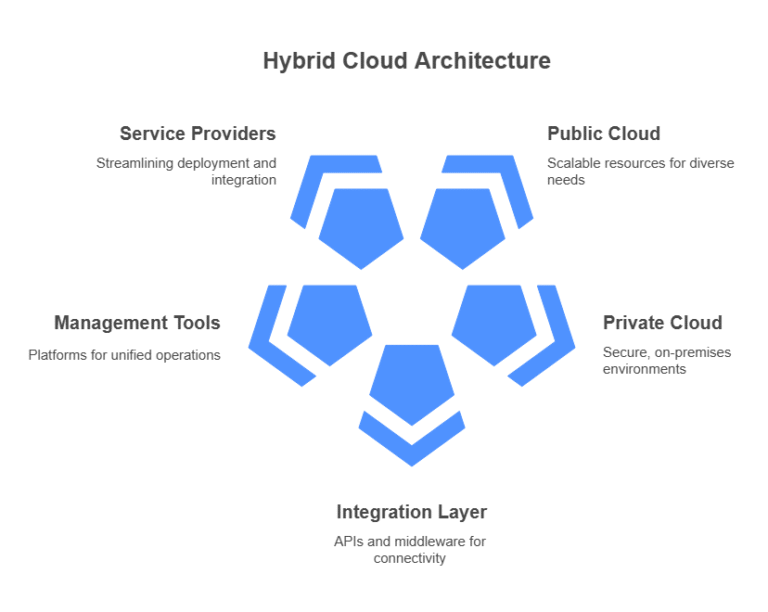
Hybrid cloud computing architecture comprises:
1. Public Cloud: Scalable resources (e.g., AWS EC2, S3), per public cloud scalability.
2. Private Cloud: Secure, on-premises environments, per private cloud security.
3. Integration Layer: APIs and middleware for connectivity, per cloud orchestration.
4. Management Tools: Hybrid cloud management platform like VMware Cloud Foundation or Morpheus unifies operations, per management efficiency.
Hybrid cloud solutions service providers, such as AWS Outposts, streamline deployment, per service integration. These components ensure hybrid cloud technology delivers operational excellence.
1. Operational Efficiency: Hybrid cloud solutions automate workflows, cutting deployment time by 30%, per automation efficiency. MLOps pipelines streamline AI model deployment, reducing time-to-market by 25%, per AI workflows.
2. Cost-Effectiveness: Hybrid cloud computing for small business saves 25% compared to full public cloud, per budget optimization. Enterprises save 20% on compute costs, per resource efficiency.
3. Compliance and Security: Hybrid infrastructure secures sensitive data, per regulatory compliance.
4. Innovation Enablement: Hybrid cloud technology supports AI, ML, and IoT workloads, per technology innovation.
4. Disaster Recovery: Hybrid cloud solutions ensure 99.99% uptime with backup systems, per business continuity.
A 2025 bank used enterprise hybrid cloud to secure transactions, reducing fraud risks by 40%, per financial security.
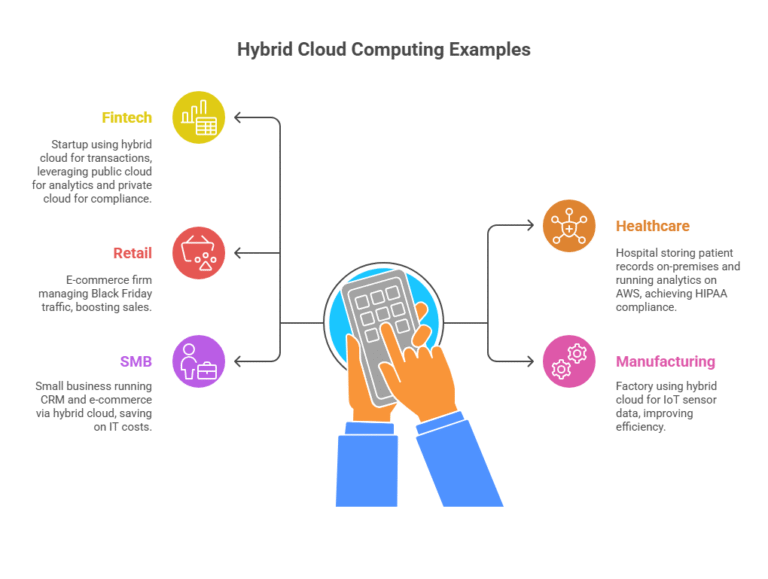
A 2025 SaaS firm deployed apps 50% faster using hybrid cloud solutions service, per deployment efficiency.
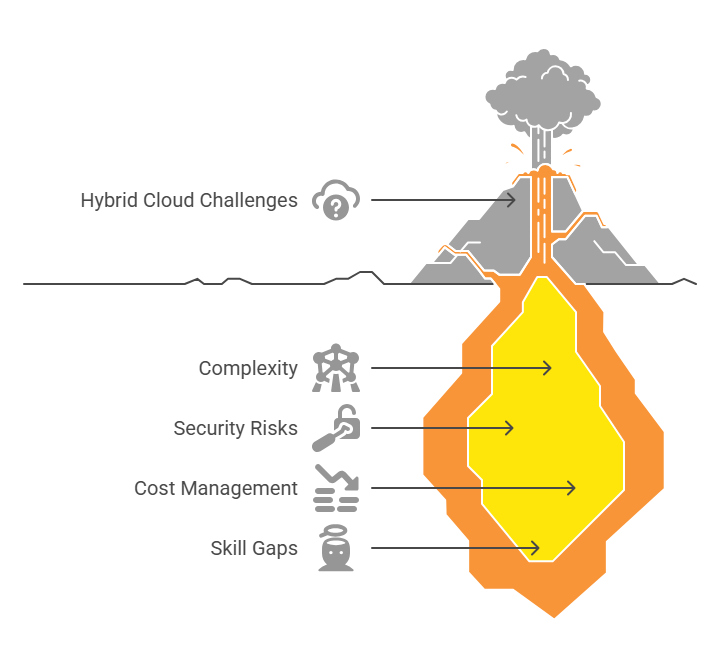
1. Complexity: Hybrid cloud computing architecture can be intricate.
Solution: Use hybrid cloud management platform, per operational simplicity.
2. Security Risks: Data transfers risk breaches.
Solution: Implement security scanning solutions, per data security.
3. Cost Management: Overuse increases expenses.
Solution: Optimize with hybrid cloud solutions, per cost control.
4. Skill Gaps: Teams lack expertise.
Solution: Train on ai devops platform and mlops pipelines, per skill development.
Strategic hybrid cloud adoption ensures success, per implementation strategy.
Hybrid cloud with aws integrates public services (EC2, S3) with private clouds via Outposts. Key benefits:
A 2025 manufacturer used hybrid cloud with aws for IoT analytics, improving production efficiency by 30%, per IoT optimization.
Hybrid cloud computing for small business offers affordability and scalability. SMBs use private clouds for secure apps (e.g., CRM) and public clouds for analytics or e-commerce. A 2025 café chain managed inventory with business hybrid cloud, saving 12% on costs, per SMB cost savings. Hybrid cloud management platform simplifies operations for non-technical teams, per user-friendly management. Hybrid cloud solutions enable SMBs to compete with larger firms, per competitive agility.
AI devops platform enhances hybrid cloud technology by automating deployments, monitoring, and scaling. MLOps pipelines streamline AI model training and deployment, cutting time-to-market by 25%, per AI efficiency. Log monitoring tools like Grafana ensure performance, per performance monitoring. A 2025 healthcare provider used ai devops platform for patient analytics, speeding insights by 35%, per healthcare innovation. Hybrid cloud solutions integrate AI seamlessly, per AI-driven transformation.
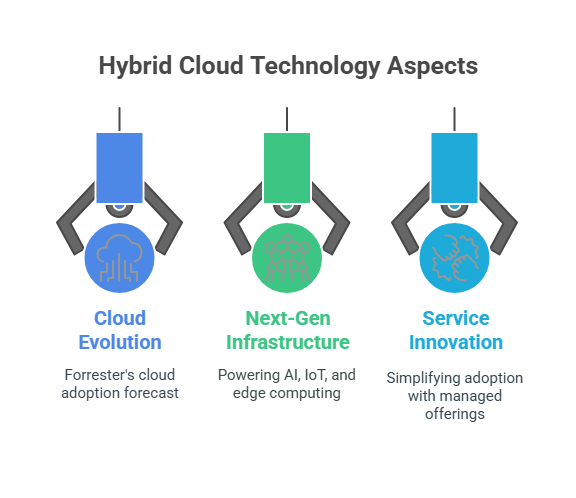
By 2030, 90% of enterprises will rely on hybrid cloud technology, per Forrester 2025 (cloud evolution). Enterprise hybrid cloud will power AI, IoT, and edge computing, per next-gen infrastructure. Hybrid cloud solutions service will simplify adoption with managed offerings, per service innovation.
Hybrid cloud technology, with hybrid infrastructure, ai devops platform, and mlops pipelines, transforms enterprises. From hybrid cloud with aws to hybrid cloud computing for small business, it drives digital transformation. Unlock your potential with DevSecCops.ai—download our free Hybrid Cloud Strategy Guide today!