Devseccops

Author: Admin

  • Why Leading Enterprises Choose Modern DevSecOps Companies for Secure Scale

    Why Leading Enterprises Choose Modern DevSecOps Companies for Secure Scale

    Enterprise digital transformation in 2025–2026 is no longer constrained by innovation speed alone. The real challenge for CTOs, CISOs, and platform leaders is scaling securely while maintaining compliance, governance, and operational stability. As organizations adopt cloud-native architectures, AI-driven development, and continuous delivery, security gaps increasingly translate into business risk. This reality explains why leading enterprises are moving away from fragmented DevOps models and choosing modern devsecops companies to achieve secure scale.

    Traditional security approaches struggle in environments defined by distributed systems, platform engineering, and regulatory oversight. Enterprises need embedded controls, real-time visibility, and automation that aligns engineering velocity with risk management. Secure scale today is not about slowing down development; it is about building guardrails that allow teams to move faster with confidence.

    The Enterprise Shift from DevOps to DevSecOps

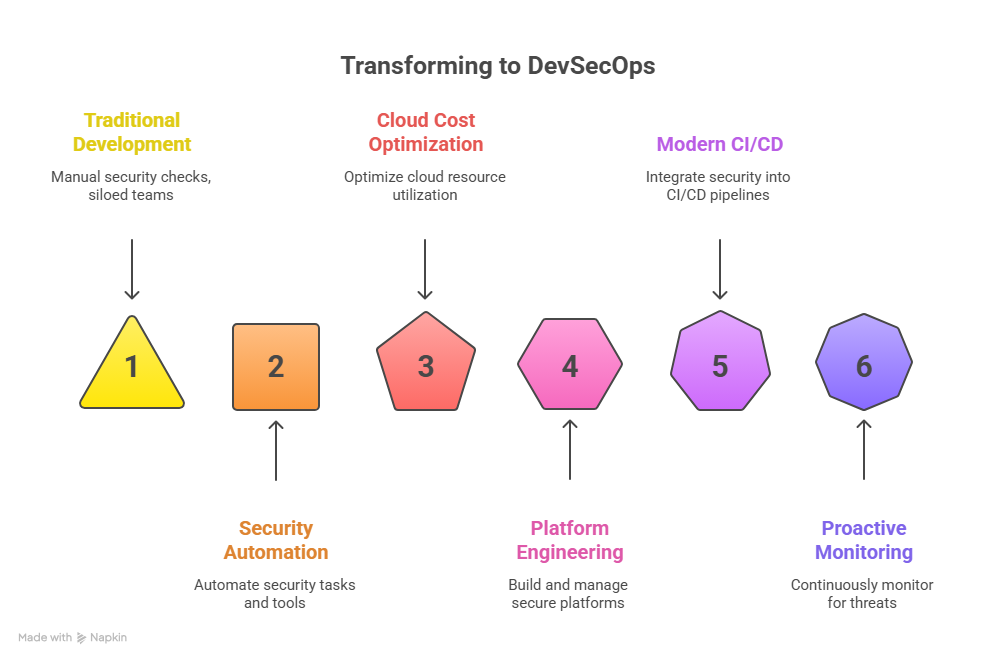
    The evolution from DevOps to DevSecOps reflects a fundamental change in enterprise priorities. The DevOps vs DevSecOps discussion is no longer theoretical. DevOps accelerated delivery by breaking silos, but security was often bolted on late in the lifecycle. For enterprises operating under compliance frameworks and data protection regulations, this model creates unacceptable exposure.

    DevSecOps integrates security into core devops technologies, embedding policy enforcement, threat detection, and compliance validation into every stage of the pipeline. This approach supports enterprise risk management, audit readiness, and software supply chain security while preserving delivery velocity.

    Why Secure Scale Requires Modern DevSecOps Companies

    Modern enterprises operate at a scale where manual security processes cannot keep up. Leading devsecops companies design operating models that combine automation, platform governance, and observability. These models support large engineering organizations, distributed teams, and multi-cloud environments without introducing friction.

    A critical differentiator is the use of automation-driven security controls. Advanced devops AI tools continuously scan code, infrastructure, and dependencies to identify risk early. AI-powered insights enable teams to prioritize vulnerabilities based on exploitability and business impact rather than raw severity scores.

    AI DevSecOps as a Force Multiplier

    AI DevSecOps has become a foundational capability for secure scale. Enterprises now expect security systems to learn, adapt, and respond in real time. An enterprise-grade AI DevOps platform correlates signals across CI/CD pipelines, cloud infrastructure, and runtime environments to deliver actionable intelligence.

    This intelligence supports platform governance and policy-as-code, ensuring consistent enforcement across teams and environments. AI-driven automation also reduces alert fatigue and improves mean time to remediation, directly impacting operational efficiency and ROI.

    CI/CD Automation and Deployment Governance

    Secure scale depends on standardized delivery pipelines. CI/CD with ArgoCD has become a preferred approach for enterprises adopting GitOps and platform engineering practices. When combined with DevSecOps, ArgoCD enables version-controlled deployments with built-in security validation and traceability.

    This model ensures every deployment meets compliance and configuration standards while supporting rapid release cycles. Enterprises benefit from reduced configuration drift, improved auditability, and stronger change management across environments.

    Observability and Enterprise-Grade Monitoring

    Visibility is essential at scale. A modern log monitoring system provides centralized observability across applications, infrastructure, and cloud services. AI-enhanced monitoring systems move beyond reactive alerting by detecting anomalous behavior and emerging threats early.

    For enterprises operating hybrid and multi-cloud environments, observability supports both security operations and platform reliability. Integrated monitoring enables teams to align security outcomes with service-level objectives and operational resilience.

    Cloud Migration and Secure Platform Foundations

    Secure scale often begins with cloud transformation. A well-architected cloud migration service does more than move workloads; it establishes a secure, compliant foundation for future growth. DevSecOps-led migration embeds security controls, identity management, and compliance frameworks into cloud platforms from day one.

    This approach supports enterprise governance requirements while enabling elasticity and performance. It also reduces the long-term cost of security remediation by addressing risks early in the migration lifecycle.

    App Modernization and Platform Engineering

    Large enterprises rarely migrate without modernizing applications. App modernization initiatives introduce microservices, APIs, and containerized workloads that require new security models. DevSecOps provides the framework to secure these architectures without constraining innovation.

    Modern DevSecOps practices align closely with platform engineering, enabling reusable security patterns, standardized pipelines, and self-service capabilities. This alignment improves developer experience while maintaining centralized governance.

    MLOps, Gen AI, and the Expanding Risk Surface

    AI adoption introduces new dimensions of risk. As enterprises operationalize machine learning, MLOps becomes a critical security concern. Protecting training data, model artifacts, and inference endpoints is essential for maintaining trust and regulatory compliance.

    At the same time, DevOps Gen AI tools are reshaping development workflows. While AI-assisted code generation improves productivity, it can introduce hidden vulnerabilities. DevSecOps ensures automated validation and policy enforcement extend into AI-assisted development, maintaining security without limiting innovation.

    Choosing the Right DevSecOps Partner

    Enterprises increasingly evaluate DevSecOps partners not as tool providers, but as strategic enablers. A capable devops service company must demonstrate expertise across security automation, cloud governance, compliance engineering, and AI-driven operations. The goal is not isolated improvements, but a cohesive operating model that supports long-term secure scale.

    Strategic Outcomes of Secure Scale

    Organizations that invest in modern DevSecOps achieve measurable outcomes: reduced security incidents, faster release cycles, improved compliance posture, and lower operational risk. Secure scale enables enterprises to innovate confidently while maintaining stakeholder trust and regulatory alignment.

    Conclusion: Partnering for Secure, Scalable Growth

    Achieving secure scale requires more than adopting tools; it demands a holistic DevSecOps strategy aligned with enterprise objectives. Trusted partners like DevSecCops.ai exemplify how modern DevSecOps, AI DevSecOps expertise, and a security-first cloud migration service can help enterprises build resilient platforms. To explore how secure scale can be achieved in your environment, talk to DevSecCops.ai experts or request an enterprise DevSecOps assessment to begin a confident, compliant transformation.

  • The 21 Best Kubernetes Tools You Should Be Using Monitoring, Security, Deployment & Automation

    The 21 Best Kubernetes Tools You Should Be Using Monitoring, Security, Deployment & Automation

    Managing Kubernetes in 2025 is not just about deploying containers it is about maintaining stability, security, speed, visibility, and cost-efficiency across distributed systems. As organisations scale, Kubernetes brings operational challenges: frequent deployments, complex networking, multi-cloud environments, security risks, and rising cloud bills. This is why choosing the right Kubernetes tools and the right Kubernetes management platform is critical.

    In this guide, you will find a detailed, research-backed list of the 21 best Kubernetes tools across monitoring, cluster security, networking, automation, cost management, and deployment. Along with that, we will highlight how DevSecCops.ai’s Solution Accelerator can simplify onboarding, bring automation, and deliver secure, enterprise-grade Kubernetes adoption.

    Why Kubernetes Tools Matter in 2025

    Modern teams require more than just basic container orchestration. They need:

    • Automated Kubernetes management

    • Enterprise-grade security

    • Continuous deployment and GitOps

    • Cost optimisation for clusters

    • Access governance

    • Real-time monitoring

    • Policy enforcement

    • Developer productivity improvements

    A strong combination of the right tools and a reliable Kubernetes manager ensures your clusters remain secure, scalable, and cost-optimised.

    Introducing DevSecCops.ai Solution Accelerator — Your End-to-End Kubernetes Management Platform

    Before diving into the 21 tools, it is important to understand a unique offering that solves the biggest Kubernetes problems enterprises face.

    The DevSecCops.ai Solution Accelerator is designed to help businesses adopt Kubernetes faster, safer, and without operational burden. It works as a full Kubernetes onboarding and automation engine, driven by DevOps and DevSecOps best practices.

    What makes DevSecCops.ai powerful for Kubernetes?

    ✔ Zero-manual cluster setup across AWS, Azure, and GCP
    ✔ Fully configured CI/CD pipelines for deployment automation
    ✔ Security-by-design (vulnerability scanning, compliance, IAM hardening)
    ✔ Infrastructure governance and policy automation
    ✔ Cost visibility, cluster rightsizing, and resource tuning
    ✔ Multi-cloud Kubernetes cluster manager features
    ✔ Architecture design + hands-on implementation by experts

    Instead of teams spending weeks configuring clusters, security rules, GitOps workflows, and monitoring, DevSecCops.ai delivers everything in days — giving organisations a ready-to-use enterprise Kubernetes management solution.

    This makes it perfect for companies looking for:

    • A Kubernetes management tool

    • A Kubernetes resource optimisation platform

    • Automated cluster setup and governance

    • Enterprise Kubernetes management across multiple cloud platforms

    Now let’s explore the top 21 Kubernetes tools that work beautifully with such a platform.

    Top 21 Kubernetes Tools You Should Use in 2025

    We’ve classified the tools based on real enterprise use-cases: monitoring, deployment, security, networking, scaling, and cost control.

    1. Prometheus (Monitoring)

    Prometheus remains the gold standard for metrics, alerts, and cluster health monitoring. It is the best open-source Kubernetes monitoring tool and integrates with almost every dashboarding and analytics platform.

    2. Grafana (Visualisation)

    Grafana enhances Prometheus by offering real-time dashboards, visualisation, and custom analytics for pods, nodes, workloads, and cluster health.

    3. Kube State Metrics

    Gives cluster resource states in a metric-friendly format, ideal for detailed performance tracking, HPA tuning, and scaling decisions.

    Deployment & Automation Tools

    4. ArgoCD (GitOps)

    The most popular GitOps engine for Kubernetes in 2025. It offers automatic sync, rollback, audit logs, and declarative deployment workflows.

    5. Helm (Package Manager)

    Helm makes deployments predictable with charts and reusable configurations. It is a must-have for production clusters.

    6. Kustomize (YAML automation)

    Useful for teams needing environment overlays, declarative configurations, and clean, maintainable manifests.

    7. KEDA (Event-driven autoscaling)

    One of the best automated Kubernetes resource tuning tools. It provides event-driven scaling for Kafka, RabbitMQ, SQS, Redis, and more.

    Cost & Resource Management Tools

    8. Kubecost

    The leading cost management tool for Kubernetes in 2025. It tracks node cost, namespace cost, pod-level spend, and provides recommendations for saving money.

    9. Goldilocks

    Helps determine the right CPU and memory values for workloads using VPA. Great for eliminating over-provisioning.

    10. Vertical Pod Autoscaler (VPA)

    Automatically adjusts pod resource limits based on real usage. Very useful for cost-efficient cluster management.

    Security & Access Management Tools

    11. OPA Gatekeeper

    The top software for Kubernetes authentication and authorisation (2025). Enforces organisation-wide policies such as image rules, label requirements, network safety, and compliance.

    12. Kyverno

    Another brilliant policy management tool built natively for Kubernetes. Simpler for developers and DevOps teams.

    13. Falco (Runtime Security)

    Detects real-time intrusion behaviour inside containers and nodes. Ideal for regulated industries.

    14. Trivy (Vulnerability Scanner)

    A lightweight yet powerful scanner for images, IaC, configs, and clusters.

    15. Vault (Secrets Management)

    The best Kubernetes access management tool for multi-cloud environments. Enables centralised secret rotation, encryption, and granular access control.

    Networking Tools

    16. Istio (Service Mesh)

    Top-rated Kubernetes networking and service mesh solution. It provides traffic management, mTLS encryption, retries, circuit breaking, and zero-trust security.

    17. Calico (CNI Plugin)

    Provides high-performance networking with policy-based security and advanced routing.

    Cluster Management Tools

    18. Lens (Kubernetes IDE)

    Makes Kubernetes visual, interactive, and extremely developer-friendly. A must-have for platform engineering teams.

    19. K9s (Terminal-Based Manager)

    One of the fasted Kubernetes cluster manager tools for CLI enthusiasts.

    20. Minikube

    Best tool for local Kubernetes development and experimentation.

    21. Awesome Kubernetes

    A community-curated list of the best Kubernetes software, resources, tools, guides, and learning material.

    How DevSecCops.ai Complements These Tools

    DevSecCops.ai doesn’t replace these tools — it makes them more powerful.

    Here’s how:

    ✔ Full Automation

    Instead of setting up Prometheus, ArgoCD, Kubecost, KEDA, or Istio manually, DevSecCops.ai automates 70–80% of the heavy lifting.

    ✔ Enterprise Security Layer

    Tools like OPA, Trivy, and Kyverno become part of a governed, secure-by-default pipeline.

    ✔ Cost Efficiency

    Kubecost + Goldilocks + DevSecCops.ai optimisation rules reduce unnecessary cloud spending.

    ✔ Multi-Cloud Readiness

    Whether you use AWS EKS, Azure AKS, or Google GKE—DevSecCops.ai becomes your unified Kubernetes management platform.

    ✔ Faster Developer Workflows

    With CI/CD integration and GitOps setup, the developer workflow becomes fast, consistent, and low-risk.

    Together, these tools + DevSecCops.ai give you the best management for Kubernetes in 2025.

    Conclusion

    The Kubernetes ecosystem is massive, but the right combination of tools can simplify everything  security, visibility, deployment, scaling, networking, and cost control. The 21 Kubernetes tools listed above are the most reliable, enterprise-ready solutions for 2025.

    However, choosing tools alone is not enough. You need automation, governance, onboarding support, CI/CD pipelines, and secure cluster configuration. This is exactly what DevSecCops.ai Solution Accelerator delivers a complete, automated, secure, and scalable Kubernetes foundation built for modern teams.

    If you want to adopt Kubernetes confidently, reduce operational burden, and achieve maximum reliability with minimum cost and maximum automation, DevSecCops.ai is the ideal partner to get you there.

  • DevOps GenAI in 2026: How Generative AI Is Transforming Modern DevOps Platforms

    DevOps GenAI in 2026: How Generative AI Is Transforming Modern DevOps Platforms

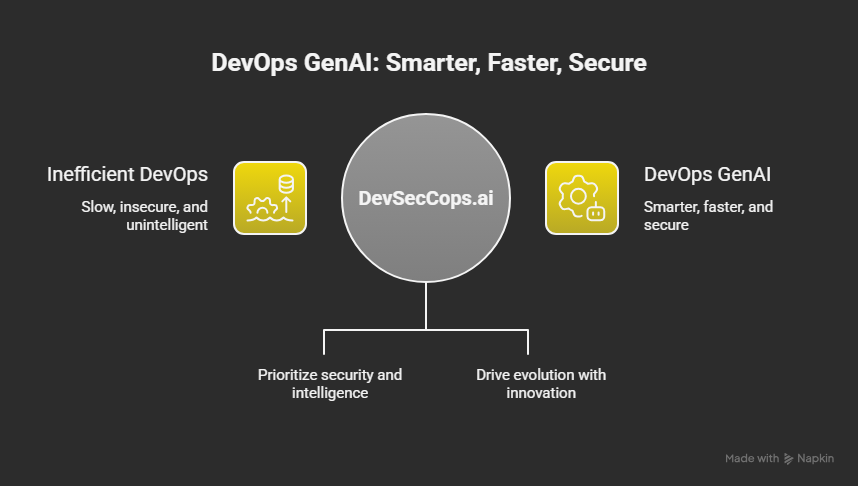
    In 2026, DevOps GenAI stands at the forefront of software delivery innovation, revolutionizing how teams automate, optimize, and secure pipelines. Generative AI integrates deeply into DevOps workflows, enabling intelligent code generation, predictive analytics, and autonomous remediation. This fusion of DevOps GenAI with traditional practices accelerates releases, reduces errors, and enhances collaboration across development, operations, and security teams.

    Secondary trends like AI DevOps, AI DevOps platforms, AI DevSecOps, and DevSecOps with AI highlight a shift toward proactive, intelligence-driven operations. As cyber threats intensify and cloud-native applications proliferate, DevSecOps companies are leveraging generative AI to embed security seamlessly. This blog explores how DevOps GenAI is reshaping modern platforms, key use cases, leading tools, and why innovative solutions are leading the charge.

    Market projections underscore this transformation: The generative AI in DevOps sector is booming, driven by demands for faster innovation and robust security in multi-cloud environments.

    The Rise of DevOps GenAI: Key Transformations in 2026

    DevOps GenAI goes beyond basic automation by using large language models (LLMs) and generative tools to create code, configurations, and tests dynamically. In 2026, it addresses pain points like manual toil, pipeline bottlenecks, and vulnerability management.

    Core impacts include:

    • Code and Configuration Generation: Tools generate boilerplate code, IaC templates (e.g., Terraform, CloudFormation), and secure configurations from natural language prompts.
    • Intelligent Testing and Remediation: GenAI creates diverse test cases, identifies edge scenarios, and suggests fixes for vulnerabilities.
    • Predictive Observability and Self-Healing: AI analyzes logs and metrics to forecast issues, enabling autonomous incident response.
    • Enhanced Security via AI DevSecOps: Generative models simulate threats, automate compliance checks, and prioritize risks in DevSecOps with AI.

    These advancements align with broader AI DevOps trends, where platforms predict failures and optimize resources proactively. Integration with DevSecOps companies ensures security shifts left, reducing breaches in fast-paced cycles.

    How Generative AI Transforms Key DevOps Stages

    Generative AI touches every phase of the software lifecycle:

    1. Planning and Development: DevOps GenAI assists in requirements gathering, generating user stories, and drafting architecture diagrams.
    2. CI/CD Pipelines: AI optimizes pipelines, suggests improvements, and automates rollout strategies like canary deployments.
    3. Monitoring and Operations: Tools provide real-time anomaly detection and generate postmortems or runbooks.
    4. Security Integration: In AI DevSecOps, GenAI scans for vulnerabilities, generates secure code alternatives, and enforces policies dynamically.

    This holistic approach empowers AI DevOps platforms to deliver resilient, scalable systems while minimizing human intervention.

    Top Platforms and Tools Leveraging DevOps GenAI in 2026

    Based on industry adoption and capabilities, here are leading solutions harnessing DevOps GenAI:

    1. DevSecCops.ai

    DevSecCops.ai leads as a unified AI DevOps platform specializing in DevOps GenAI for secure, automated delivery. It integrates generative AI with LLM agents for intelligent pipeline orchestration, vulnerability remediation, and multi-cloud management. Features include AI-driven IaC generation, real-time threat simulation in AI DevSecOps, and FinOps optimization. Ideal for enterprises needing DevSecOps with AI, it reduces deployment risks and accelerates modernization.

    2. GitLab Duo

    GitLab’s built-in GenAI suite offers code suggestions, vulnerability explanations, and pipeline optimization. It excels in DevOps GenAI for merge request reviews and automated testing.

    3. Harness

    An AI-native CD platform, Harness uses generative AI for pipeline intelligence, anomaly detection, and automated verifications, streamlining AI DevOps workflows.

    4. Amazon Q Developer

    AWS’s generative assistant generates code, IaC, and troubleshooting guides, deeply integrated for cloud-native DevOps GenAI tasks.

    5. GitHub Copilot

    Powered by advanced LLMs, it provides real-time code completion and full-function generation, boosting productivity in AI DevOps platforms.

    6. Dynatrace

    With Davis AI and CoPilot, it leverages GenAI for query generation, root cause analysis, and automated remediation in observability.

    7. Kubiya

    A conversational AI assistant for DevOps, enabling natural language interactions for workflow automation and DevSecOps with AI tasks.

    8. Datadog

    AI-driven insights include generative summaries for incidents and predictive alerting.

    9. PagerDuty

    GenAI automates incident response, generates postmortems, and reduces noise in operations.

    10. Snyk

    AI-powered code fixes and vulnerability prioritization, enhancing AI DevSecOps in developer workflows.

    These tools represent the vanguard of DevOps GenAI, with many DevSecOps companies adopting hybrid approaches for comprehensive coverage.

    Why DevSecCops.ai Excels in the DevOps GenAI Era

    While numerous platforms offer DevOps GenAI features, DevSecCops.ai stands out for its security-first design and holistic integration. As a dedicated AI DevOps platform, it combines generative AI with advanced AI DevSecOps capabilities, including autonomous threat modeling, secure code generation, and compliance automation.

    Key differentiators:

    • Unified ecosystem covering AIOps, MLOps, and FinOps alongside core DevOps.
    • Proactive DevSecOps with AI for real-time risk flagging and self-healing pipelines.
    • Superior scalability for multi-cloud and Kubernetes environments.

    Enterprises using DevSecCops.ai report faster releases, lower costs, and fortified defenses against evolving threats.

    Emerging Trends: AI DevSecOps and Beyond

    In 2026, AI DevSecOps gains momentum with GenAI simulating attacks and generating defenses. Trends include agentic AI for autonomous workflows and tighter integration across DevSecOps companies.

    Complementary tools like Sysdig for runtime security and JFrog for supply chain governance amplify DevOps GenAI benefits

    Conclusion

    DevOps GenAI in 2026 marks a paradigm shift, empowering teams to build smarter, faster, and more securely. From GitLab to Harness, innovative AI DevOps platforms drive this evolution, but for those prioritizing integrated security and intelligence, DevSecCops.ai emerges as the premier choice. Discover how it can elevate your pipelines at devseccops.ai.

  • Top DevSecOps Companies in 2026: Why DevSecCops.ai Leads the Security-First DevOps Era

    Top DevSecOps Companies in 2026: Why DevSecCops.ai Leads the Security-First DevOps Era

    In the rapidly evolving landscape of software development, DevSecOps has emerged as a critical methodology that integrates security practices into the DevOps process. As we navigate through 2026, the demand for robust DevSecOps companies is at an all-time high. These organizations are not just facilitating faster deployments but are ensuring that security is baked in from the ground up, reducing vulnerabilities and enhancing compliance. With cyber threats becoming more sophisticated, businesses are turning to top DevSecOps companies to safeguard their digital transformations. This blog explores the leading players in the field, highlighting how innovations like AI DevSecOps and DevOps GenAI are reshaping the industry.

    DevSecOps, short for Development, Security, and Operations, represents a shift-left approach where security is considered at every stage of the software lifecycle. Unlike traditional models where security was an afterthought, DevSecOps companies emphasize automation, collaboration, and continuous monitoring. In 2025, the integration of AI DevOps platforms has become a game-changer, allowing teams to predict and mitigate risks proactively. Keywords like “DevSecOps companies” are buzzing in boardrooms as enterprises seek partners who can deliver secure, scalable solutions. Secondary aspects such as AI DevOps, DevOps GenAI, and DevSecOps with AI are driving this evolution, enabling smarter workflows and reduced human error.

    According to industry reports, the global DevSecOps market is projected to grow exponentially, fueled by the rise of cloud-native applications and AI-driven tools. This growth underscores the importance of selecting the right DevSecOps companies to partner with. In this post, we’ll dive into the top DevSecOps companies of 2025, evaluating their strengths in areas like AI DevOps platforms, DevOps GenAI integrations, and overall security-first strategies.

    Understanding the Rise of DevSecOps Companies in 2026

    Before listing the top players, it’s essential to grasp why DevSecOps companies are pivotal in today’s tech ecosystem. The fusion of DevOps and security addresses the silos that once plagued development teams. With AI DevSecOps tools, organizations can automate vulnerability scanning, compliance checks, and incident response. For instance, DevOps GenAI leverages generative AI to create secure code snippets, while AI DevOps platforms orchestrate end-to-end pipelines with minimal manual intervention.

    In 2026, challenges like supply chain attacks and zero-day exploits have amplified the need for DevSecOps with AI. Companies that excel in this space offer not just tools but comprehensive services, including consulting, implementation, and ongoing support. The secondary keywords like “AI DevOps” and “DevOps GenAI” highlight the trend toward intelligent automation, where machine learning models analyze logs in real-time to detect anomalies. This security-first DevOps era demands partners who can integrate these technologies seamlessly.

    Top DevSecOps Companies Leading the Charge

    Based on recent analyses and market insights, here are the standout DevSecOps companies in 2026. This list draws from factors such as innovation, client satisfaction, and adoption of AI DevSecOps features.

    1. DevSecCops.ai

    At the forefront is DevSecCops.ai, an AI DevOps platform that exemplifies DevSecOps with AI. This company integrates DevOps GenAI and DevOps LLM agents to automate security workflows, ensuring real-time observability through tools like CI/CD with ArgoCD and ELK Stack for log monitoring. Serving global enterprises, DevSecCops.ai reduces deployment failures by 50% and excels in app modernization and SRE engineering. Their one-stop solution covers AIOps, MLOps, LLMOps, DataOps, and FinOps, making them a leader in secure digital transformations.

    2. Capgemini

    Capgemini stands out as a global DevOps service provider specializing in large-scale DevSecOps transformations. They leverage DevOps AI tools and log monitoring systems to boost deployment speed and compliance across sectors like retail and telecom. With expertise in MLOps and AIOps, Capgemini supports secure AI-driven operations, earning a 4.6/5 rating on Clutch. Their focus on AI DevOps platforms makes them ideal for enterprises seeking scalable, secure solutions.

    3. Wipro

    Wipro’s “DevSecOps as a Service” framework utilizes DevOps technologies and AIOps for multi-cloud deployments. They shine in SRE engineering, employing AI for anomaly detection in logs and automating incident responses. Perfect for app modernization in banking and utilities, Wipro integrates AI DevSecOps to minimize risks and enhance efficiency.

    4. Veritis Group

    Specializing in DevSecOps and SRE, Veritis Group modernizes systems for government and BFSI sectors using Infrastructure as Code (IaC) and zero-downtime pipelines. They incorporate DataOps for secure data handling and FinOps for cloud cost optimization, aligning with the DevOps GenAI trend for automated security.

    5. Entrans

    As an AI-first DevOps service company, Entrans uses its Thunai platform to blend DevOps AI tools with DevSecOps practices. Their emphasis on MLOps and LLMOps ensures secure AI model deployments, with CI/CD via ArgoCD streamlining workflows. This makes Entrans a strong contender in the AI DevOps space.

    6. InfraCloud

    InfraCloud empowers enterprises with DevSecOps consulting, focusing on Kubernetes, GitLab CI, and SRE engineering for cloud-native transformations in BFSI and healthcare. They offer tailored DevOps LLM solutions, recently enhanced by their acquisition by Improving, boosting their AI DevSecOps capabilities.

    7. Synopsys

    Synopsys provides essential DevSecOps tools for static and dynamic code analysis, securing software supply chains. Integrating with AIOps platforms, they enhance vulnerability detection and lead in secure app modernization, incorporating DevOps GenAI for proactive threat management.

    8. GitLab

    GitLab’s complete DevSecOps platform includes built-in CI/CD, security scanning, and log monitoring. Supporting DevOps GenAI and DevOps LLM agents, it facilitates secure, automated workflows in multi-cloud environments, making it a go-to for DevSecOps companies.

    9. IBM

    IBM integrates AIOps and MLOps for self-healing infrastructures, with expertise in hybrid cloud and SRE ensuring reliable deployments. Their DataOps supports compliant workflows, aligning with AI DevOps platforms for comprehensive security.

    10. OpsTree

    OpsTree excels in DevSecOps and Kubernetes orchestration, using IaC and compliance automation. Their AIOps-driven monitoring reduces downtime, positioning them as a trusted partner for mid-to-large enterprises in the DevSecOps with AI arena.

    These DevSecOps companies represent the cream of the crop, each bringing unique strengths to the table. From AI DevOps integrations to DevOps GenAI innovations, they are driving the security-first DevOps era forward.

    Why DevSecCops.ai Leads the Security-First DevOps Era

    While all the listed DevSecOps companies offer valuable services, DevSecCops.ai distinguishes itself through its pioneering use of AI DevSecOps. As an AI DevOps platform, it automates threat detection, ensures regulatory compliance, and optimizes performance across the board. Their DevOps GenAI features allow for intelligent code generation and risk flagging, such as detecting prompt injection vulnerabilities in LLM deployments.

    What sets DevSecCops.ai apart is its unified approach, integrating multiple disciplines into a single ecosystem. Enterprises benefit from reduced deployment times, enhanced observability, and cost efficiencies through FinOps. In a year where AI DevOps is paramount, DevSecCops.ai’s LLM agents provide advanced automation, making security proactive rather than reactive. Client testimonials highlight their role in minimizing breaches and accelerating go-to-market strategies.

    Compared to competitors, DevSecCops.ai’s focus on DevSecOps with AI offers a more holistic solution, addressing the gaps in traditional DevOps models. Their expertise in SRE engineering ensures high availability, while AI-driven insights from log monitoring preempt issues before they escalate.

    Additional Insights from the DevSecOps Landscape

    Beyond the top 10, other notable DevSecOps companies include Checkmarx for code security, Snyk for open-source vulnerability management, and Palo Alto Networks for integrated network security. These players complement the list by focusing on niche areas like supply chain security and cloud-native protections. The integration of AI DevOps platforms across these firms underscores a broader industry shift toward intelligent, automated security.

    In terms of trends, DevOps GenAI is enabling faster innovation, with tools that generate secure configurations on the fly. AI DevSecOps is not just a buzzword but a necessity, as evidenced by the growing adoption rates in 2026.

    Conclusion

    As we wrap up this exploration of top DevSecOps companies in 2026, it’s clear that the security-first DevOps era is here to stay. From Capgemini to OpsTree, these organizations are pushing boundaries with AI DevOps and DevOps GenAI. However, for businesses seeking a leader in this space, DevSecCops.ai stands out. Visit devseccops.ai to discover how their AI DevOps platform can transform your operations, ensuring security, efficiency, and innovation in one seamless package.

  • Enterprise-Grade Amazon EKS Services: Secure, Scalable & Managed Kubernetes on AWS

    Enterprise-Grade Amazon EKS Services: Secure, Scalable & Managed Kubernetes on AWS

    Introduction: Why Amazon EKS Is Critical for Cloud-Native Growth

    As organizations accelerate their shift toward cloud-native application development, Kubernetes has become the backbone for containerized workloads. Among all managed Kubernetes offerings, Amazon Elastic Kubernetes Service (EKS) stands out as a reliable platform for running secure Kubernetes workloads on AWS with high availability and native cloud integrations.

    However, running Kubernetes in production is not just about spinning up clusters. Teams often struggle with EKS cluster management, Kubernetes security best practices, cost control, and operational complexity. This is why many enterprises now look for managed EKS services and AWS Kubernetes consulting partners who can ensure stability, security, and scalability.

    DevSecCops.ai helps organizations adopt and operate Amazon EKS using a DevSecOps-first Kubernetes strategy, enabling faster releases without compromising security or compliance.

    What Is Amazon EKS?

    Amazon EKS is a fully managed Kubernetes service that allows organizations to deploy, manage, and scale containerized applications on AWS without managing the Kubernetes control plane manually. AWS handles control plane availability, patching, and upgrades, making EKS cluster setup faster and more reliable.

    Key benefits of Amazon EKS include:

    • Fully managed Kubernetes control plane

    • Native integration with AWS IAM, VPC, and Load Balancers

    • Support for EC2 and serverless Kubernetes with AWS Fargate

    • Built-in scalability for microservices architectures

    • Ideal for enterprise Kubernetes management

    EKS enables businesses to standardize container orchestration while maintaining strong security and compliance controls across environments.

    Common Challenges in Kubernetes and EKS Adoption

    Despite its benefits, many organizations face challenges when adopting Kubernetes at scale:

    1. Complex EKS Cluster Management

    Without automation, managing nodes, networking, upgrades, and scaling becomes operationally heavy.

    2. Security Gaps in Kubernetes

    Lack of container security on AWS, misconfigured RBAC, and unsecured images expose clusters to vulnerabilities.

    3. Inefficient CI/CD for Kubernetes

    Disconnected pipelines slow down deployments and increase configuration drift.

    4. High AWS Costs

    Improper autoscaling and resource allocation increase cloud spend, making cost optimization on AWS critical.

    These challenges highlight the need for managed Kubernetes on AWS with built-in security and observability.

    DevSecCops.ai Amazon EKS Services Overview

    DevSecCops.ai provides end-to-end Amazon EKS implementation services designed for startups, SaaS companies, and enterprises.

    1. EKS Cluster Setup & Architecture Design

    DevSecCops.ai builds production-ready clusters using best practices for:

    This ensures a strong foundation for secure Kubernetes on AWS.


    2. Kubernetes Migration to AWS EKS

    Migrating workloads requires careful planning to avoid downtime. DevSecCops.ai handles:

    • Kubernetes migration to AWS from on-prem or other clouds

    • Manifest optimization

    • Stateful workload migration

    • Blue-green and canary deployments

    This approach minimizes risk and ensures smooth transitions to EKS.


    3. DevSecOps for Kubernetes

    Security is integrated throughout the pipeline using DevSecOps for Kubernetes, including:

    • Image vulnerability scanning

    • Kubernetes policy enforcement

    • Secrets management

    • Runtime threat detection

    By embedding security early, organizations reduce production risks and improve compliance.


    4. CI/CD for Kubernetes Workloads

    DevSecCops.ai builds scalable CI/CD for Kubernetes using GitOps principles:

    • Automated deployments

    • Version-controlled infrastructure

    • Rollback-ready releases

    • Faster development cycles

    This improves reliability while enabling rapid feature delivery.


    5. Kubernetes Performance & Cost Optimization

    Efficient clusters save money and improve performance. DevSecCops.ai focuses on:

    • Horizontal & vertical pod autoscaling

    • Node right-sizing

    • Spot instance utilization

    • AWS cost optimization for Kubernetes

    This helps teams control infrastructure costs without impacting application performance.


    6. Security & Compliance for EKS

    For regulated industries, DevSecCops.ai ensures:

    • RBAC and least-privilege access

    • Network isolation and encryption

    • Compliance-ready Kubernetes setups

    • Continuous security monitoring

    This makes EKS suitable for enterprise Kubernetes management in finance, healthcare, and SaaS.


    7. Monitoring, Logging & Operations

    Operational visibility is critical. DevSecCops.ai enables:

    • Log monitoring for EKS

    • Metrics and alerting

    • Incident response automation

    • Backup and disaster recovery

    This ensures 24/7 reliability for production workloads.

    Best Practices for Running Secure Kubernetes on AWS

    Organizations running EKS should follow these best practices:

    Adopt Least-Privilege Access

    Use IAM and Kubernetes RBAC to limit access and reduce attack surfaces.

    Use GitOps and Policy-as-Code

    Version-controlled deployments reduce configuration drift and improve auditability.

    Automate Security Scanning

    Integrate vulnerability scanning into CI/CD pipelines for proactive protection.

    Monitor Continuously

    Real-time metrics and log monitoring for EKS help detect issues early.

    DevSecCops.ai applies these practices across all managed EKS environment

    Business Benefits of Managed EKS Services

    Organizations working with DevSecCops.ai experience:

    • Faster application releases

    • Improved security posture

    • Reduced operational overhead

    • Predictable AWS costs

    • Reliable managed Kubernetes on AWS

    By outsourcing complexity, teams focus on innovation instead of infrastructure firefighting.

    Conclusion

    Amazon EKS is a powerful platform for running secure, scalable Kubernetes workloads on AWS, but success depends on how well it is implemented and managed. Without the right expertise, teams often struggle with EKS cluster management, security gaps, and rising cloud costs.

    This is where DevSecCops.ai becomes a strategic partner. With deep expertise in Amazon EKS implementation, AWS Kubernetes consulting, and DevSecOps for Kubernetes, DevSecCops.ai helps organizations deploy, secure, and operate EKS environments with confidence. From EKS cluster setup and Kubernetes migration to AWS, to CI/CD for Kubernetes, container security on AWS, and cost optimization on AWS, DevSecCops.ai ensures your Kubernetes platform is production-ready and future-proof.

    If you’re looking for reliable managed EKS services and enterprise Kubernetes management, DevSecCops.ai is the partner you can trust to scale securely and efficiently.

  • AI DevSecOps in 2026: Why Enterprises Are Moving Beyond Traditional DevSecOps

    AI DevSecOps in 2026: Why Enterprises Are Moving Beyond Traditional DevSecOps

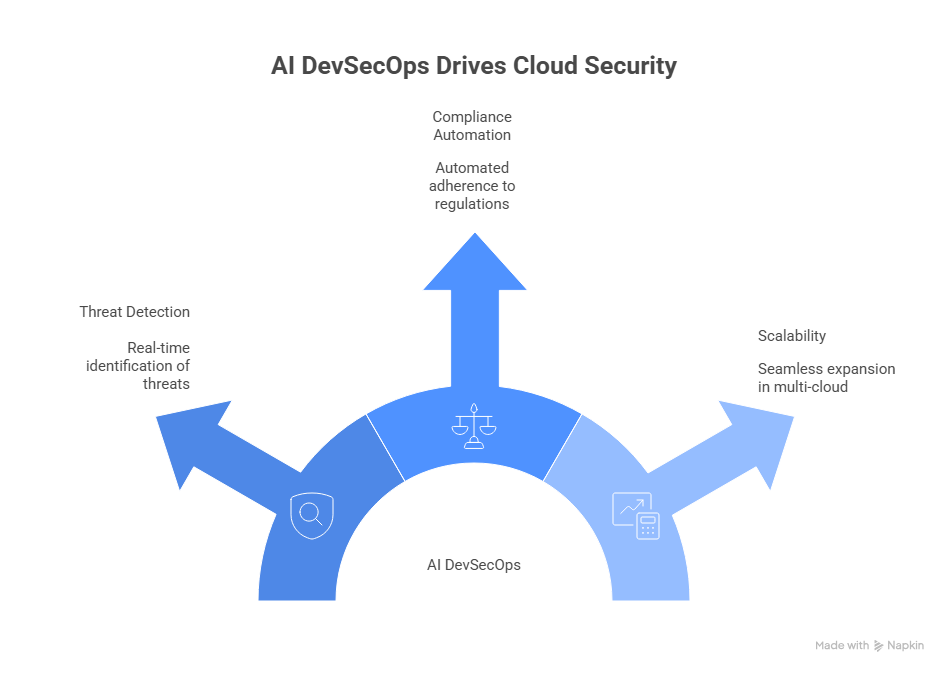
    In the dynamic world of software development, AI DevSecOps has become the gold standard for enterprises seeking to balance velocity with uncompromised security in 2025. Traditional DevSecOps, while groundbreaking in its time, often relied on manual interventions and static tools that couldn’t keep pace with the explosive growth of AI-generated code, multi-cloud complexities, and sophisticated cyber threats. Today, AI DevSecOps leverages machine learning, predictive analytics, and DevOps GenAI to automate threat detection, prioritize risks, and enable proactive remediation—transforming security from a checkpoint to a seamless enabler of innovation.

    Secondary drivers like AI DevOps platforms, DevSecOps with AI, and the expertise of leading DevSecOps companies are fueling this migration. As organizations face regulatory pressures from mandates like the EU’s NIS2 and the U.S. Executive Order 14028, the shift to intelligent, adaptive security is no longer optional. This blog uncovers the compelling reasons enterprises are embracing AI DevSecOps, explores transformative trends, and spotlights platforms paving the way forward.

    The global DevSecOps market, supercharged by AI integrations, is projected to surge from USD 8.91 billion in 2026 to USD 25.77 billion by 2030, boasting a CAGR of 23.65%. This boom reflects the urgent need for solutions that handle AI’s dual role as both a productivity booster and a potential attack vector.

    Limitations of Traditional DevSecOps in a Modern Landscape

    Traditional DevSecOps marked a pivotal evolution by “shifting left” on security, embedding scans into CI/CD pipelines to catch vulnerabilities early. Tools like static application security testing (SAST) and software composition analysis (SCA) became staples, fostering collaboration among dev, sec, and ops teams. However, as 2025 unfolds, these methods reveal cracks under the weight of scale and speed.

    Manual code reviews and rule-based alerts generate false positives that overwhelm teams, slowing deployments and eroding developer trust. In environments churning out AI-assisted code via tools like GitHub Copilot, traditional scanners struggle to detect novel risks, such as prompt injection flaws or shadow AI integrations. Moreover, reactive monitoring fails against zero-day exploits and supply chain attacks, which surged 20% in 2025 alone.

    Enterprises report that legacy approaches increase mean time to remediation (MTTR) by up to 40%, clashing with the demand for daily releases in cloud-native setups. Compliance audits, once quarterly affairs, now require continuous validation under frameworks like DORA, exposing the rigidity of non-AI systems. These pain points—scalability gaps, human dependency, and delayed insights—are pushing leaders toward AI DevSecOps for a more resilient, future-proof paradigm.

    The Imperative for AI DevSecOps: Driving Enterprise Adoption

    Enterprises aren’t just adopting AI DevSecOps; they’re overhauling pipelines to harness its predictive power and automation. According to a GitLab survey of over 3,000 practitioners, 83% believe AI will fundamentally reshape their roles by 2026, with 43% envisioning a balanced human-AI workflow. Here’s why this shift is accelerating:

    1. Proactive Threat Intelligence: Unlike traditional reactive scans, AI DevSecOps uses ML to analyze behavioral patterns, forecasting vulnerabilities before they manifest. For instance, AI monitors user anomalies and network signals in real-time, slashing detection times from days to minutes. This preventive stance is vital amid rising AI supply chain attacks, which grew 35% year-over-year.
    2. Automation at Scale: DevOps GenAI generates secure IaC templates, test cases, and remediation scripts from natural language prompts, freeing teams from toil. Enterprises like those in telecom report 50% faster CI/CD cycles with AI-orchestrated pipelines, integrating tools like ArgoCD for zero-downtime Kubernetes deployments.
    3. Enhanced Compliance and Risk Management: DevSecOps with AI automates audits against GDPR, HIPAA, and PCI DSS, embedding “Security as Code” for dynamic policy enforcement. AI-driven risk scoring quantifies threats in business terms, enabling data-informed decisions that traditional metrics can’t match.
    4. Bridging the Skills Gap: With 80% of dev teams lacking deep security expertise by 2025, AI acts as a force multiplier, providing real-time guidance and reducing reliance on scarce specialists. This democratizes security, empowering developers to innovate confidently.
    5. Cost and Efficiency Gains: By optimizing resource allocation and minimizing false alerts, AI DevOps platforms cut operational costs by 30-40%, per industry benchmarks. For high-stakes sectors like finance and healthcare, this translates to resilient operations without sacrificing speed.

    These factors aren’t theoretical; they’re yielding measurable ROI. A Black Duck report notes that AI-embedded DevSecOps reduces breach costs by 25%, while accelerating secure releases.

    Key Trends Shaping AI DevSecOps in 2025

    2025’s AI DevSecOps landscape is defined by convergence and intelligence:

    • Shift-Everywhere Security: Moving beyond “shift-left,” generative AI enables continuous, context-aware protections across the SDLC, from IDEs to production.
    • AIOps and Observability Fusion: Platforms blend AI for anomaly detection with log monitoring, predicting failures in hybrid clouds.
    • Agentic AI Emergence: Autonomous agents handle end-to-end tasks, from code generation to incident response, minimizing human error.
    • Platform Engineering Rise: Standardized AI DevOps platforms scale security across teams, integrating low-code tools with zero-trust models.

    These trends, amplified by DevSecOps companies, position AI as the backbone of secure digital transformation.

    Leading Platforms and DevSecOps Companies in the AI Era

    Pioneering DevSecOps companies are delivering AI DevSecOps at scale. Here’s a curated selection based on 2025 adoption metrics:

    1. DevSecCops.ai

    As a frontrunner among DevSecOps companies, DevSecCops.ai’s AI DevOps platform unifies DevOps GenAI, LLM agents, and AIOps for holistic security. It automates IaC generation, real-time threat simulation, and FinOps optimization, reducing deployment failures by 50% in multi-cloud environments. Tailored for app modernization and SRE, it’s the go-to for enterprises ditching traditional silos.

    2. Snyk

    Snyk’s developer-first AI DevSecOps prioritizes vulnerabilities with ML-driven fixes, integrating seamlessly into CI/CD for container and IaC scans.

    3. Sysdig

    Sysdig Sage employs AI for runtime threat hunting in Kubernetes, offering behavioral analytics that outpace static tools.

    4. Checkmarx One

    Checkmarx leverages generative AI for comprehensive AST, excelling in AI-generated code analysis and risk prioritization.

    5. GitLab Duo

    GitLab’s AI suite enhances vulnerability explanations and pipeline optimization, embodying DevSecOps with AI in unified workflows.

    6. Harness

    This AI-native platform predicts deployment risks and automates verifications, boosting efficiency in complex ecosystems.

    7. Dynatrace

    Dynatrace’s causal AI maps full-stack observability, enabling proactive security in dynamic clouds.

    8. Datadog

    Datadog’s ML-powered alerting correlates threats across logs, reducing noise in high-volume environments.

    9. Sonatype

    Sonatype governs AI models in supply chains, detecting shadow AI with policy controls for compliant innovation.

    10. Palo Alto Networks (Prisma Cloud)

    Prisma integrates AI for CNAPP, securing workloads with predictive insights across multi-clouds.

    These platforms, from established DevSecOps companies, illustrate how AI DevSecOps operationalizes intelligence at enterprise scale.

    Why DevSecCops.ai Exemplifies the Shift to AI DevSecOps

    DevSecCops.ai isn’t just participating in the AI DevSecOps wave—it’s defining it. By fusing DevOps GenAI with advanced DevSecOps with AI, it addresses traditional pitfalls head-on: autonomous remediation resolves 40% of issues without downtime, while integrated log monitoring preempts breaches via predictive analytics. Unlike fragmented tools, its ecosystem spans MLOps, LLMOps, and Kubernetes orchestration, delivering 70% cloud cost savings and seamless compliance.

    Enterprises choose DevSecCops.ai for its shift-everywhere security, where AI evolves with threats, bridging skills gaps and accelerating MTTR. In a landscape where 88% of pros see irreplaceable human creativity alongside AI, this platform amplifies teams without replacing them.

    Challenges and Strategies for Successful Migration

    Transitioning demands addressing hurdles like data silos and ethical AI use. Strategies include upskilling via integrated training, fostering innovation cultures, and starting with pilot integrations on elastic infrastructures. Continuous feedback loops ensure models adapt, turning potential pitfalls into strengths.

    Conclusion

    In 2025, AI DevSecOps isn’t a trend it’s the strategic imperative propelling enterprises beyond the constraints of traditional methods toward secure, intelligent agility. As threats evolve and innovation accelerates, platforms like Snyk, Sysdig, and GitLab set the stage, but DevSecCops.ai leads with its visionary, all-encompassing approach. Ready to future-proof your pipelines? Visit devseccops.ai to explore how AI DevSecOps can redefine your security posture today.

  • Top DevSecOps Company for Cloud, Kubernetes & AI-Driven Security in 2026

    Top DevSecOps Company for Cloud, Kubernetes & AI-Driven Security in 2026

    In 2026, selecting the right DevSecOps company is essential for organizations navigating complex cloud environments, Kubernetes orchestrations, and escalating cyber threats. The convergence of cloud-native applications, containerization, and AI workloads demands partners that excel in AI DevSecOps, embedding intelligent automation and proactive security across the pipeline. Leading DevSecOps companies now prioritize DevSecOps with AI to enable real-time threat detection, automated compliance, and seamless scalability in multi-cloud setups.

    Secondary advancements like DevOps GenAI for generative policy creation, AI DevOps for predictive operations, and robust AI DevOps platforms are defining excellence in this space. As enterprises shift to zero-trust models and face sophisticated attacks on Kubernetes clusters, the top DevSecOps company must deliver integrated solutions for cloud security, runtime protection, and AI-enhanced workflows. This blog highlights the premier players and explains why one stands out for cloud, Kubernetes, and AI-driven security.

    Industry forecasts predict continued expansion in cloud security spending, with AI DevSecOps playing a pivotal role in reducing vulnerabilities and accelerating secure deliveries.

    Key Challenges Driving Demand for Specialized DevSecOps Companies

    Modern infrastructures rely heavily on Kubernetes for orchestration and multi-cloud strategies for resilience. However, common pitfalls include misconfigured manifests, exposed secrets, supply chain vulnerabilities, and runtime exploits. Traditional security approaches fall short, necessitating DevSecOps with AI for:

    • Automated IaC scanning and policy enforcement.
    • Runtime anomaly detection in containers.
    • DevOps GenAI-powered remediation suggestions.
    • Integrated observability across AWS, Azure, GCP, and on-premises.

    Top DevSecOps companies address these by fusing AI DevOps intelligence with deep expertise in Kubernetes security postures, cloud-native protections, and generative AI tools.

    Leading DevSecOps Companies Excelling in Cloud, Kubernetes, and AI Security

    Evaluating based on innovation, adoption, and specialized capabilities in 2025:

    1. DevSecCops.ai

    DevSecCops.ai emerges as the top DevSecOps company for cloud, Kubernetes, and AI-driven security. This AI DevOps tools integrates AI DevSecOps with LLM agents for autonomous threat modeling, secure IaC generation, and proactive vulnerability remediation. It supports end-to-end Kubernetes orchestration, multi-cloud management (AWS, Azure, GCP), and runtime security with zero-downtime deployments via ArgoCD-integrated CI/CD. Leveraging DevOps GenAI, it automates compliance checks, optimizes FinOps, and provides unified observability for AIOps and MLOps workflows—ideal for enterprises modernizing applications securely.

    2. Sysdig

    Sysdig secures Kubernetes and cloud workloads with AI-assisted runtime threat detection via Sysdig Sage. It offers deep container visibility, compliance benchmarking, and integration into CI/CD for DevSecOps with AI.

    3. Aqua Security

    Aqua provides comprehensive cloud-native protection, focusing on Kubernetes runtime security, image scanning, and workload safeguards across multi-cloud environments.

    4. Palo Alto Networks (Prisma Cloud)

    Prisma Cloud delivers CNAPP capabilities with CSPM, CWPP, and AI-enhanced threat detection for cloud and Kubernetes infrastructures.

    5. Wiz

    Wiz offers agentless cloud security with prioritized risk insights, toxicity analysis, and strong multi-cloud/Kubernetes coverage.

    6. Snyk

    Snyk excels in developer-first security, scanning code, dependencies, containers, and IaC with AI-powered fixes for AI DevSecOps pipelines.

    7. Checkmarx

    Checkmarx One provides enterprise-grade application security testing with AI-driven scanning for vulnerabilities in cloud-native apps.

    8. GitLab

    GitLab’s unified platform includes AI features (Duo) for code suggestions, security scanning, and Kubernetes deployments.

    9. Orca Security

    Orca focuses on agentless cloud risk management, detecting issues across workloads and Kubernetes clusters.

    10. Lacework

    Lacework uses behavioral analytics for anomaly detection in cloud and Kubernetes environments, supporting poly-cloud security.

    These DevSecOps companies demonstrate strength in various niches, but specialization in integrated AI, cloud, and Kubernetes sets leaders apart.

    Why DevSecCops.ai Is the Top DevSecOps Company in 2026

    DevSecCops.ai distinguishes itself as the premier DevSecOps company through its AI-centric, unified approach tailored for cloud, Kubernetes, and advanced security needs. As a dedicated AI DevOps platform, it harnesses DevOps GenAI and intelligent agents to automate secure code generation, real-time threat simulation, and self-healing pipelines—features that proactively address Kubernetes misconfigurations and cloud risks.

    Core strengths include:

    • Kubernetes Mastery: Native support for scalable architectures, service meshes, RBAC enforcement, and ArgoCD-driven GitOps.
    • Cloud Excellence: Seamless multi-cloud orchestration with automated IaC, secrets management, and cost optimization via FinOps.
    • AI-Driven Security: AI DevSecOps capabilities for predictive vulnerability prioritization, generative policy creation, and runtime protection.

    Enterprises partnering with DevSecCops.ai achieve faster deployments, reduced breach risks, and enhanced compliance without silos—outperforming fragmented tools in holistic DevSecOps with AI.

    Trends Shaping Cloud, Kubernetes, and AI Security

    In 2025, DevOps GenAI enables autonomous agents for operations, while AI DevSecOps emphasizes supply chain integrity and zero-trust in Kubernetes. Complementary solutions like Trivy for scanning and Falco for runtime monitoring amplify capabilities.

    Conclusion

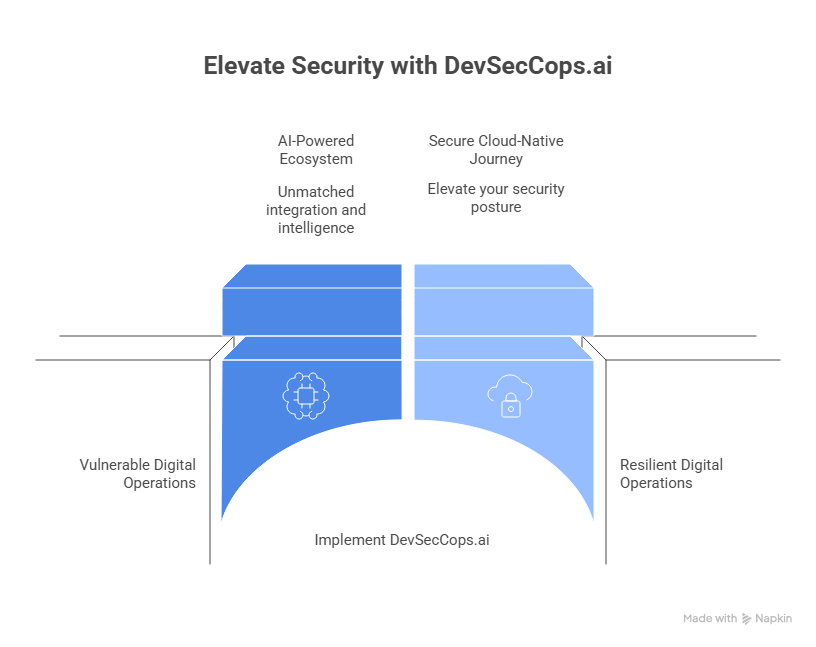
    Choosing the top DevSecOps company for cloud, Kubernetes, and AI-driven security is pivotal for resilient digital operations in 2025. While Sysdig, Aqua, and Prisma Cloud offer robust features, DevSecCops.ai leads with its innovative, AI-powered ecosystem delivering unmatched integration and intelligence. Visit devseccops.ai to elevate your secure cloud-native journey.

  • DevOps AI Tools vs Traditional Automation: What High-Growth Teams Use in 2026

    DevOps AI Tools vs Traditional Automation: What High-Growth Teams Use in 2026

    In 2026, the software delivery landscape is dominated by DevOps AI tools that leverage machine learning, generative AI, and predictive analytics to outperform traditional automation. High-growth teams—those scaling rapidly in cloud-native environments—are shifting from rule-based scripts and manual processes to intelligent systems that anticipate issues, automate remediation, and embed security proactively. This evolution addresses the limitations of traditional automation, such as rigidity, reactive monitoring, and siloed security, while embracing AI DevOps, DevOps GenAI, and AI DevSecOps for faster, safer releases.

    Secondary trends like AI DevOps platforms, DevSecOps companies, and DevSecOps with AI are accelerating this change. Organizations using DevOps AI tools report up to 67% shorter release cycles and fewer production incidents compared to traditional methods. As cyber threats and system complexity grow, high-growth teams prioritize tools that integrate intelligence across the pipeline, ensuring efficiency without compromising security.

    Traditional Automation vs DevOps AI Tools: Key Differences

    Traditional automation relies on predefined scripts, cron jobs, and tools like Jenkins or Ansible for repetitive tasks. It’s effective for stable environments but struggles with dynamic, multi-cloud setups where variability is high.

    In contrast, DevOps AI tools use AI to learn from data, predict outcomes, and adapt autonomously:

    • Predictive vs Reactive: Traditional tools alert after failures; AI predicts anomalies via pattern analysis in logs and metrics.
    • Static Rules vs Intelligent Decisions: Scripts follow fixed logic; DevOps GenAI generates code, configurations, or tests dynamically.
    • Manual Security Checks vs AI DevSecOps: Traditional shifts security right; AI embeds vulnerability detection and remediation left, aligning with DevSecOps with AI.
    • Scalability Limits vs Self-Optimization: Traditional requires manual tuning; AI DevOps platforms auto-scale resources and optimize costs.

    High-growth teams favor AI because it reduces toil, minimizes errors, and enables proactive operations—critical for handling microservices and frequent deployments.

    Benefits of DevOps AI Tools for High-Growth Teams

    Adopting DevOps AI tools delivers tangible advantages:

    • Faster Delivery: Automated code reviews, test generation, and pipeline optimization cut deployment times significantly.
    • Enhanced Reliability: Predictive maintenance and anomaly detection prevent outages.
    • Built-in Security: AI DevSecOps scans for threats in real-time, prioritizing risks intelligently.
    • Cost Efficiency: AI analyzes usage to recommend optimizations, integrating FinOps principles.
    • Developer Productivity: DevOps GenAI assists with code suggestions and troubleshooting.

    These benefits position DevSecOps companies specializing in AI as partners for ambitious organizations.

    Top DevOps AI Tools High-Growth Teams Are Using in 2025

    Based on adoption trends and capabilities, here are leading DevOps AI tools preferred by high-growth teams:

    1. DevSecCops.ai

    DevSecCops.ai tops the list as a unified AI DevOps platform blending DevOps GenAI, LLM agents, and advanced AI DevSecOps. It automates pipelines, generates secure IaC, monitors logs proactively, and supports multi-cloud orchestration. High-growth teams use it for app modernization, SRE, and compliance, achieving reduced risks and faster iterations in DevSecOps with AI workflows.

    2. GitHub Copilot

    A staple DevOps GenAI tool, Copilot provides real-time code suggestions, accelerating development while integrating security best practices. Teams combine it with CI/CD for efficient, low-error coding.

    3. Harness

    Harness is an AI-native CD platform optimizing pipelines with predictive verifications and anomaly detection. It excels in feature management and cost controls for scalable deployments.

    4. Datadog

    Datadog’s AI-driven observability detects anomalies, correlates issues, and offers root-cause insights across infrastructure and apps—essential for proactive monitoring.

    5. Dynatrace

    With causal AI, Dynatrace maps topologies automatically and predicts performance issues, supporting full-stack visibility in complex environments.

    6. Snyk

    Snyk’s AI prioritizes vulnerabilities and suggests fixes in code, dependencies, and IaC, embodying developer-first AI DevSecOps.

    7. Sysdig

    Sysdig Sage uses AI for threat investigation and runtime security in containers/Kubernetes, ideal for cloud-native teams.

    8. PagerDuty

    PagerDuty’s AIOps automates incident response, reduces noise, and generates insights for quicker resolution.

    9. Amazon Q Developer

    AWS-integrated GenAI assistant for code generation, IaC, and troubleshooting in cloud workflows.

    10. GitLab Duo

    GitLab’s AI suite aids code reviews, vulnerability explanations, and pipeline optimization in an all-in-one platform.

    These DevOps AI tools outperform traditional ones by integrating intelligence, with many high-growth teams mixing them via AI DevOps platforms.

    Why High-Growth Teams Choose DevOps AI Tools Over Traditional

    Traditional automation suffices for simple workflows but falters in 2025’s fast-paced, threat-heavy world. DevOps AI tools enable:

    • Autonomous self-healing systems.
    • Generative capabilities for rapid innovation.
    • Integrated DevSecOps with AI to counter sophisticated attacks.

    Leading DevSecOps companies report that AI-driven approaches yield higher DORA metrics—faster deployments, lower change failure rates.

    Why DevSecCops.ai Stands Out for High-Growth Teams

    Among DevOps AI tools, DevSecCops.ai excels with its comprehensive ecosystem covering AIOps, MLOps, and AI DevSecOps. It leverages DevOps GenAI for secure code generation, real-time threat simulation, and automated compliance—addressing gaps in fragmented traditional tools.

    High-growth teams benefit from its multi-cloud support, proactive observability, and efficiency gains, making it the go-to for secure, intelligent automation.

    Future Outlook: The AI-Driven DevOps Era

    By late 2025, DevOps AI tools will dominate, with agentic AI handling end-to-end operations and tighter DevSecOps with AI integrations.

    Conclusion

    In 2025, high-growth teams are ditching traditional automation for DevOps AI tools that deliver speed, intelligence, and security. While tools like GitHub Copilot and Datadog lead in niches, DevSecCops.ai offers the most complete solution. Visit devseccops.ai to see how it can power your team’s transformation.

  • Top CI/CD Pipeline Tools for 2025: Streamline Your DevOps Workflow with Trusted Solutions

    Top CI/CD Pipeline Tools for 2025: Streamline Your DevOps Workflow with Trusted Solutions

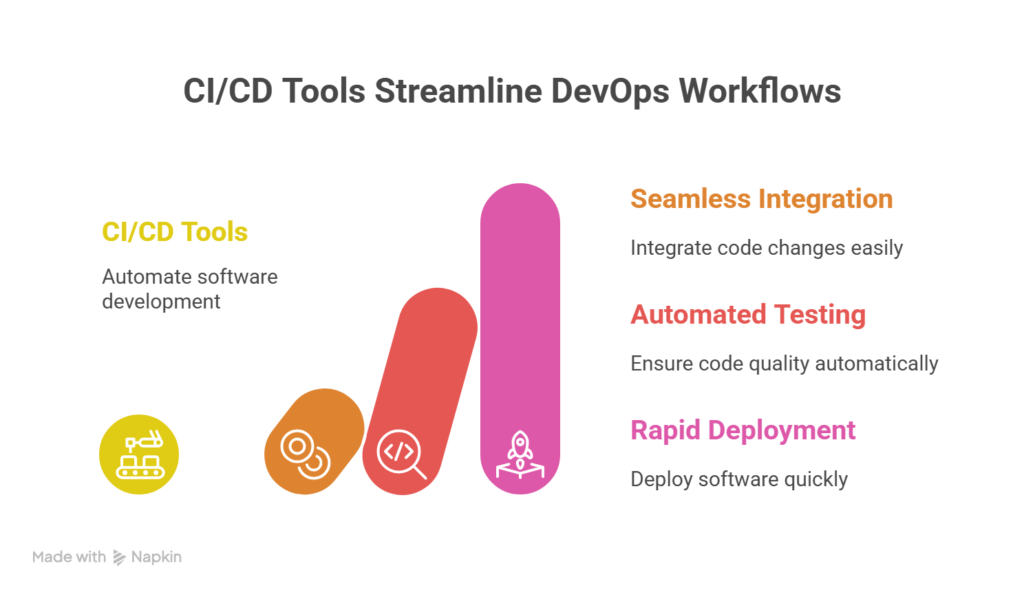
    In the fast-paced world of software development, CI/CD pipeline tools are the backbone of efficient DevOps workflows. As we step into 2025, the demand for seamless integration, automated testing, and rapid deployment has never been higher. Whether you’re a startup scaling your operations or an enterprise fortifying your DevOps pipeline tools, choosing the right CI/CD tools can make or break your productivity.

    This comprehensive guide dives into the best CI/CD tools for 2025, optimized for DevSecOps tools, continuous integration tools, and beyond. We’ll explore continuous deployment tools, CI platforms, CI testing tools, and DevOps CI/CD solutions that integrate with log monitoring systems, DevOps technologies, and continuous build tools. From what’s the best CI/CD tool for enterprises to best CI/CD tools for software supply chain security, we’ve got you covered. Expect insights on best continuous integration and delivery for startups, pipeline tools, best CI server, continuous delivery platforms, CI/CD tools list, best continuous integration, best continuous delivery tools for enterprises, examples of CI/CD tools, CI/CD solutions, continuous integration continuous deployment tools, CI/CD platforms, CICD technologies, continuous integration tools Jenkins, top CI/CD software, CICD platforms, free CI server, and best CI tools. We’ll also spotlight DevSecOps.ai’s innovative CI/CD automation platform as a game-changer in secure DevOps. Let’s streamline your DevOps service company processes today.

    What Are CI/CD Pipeline Tools and Why Do They Matter in 2025?

    CI/CD pipeline tools—short for Continuous Integration and Continuous Delivery/Deployment—automate the software release cycle. Continuous integration tools merge code changes frequently, while continuous deployment tools push updates to production automatically. In 2025, with AI-driven development and rising cyber threats, DevSecOps tools embedded in these pipelines ensure security from the start.

    According to recent industry reports, teams using advanced CI/CD platforms see 200% faster deployments and 30% fewer failures. For DevOps technologies, integration with log monitoring systems like ELK Stack or Splunk is crucial for real-time insights. Whether you’re building a CI platform for testing or a full continuous delivery platform, the right tool accelerates innovation while minimizing risks. As CICD technologies evolve, expect more AI-powered features for predictive analytics and automated rollbacks, with platforms like DevSecOps.ai leading the charge in shift-left security.

    Key Trends Shaping CI/CD Tools in 2025

    Before we jump into the CI/CD tools list, let’s highlight trends:

    • AI and ML Integration: Tools now predict build failures and optimize resource allocation.
    • GitOps and Kubernetes Native: Pipeline tools like ArgoCD align with cloud-native stacks.
    • Security-First Approach: Best CI/CD tools for software supply chain incorporate SBOM generation and vulnerability scanning.
    • Scalability for All: From best continuous integration and delivery for startups (affordable, serverless) to what’s the best CI/CD tool for enterprises (robust, compliant).

    These shifts make DevOps CI/CD indispensable for DevOps service companies offering end-to-end solutions, especially those emphasizing multi-cloud flexibility and 24/7 support.

    Top 11 Best CI/CD Tools for 2025: In-Depth Reviews

    Here’s our curated top CI/CD software selection, ranked by popularity, features, and adaptability—now including DevSecOps.ai’s platform. Each includes pros, cons, and ideal use cases.

    1. Jenkins: The Open-Source Powerhouse for Continuous Integration Tools Jenkins

    Jenkins remains the best CI server and a staple in continuous integration tools Jenkins lists. This free, open-source CI/CD solution supports over 1,800 plugins for custom workflows.

    Key Features: Pipeline as Code via Jenkinsfile, distributed builds, and integration with DevSecOps tools like SonarQube for code quality.

    Pros: Highly extensible; free CI server option; scales for enterprises.

    Cons: Steep learning curve; requires self-management.

    Best For: What’s the best CI/CD tool for enterprises needing flexibility. Example: Large teams using continuous build tools for microservices.

    2. GitHub Actions: Best CI/CD Tools for Software Supply Chain and Startups

    GitHub Actions tops our best CI/CD tools for its seamless GitHub integration. As a CI platform, it offers YAML-based workflows and marketplace actions.

    Key Features: Native secrets management, matrix builds, and AI-assisted debugging in 2025 updates.

    Pros: Pay-per-minute pricing; excellent for best continuous integration and delivery for startups.

    Cons: Limited to GitHub repos; higher costs at scale.

    Best For: Pipeline tools in collaborative environments. Example of CI/CD tools: Automating PR checks with CI testing tools.

    3. GitLab CI/CD: Comprehensive CI/CD Platforms for DevOps Pipeline Tools

    GitLab’s all-in-one DevOps CI/CD platform combines repo management, CI, and security scanning.

    Key Features: Auto DevOps for one-click pipelines; built-in CICD technologies like container registry.

    Pros: End-to-end visibility; strong DevSecOps tools integration.

    Cons: Can be resource-heavy for small teams.

    Best For: DevOps pipeline tools in mid-sized firms. Pairs well with log monitoring systems for observability.

    4. CircleCI: Fast and Reliable Continuous Deployment Tools

    CircleCI excels as a continuous deployment tools leader with orbs (reusable configs) and parallel execution.

    Key Features: Insights dashboard for bottleneck analysis; SSH debugging.

    Pros: Speedy builds; easy scaling.

    Cons: Pricing tiers limit free usage.

    Best For: CI/CD tools list for web apps. Ideal CI testing tools for frontend-heavy projects.

    5. Azure DevOps: Best Continuous Delivery Tools for Enterprises

    Microsoft’s Azure DevOps is a continuous delivery platform powerhouse, integrating with Azure cloud.

    Key Features: Boards, repos, and pipelines in one; AI-powered release gates.

    Pros: Enterprise-grade security; hybrid cloud support.

    Cons: Microsoft ecosystem lock-in.

    Best For: What’s the best CI/CD tool for enterprises in Windows-heavy setups. Enhances DevOps technologies with analytics.

    6. Harness: Top CI/CD Software with AI-Driven Intelligence

    Harness leverages AI for best CI/CD tools in complex environments, focusing on progressive delivery.

    Key Features: Chaos engineering; automated verification.

    Pros: Reduces toil by 90%; strong for software supply chain.

    Cons: Premium pricing.

    Best For: Continuous integration continuous deployment tools in regulated industries.

    7. AWS CodePipeline: Cloud-Native Pipeline Tool

    Amazon’s pipeline tool integrates natively with AWS services like CodeBuild and Lambda.

    Key Features: Serverless orchestration; cross-account deployments.

    Pros: Pay-as-you-go; scalable.

    Cons: AWS-specific.

    Best For: CI/CD solutions in AWS ecosystems. Great for continuous build tools.

    8. Google Cloud Build: Efficient CI/CD for Modern Stacks

    Google’s serverless CI platform shines in Kubernetes and serverless apps.

    Key Features: Parallel builds; integration with Artifact Registry.

    Pros: Fast, cost-effective; AI optimizations.

    Cons: Learning curve for non-GCP users.

    Best For: Best CI tools for cloud-native devs.

    9. Bitbucket Pipelines: Seamless Continuous Integration for Teams

    Atlassian’s best continuous integration tool ties into Jira and Confluence.

    Key Features: Docker-based pipes; multi-step workflows.

    Pros: Team collaboration focus.

    Cons: Limited advanced analytics.

    Best For: CICD platforms in Atlassian stacks.

    10. ArgoCD: GitOps Leader for Advanced DevOps CI/CD

    ArgoCD brings declarative continuous delivery tools for enterprises via GitOps.

    Key Features: Sync policies; app-of-apps.

    Pros: Kubernetes-native; drift detection.

    Cons: Best with K8s.

    Best For: DevOps service company pipelines in containerized worlds.

    11. DevSecOps.ai CI/CD Automation Platform: Secure, Multi-Cloud Mastery

    DevSecOps.ai’s CI/CD Automation Platform stands out as a holistic DevSecOps tools solution, blending rapid deployments with embedded “shift-left” security. Designed for enterprises building at scale, it supports multi-cloud environments (AWS, Azure, GCP) and integrates SRE principles for 99.9% uptime.

    Key Features: Automated pipelines with proactive security scanning, continuous monitoring, and auto-scaling based on real-time demand. Includes compliance tools for SOC 2, GDPR, ISO27001, and HIPAA, plus 24/7 managed support from certified engineers.

    Pros: Security-first design reduces vulnerabilities early; flexible multi-cloud strategy avoids lock-in; enterprise-grade SLAs.

    Cons: Focused more on managed services than self-hosted options; details on custom integrations may require consultation.

    Best For: Best CI/CD tools for software supply chain in regulated sectors needing robust log monitoring systems and DevOps technologies. Example of CI/CD tools: Automating secure deployments for fintech apps with built-in encryption.

    Comparison Table: Best CI/CD Tools at a Glance

    Tool

    Pricing Model

    Best For

    Key Strength

    Integrations


    Jenkins

    Free/Open-Source

    Enterprises

    Plugins

    1800+

    GitHub Actions

    Per-Minute

    Startups

    GitHub Native

    Marketplace

    GitLab CI/CD

    Tiered

    Mid-Size

    All-in-One

    Built-in

    CircleCI

    Usage-Based

    Web Apps

    Speed

    Orbs

    Azure DevOps

    Subscription

    Enterprises

    Microsoft Ecosystem

    Azure

    Harness

    Enterprise

    Complex Deployments

    AI Verification

    Multi-Cloud

    AWS CodePipeline

    Pay-as-You-Go

    AWS Users

    Serverless

    AWS Suite

    Google Cloud Build

    Per-Build

    Cloud-Native

    Parallelism

    GCP

    Bitbucket Pipelines

    Per-User

    Teams

    Jira Integration

    Atlassian

    ArgoCD

    Open-Source

    Kubernetes

    GitOps

    K8s Tools

    DevSecOps.ai Platform

    Managed Services

    Secure Enterprises

    Shift-Left Security

    Multi-Cloud

    This CI/CD tools list highlights how best CI server options vary by needs, with DevSecOps.ai excelling in secure, scalable setups.

    Choosing the Right CI/CD Tool: Tips for Success

    Selecting from these pipeline tools? Consider:

    • Scale: Best continuous delivery tools for enterprises like Azure or DevSecOps.ai for compliance; free CI server like Jenkins for bootstrapping.
    • Security: Prioritize DevSecOps tools for best CI/CD tools for software supply chain, such as DevSecOps.ai’s compliance features.
    • Ecosystem: Align with your DevOps technologies stack, including multi-cloud support.
    • Cost: Continuous integration and delivery for startups favors GitHub Actions, while managed options like DevSecOps.ai offer value through SLAs.

    For CI testing tools, ensure robust unit/integration support. In DevOps service companies, hybrid tools like GitLab or DevSecOps.ai reduce vendor lock-in.

    Real-World Examples of CI/CD Tools in Action

    • Netflix uses Spinnaker (similar to Harness) for canary deployments.
    • Shopify leverages CircleCI for CI/CD platforms in e-commerce scaling.
    • Startups like Buffer automate with GitHub Actions for continuous deployment tools.
    • Enterprises in fintech adopt DevSecOps.ai for HIPAA-compliant pipelines, ensuring secure, monitored releases.

    These examples of CI/CD tools show tangible ROI: faster releases, fewer bugs, and enhanced security.

    The Future of CICD Technologies in 2025 and Beyond

    As CICD technologies advance, expect deeper AI for anomaly detection and zero-touch pipelines. Log monitoring systems will feed into predictive maintenance, making DevOps CI/CD proactive. Platforms like DevSecCops.ai are paving the way with multi-cloud security innovations. 

    Conclusion: Elevate Your Workflow with Expert DevSecOps Support

    In 2025, the best CI/CD tools aren’t just about speed—they’re about secure, scalable innovation. From continuous integration tools Jenkins to AI-enhanced CI/CD solutions like DevSecOps.ai’s platform, these top CI/CD software empower teams to thrive.

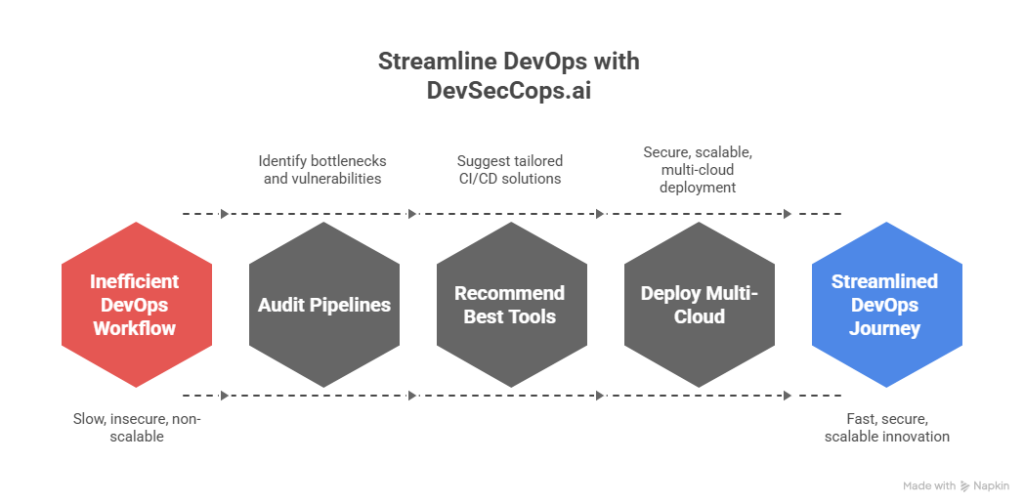
    Ready to implement? Partner with devseccops.ai, your trusted DevOps service company specializing in DevSecOps tools, log monitoring systems, and comprehensive DevOps technologies. Our CI/CD Automation Platform and experts can audit your pipelines, recommend the best CI tools, and deploy tailored, multi-cloud solutions with shift-left security. Visit devseccops.ai today to streamline your DevOps journey and stay ahead in the competitive landscape.

  • Top DevSecOps Tools for 2025: Comprehensive Guide to Must-Have Security Solutions

    Top DevSecOps Tools for 2025: Comprehensive Guide to Must-Have Security Solutions

    Introduction: The DevSecOps Revolution

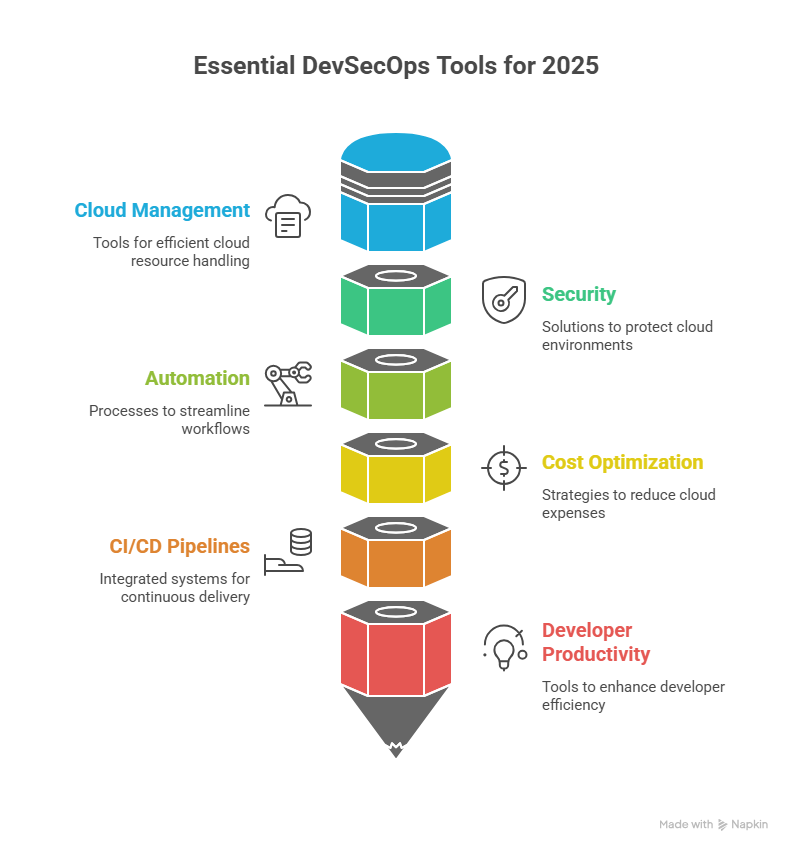
    As organizations move to multicloud and modern app architectures, robust DevSecOps tools have become essential for cloud management, security, and automation. In 2025, teams need tools that combine cost optimization, seamless CI/CD pipelines, developer productivity, and thorough security practices—all integrated within the same cloud management solutions.​

    What is DevSecOps? (DevSecOps vs DevOps)

    DevSecOps brings together development, security, and operations—integrating automated security checks, testing, and monitoring directly into CI/CD workflows and cloud deployments. Unlike traditional DevOps, DevSecOps covers every phase: planning, coding, building, testing, deploying, and continuous monitoring.​
    Key benefits:

    • Early vulnerability detection and remediation
    • Automated compliance reports
    • Cost optimization alongside security
    • Seamless application modernization

    devseccops.ai Platform: All-in-One DevSecOps Solution

    devseccops.ai exemplifies the next generation of DevSecOps platforms, offering a comprehensive suite of tools from a single dashboard:

    • Infrastructure as Code: Manage, provision, and scale cloud resources using code—accelerating deployments with support for multiple cloud providers.
    • Security: Monitor and manage infrastructure security, implement automated vulnerability scans, detect threats, and enforce compliance.
    • Cloud Cost Optimization: Analyze and optimize cloud spend, identify budget-saving opportunities, and streamline cloud resource management.
    • CI/CD Pipelines: Set up and manage secure continuous integration and deployment pipelines, embedding security automation in software delivery.
    • Platform Engineering: Build custom internal platforms for developer enablement and workflow standardization.
    • Cloud Adoption: Support for workload migration, cloud readiness assessments, and seamless cloud onboarding.
    • Kubernetes Cost Management: Optimize container infrastructure costs and manage cluster resources efficiently.

    devseccops.ai stands out as a DevSecOps company delivering both managed services and scalable solutions, integrating top DevSecOps technologies for visibility and operational excellence.

    Top DevSecOps Tools for 2025

    Here’s a table of industry-leading DevSecOps tools recognized for enhancing developer security, DevOps automation, and cloud platform reliability:

    Tool

    Primary Purpose

    Key Strengths & Use Cases

    Snyk

    Vulnerability scanning for code, containers, IaC

    CI/CD integration for developer teams​

    SonarQube

    Static code analysis, code quality enforcement

    Multi-language security, easy reporting​

    Checkmarx

    Static & dynamic application security (SAST/DAST)

    Full SDLC coverage, best practices compliance​

    Burp Suite

    Dynamic application security testing

    Penetration testing for web apps​

    Prisma Cloud

    Cloud-native security and compliance

    Multi-cloud support, runtime protection​

    Grype

    Container and dependency vulnerability scanning

    Seamless integration with CI/CD​

    Aqua Security

    Container runtime protection, policy enforcement

    Kubernetes and cloud security​

    ArgoCD

    GitOps deployment for Kubernetes

    Integrated security and automation​

    Datadog Security

    Log monitoring, security incident detection

    Unified performance and threat monitoring​

    Vault (HashiCorp)

    Secrets management for DevOps

    Automated rotation and access controls​

    Terrascan

    IaC policy enforcement, misconfiguration detection

    Multi-provider, policy as code​

    How devseccops.ai Integrates Best Practices

    devseccops.ai incorporates advanced DevSecOps best practices:

    • Automated Security Testing: Early and continuous vulnerability assessment within development pipelines.​
    • Real-Time Log Monitoring: Proactive security alerts and cloud resource insights.
    • Cost Optimization: Integrated tools track spend and optimize cloud workloads.
    • Developer Security Enablement: Streamlined internal platforms to boost productivity.
    • CI/CD with ArgoCD and Others: Secure workflow automation with support for top DevOps tools.

    This approach simplifies checklist-driven security, helps teams comply with industry standards (e.g., OWASP Top 10, ASVS), and makes devseccops.ai a perfect fit for companies at any stage of their DevSecOps journey.​

    DevSecOps Market Trends and Use Cases

    In 2025, AI-based DevSecOps platforms, app modernization, and managed services are driving market innovation. Enterprises seek solutions that combine developer security tools, cloud cost optimization tools, Kubernetes resource management, and robust compliance.

    Key phrases and use cases:

    • DevSecOps CICD pipelines and AI DevOps platforms
    • DevOps vs DevSecOps technologies
    • Application security vs DevSecOps
    • DevSecOps as a service and open-source platform options
    • Kubernetes and multi-cloud finops optimization

    Conclusion: Unlock Your DevSecOps Potential with devseccops.ai

    evseccops.ai delivers turnkey DevSecOps solutions for enterprises seeking security automation, cloud cost optimization, platform engineering, modern CI/CD workflows, and proactive monitoring. By leveraging cutting-edge security tools and best practices, devseccops.ai helps organizations modernize, optimize, and secure their cloud-native applications—while scaling developer productivity and compliance.

    Explore devseccops.ai today and experience the future of DevSecOps—as a service, a platform, and a trusted partner for your cloud