Why Choosing the Right DevSecOps Company Is Critical for Modern Businesses
In today’s fast-paced digital landscape, organizations are under constant pressure to deliver software faster while maintaining security, compliance, and operational efficiency. Traditional development and security practices often operate in silos, creating delays, vulnerabilities, and increased business risks. This is where a specialized DevSecOps company becomes essential. A DevSecOps company helps organizations integrate security into every stage of the software development lifecycle (SDLC), ensuring that applications are built, tested, deployed, and monitored with security as a core component rather than an afterthought. As cyber threats continue to evolve and compliance requirements become more stringent, businesses are increasingly turning to DevSecOps service providers to achieve secure, scalable, and reliable software delivery. This article explores the role of a DevSecOps company, the benefits of implementing DevSecOps practices, and how organizations can choose the right partner to accelerate their digital transformation journey. What Is DevSecOps? DevSecOps stands for Development, Security, and Operations. It is a modern software development methodology that integrates security practices directly into DevOps workflows. Traditionally, security checks were performed at the end of the development cycle, often resulting in delayed releases and costly remediation efforts. DevSecOps shifts security left by embedding automated security testing, vulnerability scanning, compliance checks, and monitoring throughout the development process. The goal is simple: build secure applications faster without compromising innovation or agility. Why Businesses Need a DevSecOps Company As organizations embrace cloud-native architectures, microservices, containers, and AI-driven applications, the attack surface continues to expand. Security can no longer be treated as a separate function. A professional DevSecOps company provides the expertise, tools, and frameworks needed to establish secure software delivery pipelines while maintaining development velocity. Key challenges organizations face include: By partnering with an experienced DevSecOps service company, organizations can address these challenges effectively while improving overall software quality and operational efficiency. Core Services Offered by a DevSecOps Company 1. DevSecOps Consulting A DevSecOps consulting engagement begins with assessing the current development, security, and operational processes. Experts identify security gaps, workflow inefficiencies, and compliance challenges before designing a tailored DevSecOps strategy. Consulting services typically include: 2. CI/CD Pipeline Security Continuous Integration and Continuous Deployment (CI/CD) pipelines are the backbone of modern software delivery. A DevSecOps company helps secure CI/CD environments by implementing: This ensures vulnerabilities are identified and addressed before reaching production environments. 3. Infrastructure as Code (IaC) Security Infrastructure as Code has become a standard practice for managing cloud environments. DevSecOps experts secure IaC configurations by: This significantly reduces risks associated with manual infrastructure provisioning. 4. Container and Kubernetes Security Containers and Kubernetes have transformed application deployment, but they also introduce unique security challenges. A DevSecOps company provides: These measures help organizations maintain secure containerized environments at scale. 5. Cloud Security Integration Cloud adoption continues to accelerate across industries. DevSecOps providers help organizations secure environments running on AWS, Azure, and Google Cloud by implementing: Cloud security integration ensures that applications remain protected throughout their lifecycle. 6. Continuous Security Monitoring Security is not a one-time activity. A DevSecOps company establishes continuous monitoring frameworks that provide real-time visibility into: By combining monitoring and automation, organizations can proactively address security risks before they become critical issues. Benefits of Partnering with a DevSecOps Company Faster Software Delivery Automation enables development teams to release updates more frequently without sacrificing security. Security checks become integrated into the development process rather than acting as bottlenecks. Reduced Security Risks Continuous vulnerability scanning and automated testing help identify and remediate security issues early in the development cycle. Improved Compliance Organizations operating in regulated industries must meet strict compliance requirements. A DevSecOps company automates compliance validation, reducing audit preparation time and minimizing risks. Enhanced Collaboration DevSecOps breaks down barriers between development, security, and operations teams. Improved collaboration leads to faster problem-solving and better overall outcomes. Lower Operational Costs Early vulnerability detection is significantly less expensive than addressing security incidents after deployment. Automation also reduces manual effort and operational overhead. Better Customer Trust Customers expect secure digital experiences. Strong security practices help organizations protect sensitive data and maintain customer confidence. Key Technologies Used by DevSecOps Companies Modern DevSecOps implementations rely on a variety of technologies and platforms, including: CI/CD Tools Container Platforms Security Testing Tools Infrastructure Automation Monitoring and Logging The right DevSecOps company combines these technologies into a cohesive ecosystem tailored to business requirements. How to Choose the Right DevSecOps Company Selecting the right DevSecOps partner is a strategic decision that can significantly impact security posture and operational efficiency. Consider the following factors: Industry Experience Look for a company with experience supporting organizations in your industry. Industry-specific expertise often leads to faster implementation and better outcomes. Cloud Expertise Ensure the provider has deep expertise in AWS, Azure, or Google Cloud, depending on your infrastructure requirements. Security-First Approach The best DevSecOps companies prioritize security from the beginning rather than treating it as an add-on service. Automation Capabilities Automation is at the heart of successful DevSecOps adoption. Evaluate the provider’s ability to automate testing, compliance, monitoring, and remediation processes. Compliance Knowledge Organizations subject to regulatory requirements should choose a partner with experience implementing compliance frameworks and audit-ready processes. Scalability Your DevSecOps framework should grow alongside your business. Ensure the provider can support future expansion and evolving technology needs. The Future of DevSecOps As artificial intelligence, cloud-native technologies, and software supply chains become increasingly complex, DevSecOps will continue to evolve. Future trends include: Organizations that embrace these innovations will be better positioned to manage risk while accelerating digital transformation initiatives. Why Businesses Trust DevSeccOps.ai As organizations seek secure, scalable, and efficient software delivery, partnering with the right DevSecOps company becomes increasingly important. DevSeccOps.ai helps businesses integrate security seamlessly into their development and operational workflows through automation, cloud security expertise, CI/CD optimization, infrastructure security, compliance enablement, and continuous monitoring. By combining DevOps agility with robust security practices, DevSeccOps.ai empowers organizations to build resilient applications, accelerate releases, strengthen compliance, and reduce cybersecurity risks. Whether you’re modernizing legacy systems, adopting cloud-native technologies, or scaling your software delivery capabilities, DevSeccOps.ai provides the expertise and strategic guidance needed to achieve secure digital
Top DevSecOps Companies Transforming Secure Software Delivery in 2026
In today’s rapidly evolving digital landscape, organizations are under constant pressure to deliver software faster while maintaining the highest security standards. Traditional security approaches often struggle to keep pace with modern development practices, leading to vulnerabilities, compliance risks, and costly security incidents. This challenge has fueled the rise of DevSecOps—a methodology that integrates security into every phase of the software development lifecycle. As cyber threats become more sophisticated and regulatory requirements continue to expand, businesses are increasingly turning to specialized DevSecOps companies to strengthen their security posture while accelerating innovation. This article explores the importance of DevSecOps, key services offered by leading providers, and what organizations should look for when selecting a DevSecOps partner. What is DevSecOps? DevSecOps stands for Development, Security, and Operations. It extends traditional DevOps practices by embedding security controls, testing, and compliance checks throughout the software development lifecycle. Rather than treating security as a final checkpoint before deployment, DevSecOps makes security a shared responsibility across development, operations, and security teams. Core principles of DevSecOps include: Organizations adopting DevSecOps can reduce vulnerabilities, improve deployment speed, and achieve stronger regulatory compliance. Why Businesses Need DevSecOps Companies Modern applications are built using cloud-native architectures, microservices, containers, APIs, and third-party integrations. These technologies increase agility but also introduce new security challenges. DevSecOps companies help organizations: Enhance Security Throughout Development Security vulnerabilities identified during production are significantly more expensive to fix than those discovered during development. DevSecOps providers implement automated security testing early in the development cycle. Accelerate Software Releases Automated security controls eliminate bottlenecks that traditionally delay software deployments. Businesses can release features faster without compromising security. Improve Regulatory Compliance Organizations operating in regulated industries must comply with standards such as: DevSecOps companies automate compliance validation and reporting. Reduce Operational Risks Continuous monitoring and proactive vulnerability management reduce the likelihood of security breaches, downtime, and data loss. Key Services Offered by DevSecOps Companies Leading DevSecOps service providers typically offer a comprehensive suite of solutions designed to secure modern software delivery pipelines. CI/CD Security Implementation Secure Continuous Integration and Continuous Deployment pipelines are fundamental to DevSecOps. Services include: Popular CI/CD tools include: Infrastructure as Code (IaC) Security Infrastructure as Code allows organizations to provision environments using code. DevSecOps companies help secure: Automated scanning identifies misconfigurations before deployment. Application Security Testing Application security testing is a core DevSecOps capability. Common approaches include: Static Application Security Testing (SAST) Analyzes source code for vulnerabilities before execution. Dynamic Application Security Testing (DAST) Tests running applications to identify exploitable weaknesses. Interactive Application Security Testing (IAST) Combines runtime analysis with code visibility. Software Composition Analysis (SCA) Identifies vulnerabilities in open-source libraries and dependencies. Container and Kubernetes Security Containerized environments have become the standard for cloud-native applications. DevSecOps providers secure: Security measures include: Cloud Security and Governance Organizations operating in cloud environments require specialized security controls. DevSecOps companies provide security solutions for: Services often include: Vulnerability Management Continuous vulnerability assessment helps organizations proactively address security risks. Key activities include: Automated workflows help security teams focus on critical threats. Characteristics of Leading DevSecOps Companies When evaluating DevSecOps companies, organizations should consider several important factors. Deep Security Expertise The best providers possess strong expertise in: Automation-First Approach Automation is essential for scalable security. Leading companies emphasize: Cloud-Native Experience Modern businesses increasingly rely on cloud infrastructure. Experienced DevSecOps providers understand: Compliance Capabilities Compliance requirements vary across industries. Top providers support: Scalable Solutions A reliable DevSecOps partner should support growth across: Benefits of Working with a DevSecOps Company Partnering with an experienced DevSecOps company delivers measurable business value. Faster Time-to-Market Automation reduces delays associated with manual security reviews. Lower Security Risks Continuous security testing minimizes vulnerabilities. Reduced Costs Early detection of security issues lowers remediation expenses. Improved Compliance Automated controls simplify audits and regulatory reporting. Enhanced Developer Productivity Developers receive real-time security feedback without disrupting workflows. Greater Operational Efficiency Integrated processes reduce friction between development, operations, and security teams. Emerging Trends in DevSecOps for 2026 The DevSecOps landscape continues to evolve rapidly. Several trends are shaping the future: AI-Powered Security Automation Artificial Intelligence is improving: Security as Code Organizations are increasingly implementing security policies directly within infrastructure and application code. Zero Trust Architecture Zero Trust principles are becoming standard practice across DevSecOps environments. Supply Chain Security Businesses are focusing more heavily on: Continuous Compliance Automated compliance monitoring is replacing traditional periodic audits. Choosing the Right DevSecOps Partner Selecting the right DevSecOps company requires careful evaluation. Consider: A strong partner should align security objectives with business goals while enabling innovation and growth. Conclusion As software development cycles accelerate and cyber threats become increasingly sophisticated, DevSecOps has become a critical business requirement rather than an optional security enhancement. Organizations that successfully integrate security into every stage of development can achieve faster releases, stronger compliance, improved operational resilience, and reduced security risks. The most effective DevSecOps companies combine automation, cloud-native expertise, security engineering, and compliance capabilities to help businesses build secure and scalable digital products. For organizations seeking a trusted DevSecOps partner, DevSecCops.ai delivers comprehensive DevSecOps consulting, cloud security, CI/CD security automation, infrastructure security, vulnerability management, and compliance-driven solutions. By embedding security into every layer of the software delivery lifecycle, DevSecCops.ai enables businesses to innovate with confidence while maintaining robust security and governance standards. Whether you’re modernizing legacy infrastructure, securing cloud-native applications, or implementing a complete DevSecOps transformation strategy, partnering with an experienced provider can significantly strengthen your organization’s security posture and accelerate digital success.
Cloud-Native Transformation: How DevSecCops.ai Built a Scalable, Secure, and High-Performance AWS Platform
Introduction As businesses scale their digital operations, infrastructure complexity grows rapidly. High traffic volumes, evolving security requirements, faster release cycles, and increasing customer expectations demand a modern cloud architecture capable of delivering reliability, scalability, and operational efficiency. A leading recruitment technology platform partnered with DevSecCops.ai to modernize its application infrastructure, streamline deployments, improve cloud security, and establish a future-ready platform capable of supporting large-scale workloads. Leveraging AWS, Kubernetes, DevOps automation, Infrastructure as Code (IaC), and cloud-native security practices, DevSecCops.ai designed and implemented a highly available, secure, and scalable architecture that significantly improved operational performance while reducing deployment complexity. The Challenge The client operated a large-scale digital platform serving millions of user interactions and required a modern infrastructure capable of supporting continuous growth. Several challenges needed to be addressed: The organization sought a cloud-native architecture that could improve operational agility while maintaining enterprise-grade security and performance. DevSecCops.ai Solution Overview DevSecCops.ai designed and implemented a comprehensive AWS-based architecture focused on scalability, automation, security, and reliability. The solution included: The resulting platform provided a resilient foundation capable of supporting current business requirements while enabling future growth. Building a Highly Available AWS Architecture To ensure maximum uptime and fault tolerance, the infrastructure was deployed within a dedicated Amazon Virtual Private Cloud (VPC) in the AWS Mumbai Region. The architecture followed a multi-tier design consisting of: Public Subnets Used for: Private Subnets Used for: This network segmentation enhanced security by preventing direct internet exposure of critical backend services. The architecture was distributed across multiple Availability Zones, ensuring business continuity and minimizing the impact of infrastructure failures. Edge Security and Content Delivery Optimization Performance and security began at the edge. User traffic was routed through a layered architecture that included: This approach delivered several benefits: The combination of content delivery and security controls ensured both performance and protection at scale. Application Scalability with Auto Scaling One of the key objectives was ensuring the platform could automatically respond to fluctuating traffic demands. To achieve this, DevSecCops.ai implemented: AWS Auto Scaling Groups Application workloads were distributed across multiple Availability Zones and configured with automated scaling policies. Benefits included: This architecture ensured applications remained responsive during traffic spikes while optimizing cloud resource consumption. Kubernetes Adoption with Amazon EKS As part of the modernization initiative, DevSecCops.ai implemented Amazon Elastic Kubernetes Service (EKS) to support containerized workloads. The Kubernetes platform enabled: Container images were securely stored in Amazon Elastic Container Registry (ECR), providing a centralized repository for application artifacts. By adopting Kubernetes, the organization established a strong foundation for future microservices adoption and application modernization initiatives. Modern Data Architecture Data services were deployed in isolated private subnets to maximize security and operational reliability. Amazon RDS for MySQL Amazon RDS was implemented to manage relational database workloads while providing: Amazon ElastiCache (Redis) Redis was integrated to support: Amazon S3 Amazon S3 was utilized for: Together, these services created a highly resilient and scalable data layer capable of supporting enterprise workloads. CI/CD Automation and GitOps Implementation Accelerating software delivery was a critical project objective. DevSecCops.ai implemented a modern CI/CD pipeline using: Automated Deployment Workflow This GitOps-driven approach improved deployment consistency, reduced manual errors, and enabled faster release cycles. Secure Configuration and Secrets Management Managing sensitive information securely is a critical component of modern cloud infrastructure. DevSecCops.ai implemented: AWS Systems Manager Parameter Store Used for: AWS Secrets Manager Used for: These services eliminated the risks associated with hardcoded credentials and improved overall security posture. Enterprise-Grade Cloud Security Security was integrated throughout the infrastructure using a DevSecOps-first approach. AWS Key Management Service (KMS) Implemented for: AWS IAM Role-based access control and least-privilege policies ensured secure access across the environment. AWS GuardDuty Enabled intelligent threat detection and continuous monitoring for suspicious activity. AWS Security Hub Provided centralized visibility into: These controls helped establish a comprehensive cloud security framework aligned with AWS security best practices. Event-Driven Architecture and Asynchronous Processing To improve scalability and decouple application services, DevSecCops.ai implemented event-driven workflows using: AWS Lambda Used for: Amazon SQS Used for: This architecture improved application resilience while supporting scalable asynchronous operations. Monitoring, Logging, and Observability Operational visibility is essential for maintaining high-performing cloud environments. DevSecCops.ai implemented a centralized observability strategy using Amazon CloudWatch and Amazon SNS. The monitoring ecosystem provided visibility into: Centralized logging and monitoring significantly improved troubleshooting capabilities and proactive operational management. Infrastructure as Code (IaC) and DevOps Excellence To ensure consistency and repeatability, infrastructure provisioning was automated through Infrastructure as Code practices. Infrastructure automation covered: Benefits included: This DevOps-driven approach allowed teams to manage infrastructure with greater speed and reliability. Business Outcomes The implemented solution delivered significant operational and business benefits. Key Achievements ✅ Highly available AWS infrastructure ✅ Improved application performance ✅ Kubernetes-powered container platform ✅ Automated CI/CD pipelines ✅ Enhanced cloud security posture ✅ Centralized monitoring and observability ✅ Reduced manual deployment effort ✅ Faster release cycles ✅ Improved scalability and resilience ✅ Future-ready cloud-native architecture The platform now provides a secure, scalable, and operationally efficient environment capable of supporting continued business growth and innovation. Conclusion Modern enterprises require more than just cloud infrastructure—they need a secure, automated, and scalable foundation that enables continuous innovation. Through AWS cloud architecture, Kubernetes adoption, DevOps automation, Infrastructure as Code, cloud security best practices, and advanced monitoring capabilities, DevSecCops.ai successfully transformed a large-scale digital platform into a resilient, cloud-native ecosystem. Whether you’re looking to implement AWS DevOps, Kubernetes consulting, cloud migration services, CI/CD automation, cloud security solutions, or Infrastructure as Code, DevSecCops.ai helps organizations build secure and scalable cloud platforms that drive long-term business success.
Cloud Cost Optimization in 2026: How AI is Reducing Enterprise Cloud Spend
Cloud adoption continues to accelerate across enterprises, but so do cloud expenses. In 2026, organizations are facing increasing pressure to optimize operational efficiency while maintaining scalability, performance, and security. As multi-cloud and cloud-native ecosystems become more complex, businesses are turning toward AI-driven Cloud Cost Optimization strategies to control spending and improve infrastructure utilization. Traditional manual approaches to cloud cost management are no longer sufficient. Enterprises operating across AWS, Azure, and GCP environments generate enormous volumes of infrastructure data that are difficult to analyze manually. This is where AI Cloud Optimization and intelligent automation are transforming the future of cloud operations. From predictive scaling to Kubernetes Cost Optimization and FinOps Automation, artificial intelligence is helping enterprises reduce waste, improve visibility, and maximize ROI across cloud environments. Why Enterprise Cloud Costs Are Rising in 2026 Cloud spending has become one of the largest operational expenses for modern enterprises. Several factors contribute to rising costs: Many organizations migrate to the cloud expecting lower operational costs, but without proper Cloud Governance and optimization strategies, cloud environments become expensive and inefficient. The rise of Platform Engineering and cloud-native architectures has also introduced additional operational layers that require continuous monitoring and automation. The Rise of AI-Powered Cloud Cost Optimization AI is changing how enterprises manage infrastructure. Instead of relying on manual analysis and reactive cost-cutting, organizations now use AI-powered Infrastructure Management systems that continuously monitor cloud resources in real time. AI Cloud Operations platforms analyze usage patterns, predict workload behavior, and automatically optimize resource allocation. These systems help organizations identify waste before it impacts budgets. Key capabilities of AI Cloud Optimization include: As cloud ecosystems grow more dynamic, AI-driven Infrastructure Automation is becoming essential for enterprise scalability. How FinOps Services Are Evolving with AI FinOps Services are no longer limited to financial reporting and cloud billing analysis. In 2026, modern FinOps Automation platforms integrate AI to provide proactive recommendations and automated decision-making. AI-driven FinOps solutions help enterprises: 1. Detect Cost Anomalies Instantly Machine learning algorithms identify unusual spending spikes across AWS, Azure, and GCP environments before they become major financial issues. 2. Predict Future Cloud Spend AI models analyze historical trends and forecast future infrastructure costs with high accuracy. 3. Optimize Resource Allocation AI continuously adjusts infrastructure based on workload requirements, eliminating unnecessary spending. 4. Improve Team Accountability Advanced Cloud Governance tools provide department-level cost visibility and resource ownership tracking. By combining Cloud Cost Management with AI-driven analytics, enterprises gain greater control over operational expenses. Kubernetes Cost Optimization with AI Kubernetes remains a core component of cloud-native infrastructure, but it is also one of the biggest contributors to cloud waste when not properly optimized. Many enterprises overprovision Kubernetes clusters to avoid performance issues, leading to significant resource inefficiencies. AI-powered Kubernetes Cost Optimization helps organizations: AI systems continuously analyze workload behavior and dynamically adjust cluster resources in real time. For enterprises running large-scale containerized environments, Kubernetes optimization can reduce cloud spending by 30% or more while improving overall application performance. AI-Driven Autoscaling and Infrastructure Efficiency Traditional autoscaling policies rely on static thresholds, which often fail to adapt to unpredictable workloads. AI Infrastructure Automation introduces predictive autoscaling that adjusts infrastructure proactively. Instead of reacting after demand spikes occur, AI systems anticipate traffic patterns using historical data and behavioral analysis. Benefits include: AI-powered Infrastructure Automation is especially valuable for enterprises handling seasonal traffic, SaaS workloads, and large-scale digital platforms. AWS, Azure, and GCP Cost Optimization Strategies Each cloud platform presents unique optimization opportunities. AWS Cost Optimization AWS environments often contain unused EC2 instances, excessive storage allocations, and inefficient Reserved Instance usage. AI-driven AWS Cost Optimization strategies include: Azure Cost Management Azure enterprises benefit from AI-powered monitoring and governance tools that optimize hybrid cloud environments. Key Azure Cost Management practices include: GCP Cost Optimization GCP workloads often involve data-intensive applications and AI processing environments. AI-driven GCP Cost Optimization focuses on: Organizations using multi-cloud environments increasingly rely on centralized AI Cloud Operations platforms to unify optimization strategies across providers. The Role of Cloud Automation Services Modern enterprises cannot achieve sustainable cost optimization without automation. Cloud Automation Services help organizations streamline infrastructure management through: Automation reduces operational overhead while improving scalability and reliability. When combined with AI DevOps Services and DevSecOps Automation, organizations gain end-to-end operational efficiency across development, security, and infrastructure workflows. Real-World Enterprise Cloud Optimization Strategies Leading enterprises are implementing several proven strategies to reduce cloud spending in 2026. Implement Continuous Cost Monitoring Real-time visibility is essential for proactive optimization. Adopt AI-Powered Resource Rightsizing AI helps dynamically allocate the correct compute and storage resources. Optimize Kubernetes Infrastructure Continuous cluster optimization prevents resource waste. Use Predictive Autoscaling AI forecasting improves infrastructure responsiveness. Establish Strong Cloud Governance Governance frameworks reduce shadow IT and unnecessary provisioning. Integrate FinOps with DevOps Cross-functional collaboration improves accountability and optimization outcomes. Organizations that combine AI Cloud Optimization with strong operational governance achieve long-term Cloud Efficiency and better business scalability. Why Cloud-Native Optimization Matters Cloud-native environments introduce both flexibility and complexity. Microservices, containers, serverless functions, and distributed workloads require advanced optimization strategies. Cloud-native Optimization focuses on: AI enables enterprises to manage cloud-native ecosystems at scale without excessive operational costs. As enterprises continue adopting Platform Engineering models, cloud optimization becomes a foundational business requirement rather than a secondary IT initiative. How DevSecCops.ai Helps Enterprises Optimize Cloud Costs DevSecCops.ai helps enterprises modernize infrastructure through AI-powered automation, cloud optimization, DevSecOps Automation, and intelligent infrastructure management solutions. By combining FinOps Services, AI Cloud Operations, Infrastructure Automation, and cloud-native optimization strategies, DevSecCops.ai enables organizations to: Modern enterprises need more than cost-cutting tools. They need intelligent systems capable of continuously optimizing infrastructure in real time. The Future of AI-Powered Cloud Cost Management The future of Cloud Cost Optimization lies in autonomous infrastructure management. AI systems will continue evolving toward: As cloud ecosystems grow increasingly complex, enterprises that adopt AI-driven Cloud Cost Management early will gain significant competitive advantages in operational efficiency and scalability. Cloud optimization is no longer just about reducing expenses. It is about building intelligent, efficient, and resilient digital infrastructure for
Cloud Cost Optimization in 2026: How AI is Reducing Enterprise Cloud Spend
Enterprise cloud spending continues its explosive growth, projected to surpass $1 trillion globally in 2026. Yet with this expansion comes a persistent challenge: waste. Organizations typically waste 27-30% of their cloud budgets on idle resources, overprovisioning, and inefficient workloads. Cloud Cost Optimization has evolved from a periodic exercise into a continuous, AI-powered discipline that delivers sustainable savings while supporting innovation. FinOps Services combined with AI Cloud Optimization enable enterprises to align spending with business value. At DevSecCops.ai, we help organizations implement intelligent Cloud Cost Management strategies that integrate security, automation, and governance for maximum efficiency. The Rising Cloud Cost Challenge in 2026 AI and generative workloads have dramatically accelerated cloud consumption. GPU-intensive inference and training now represent a fast-growing portion of spend, with many enterprises underestimating AI infrastructure costs by up to 30%. Multi-cloud architectures, Kubernetes sprawl, and always-on resources compound the issue. Without proactive Cloud Resource Optimization, even mature organizations see efficiency rates decline. Traditional manual reviews and native cloud tools fall short against dynamic, AI-driven environments. This is where AI-powered Infrastructure Management and FinOps Automation become essential. Understanding Modern FinOps: From Visibility to Autonomous Optimization FinOps brings financial accountability to cloud operations through collaboration between finance, engineering, and business teams. In 2026, mature FinOps practices emphasize: FinOps Automation shifts organizations from reactive cost-cutting to proactive value optimization. AI-Powered Strategies for Cloud Cost Optimization AI Cloud Optimization analyzes vast telemetry data to uncover savings opportunities that humans miss. Predictive Analytics and Anomaly Detection AI models forecast usage patterns, detect unusual spikes, and trigger alerts or automated responses. This Predictive Monitoring prevents budget overruns before they occur. Intelligent Rightsizing and Resource Allocation AI continuously evaluates actual consumption against provisioned resources, recommending or automatically applying optimal configurations across compute, storage, and databases. Commitment Management Across AWS, Azure, and GCP Modern tools optimize Savings Plans, Reserved Instances, and Committed Use Discounts with real-time adjustments. AI accounts for flexibility updates in Azure RIs and GCP billing changes. Workload-Aware Automation AI-powered Infrastructure Management routes non-critical workloads to spot instances, implements intelligent shutdown policies for dev/test environments, and optimizes storage tiers dynamically. Kubernetes Cost Optimization: Taming Container Spend Kubernetes powers many enterprise workloads but introduces unique cost challenges due to dynamic scaling and resource requests. Kubernetes Cost Optimization strategies include: Continuous optimization—rather than one-time fixes—delivers 40-60% savings in many clusters while improving performance. Platform Engineering and Infrastructure Automation Platform Engineering and Infrastructure Automation embed cost guardrails into self-service platforms. DevSecOps Automation ensures security and compliance do not compromise efficiency. Cloud Automation Services using Terraform, GitOps, and policy-as-code enforce standards at deployment time, preventing wasteful configurations from reaching production. Multi-Cloud Cost Management: AWS, Azure, and GCP Each hyperscaler offers native tools, but unified visibility is key: Cross-cloud Cloud Governance platforms provide consistent reporting, allocation, and automation. Real-World Enterprise Use Cases Global Financial Institution: Facing surging AI analytics costs, the bank engaged FinOps Services to implement AI Cloud Operations. Automated rightsizing, spot instance orchestration for non-production GPU workloads, and predictive budgeting reduced overall cloud spend by 38% within six months while accelerating model deployment. Healthcare Provider: Running large Kubernetes clusters for patient data platforms, the organization applied Kubernetes Cost Optimization with OpenTelemetry observability and AI-driven autoscaling. They achieved 45% savings on compute through continuous rightsizing and sleep modes for dev environments, maintaining strict compliance. E-commerce Retailer: Multi-cloud operations across AWS and Azure saw significant waste during seasonal peaks. AI-powered Infrastructure Management and Cloud-native Optimization enabled dynamic workload shifting and intelligent commitment management, cutting costs by 32% and improving margins. These examples show how AI DevOps Services deliver measurable ROI through Cloud Efficiency. Implementing a Successful Cloud Cost Optimization Program DevSecCops.ai provides end-to-end Platform Engineering and AI DevOps Services to accelerate this journey with secure, automated solutions. The Future: Autonomous Cloud Efficiency In 2026 and beyond, Cloud Cost Optimization will become increasingly autonomous. AI agents will handle routine optimizations, while humans focus on strategic decisions. Organizations embracing AI Cloud Operations will achieve superior unit economics and competitive advantage. : Ready to transform your cloud economics? Contact DevSecCops.ai today for a Cloud Cost Optimization assessment. Our experts will identify quick wins and build a sustainable FinOps program tailored to your enterprise needs. Schedule your consultation now and start reducing spend while scaling innovation.
AI Reliability Engineering: The Future of Intelligent Cloud Operations in 2026
AI Reliability Engineering: The Future of Intelligent Cloud Operations in 2026 In the high-stakes world of enterprise cloud infrastructure, downtime is no longer just an inconvenience—it’s a direct hit to revenue, customer trust, and competitive edge. As organizations scale across multi-cloud and Kubernetes environments, traditional Site Reliability Engineering (SRE) practices are reaching their limits against exploding complexity, alert fatigue, and manual toil. AI Reliability Engineering emerges as the evolution: a discipline that fuses AI agents, advanced observability, and automation to create proactive, self-healing, and autonomous cloud systems. For CTOs, SRE teams, DevOps engineers, cloud architects, and platform engineering leaders, this shift promises not just reliability, but intelligent operations that anticipate and resolve issues before they impact the business. What Is AI Reliability Engineering? AI Reliability Engineering extends traditional SRE by embedding artificial intelligence—particularly agentic AI, machine learning for anomaly detection, and generative models for analysis—directly into reliability workflows. It moves beyond human-defined service level objectives (SLOs) and error budgets to systems that learn, predict, and act autonomously. At its core, it integrates: Predictive analytics for issue forecasting. AI-driven root cause analysis (RCA) for rapid diagnosis. Autonomous remediation for self-healing infrastructure. This creates AI-native DevOps and Cloud Reliability Engineering practices tailored for 2026-scale environments. Traditional SRE vs. AI-Powered SRE: Key Differences Traditional SRE relies on skilled engineers monitoring metrics, responding to alerts, and following runbooks. While effective at smaller scales, it struggles with modern challenges: Alert fatigue from thousands of daily notifications. Manual incident response leading to prolonged MTTR (Mean Time To Resolution). Infrastructure complexity in sprawling Kubernetes clusters and hybrid clouds. Reactive monitoring that catches issues only after they occur. AI-powered SRE flips this paradigm: Aspect Traditional SRE AI-Powered SRE Monitoring Rule-based thresholds Predictive, anomaly-based Incident Response Manual triage and runbooks AI Agents for intelligent management Root Cause Analysis Human investigation Automated, multi-signal RCA Remediation Manual or scripted Self-Healing Infrastructure Scalability Engineer-dependent Autonomous with reduced toil By 2026, leading organizations report MTTR reductions of 40-70% through AI SRE agents that investigate, diagnose, and remediate autonomously. AI in Cloud Operations: From Reactive to Predictive AI Cloud Operations leverage AIOps platforms to process vast telemetry streams. Predictive Monitoring uses machine learning to baseline normal behavior and flag deviations early—preventing outages rather than merely detecting them. AI-powered Monitoring reduces noise dramatically. Instead of flooding on-call engineers, intelligent alerting correlates signals across logs, metrics, and traces to deliver high-confidence incidents with probable causes already attached. OpenTelemetry Monitoring serves as the foundational standard here. By providing vendor-neutral, high-fidelity telemetry (metrics, logs, traces), OTel fuels AI models with the rich, contextual data they need for accurate predictions and analysis. Enterprises adopting OTel see improved AI Observability across cloud-native stacks. Intelligent Incident Management and AI-Driven Root Cause Analysis Manual RCA is one of the biggest reliability bottlenecks. AI Incident Response changes this by: Ingesting incident context instantly. Correlating events across distributed systems. Generating causal graphs and likely root causes within minutes. AI agents can query Kubernetes events, application traces, infrastructure metrics, and even GitOps change histories to pinpoint whether a deployment, configuration drift, or resource contention caused the issue. This AI-driven Root Cause Analysis not only speeds resolution but feeds back into continuous improvement loops, strengthening overall system resilience. Self-Healing Infrastructure and Autonomous Operations The pinnacle of AI Infrastructure Automation is Self-Healing Infrastructure. In Kubernetes environments, AI can automatically: Restart unhealthy pods. Scale deployments based on predictive load. Roll back faulty changes via GitOps integration. Optimize resource allocation for Cloud Performance Optimization. Combined with Terraform for infrastructure-as-code and CI/CD pipelines, this creates Autonomous Infrastructure that maintains reliability with minimal human intervention. SRE teams shift from firefighting to strategic reliability engineering. AI in DevSecOps, Platform Engineering, and Kubernetes Reliability DevSecOps Automation benefits immensely as AI embeds security scanning, compliance checks, and vulnerability remediation into pipelines. Platform Engineering Services use internal developer platforms (IDPs) enhanced with AI to provide self-service capabilities that are inherently reliable. For Kubernetes Monitoring, AI delivers cluster-wide insights, pod-level anomaly detection, and network observability—addressing scaling complexities that overwhelm traditional tools. AI-powered Cloud Security extends this by predicting misconfigurations or threat patterns before exploitation. Overcoming Enterprise Challenges Modern cloud teams face: Monitoring overload and alert fatigue. Downtime and outages in complex environments. Cloud cost inefficiencies from over-provisioning. Reliability bottlenecks in scaling Kubernetes. AI Reliability Engineering directly tackles these. Predictive detection cuts unplanned downtime. Automated remediation reduces operational overhead. Intelligent optimization improves resource efficiency and Cloud Automation Services outcomes. Enhanced observability boosts developer productivity by letting teams focus on innovation. Ready to Build Intelligent, Resilient Cloud Infrastructure? At DevSecCops.ai, we partner with enterprise teams to implement AI Reliability Engineering, AI DevOps Services, and Cloud Automation Services that drive real outcomes. Whether you’re maturing your platform engineering workflows, enhancing Kubernetes reliability, or building next-generation observability platforms, our expertise in AI-powered SRE and DevSecOps Automation helps you achieve autonomous, high-performance operations. Contact our team to explore how AI can transform your cloud reliability strategy in 2026 and beyond.
Platform Engineering Services for Modern Enterprises: Scaling DevSecOps with AI Automation
Platform Engineering Services for Modern Enterprises: Scaling DevSecOps with AI Automation In today’s cloud-native landscape, enterprises grapple with sprawling infrastructure, fragmented tools, and mounting pressure to deliver faster while maintaining security and control. Traditional DevOps practices, while foundational, often lead to inconsistent environments, high cognitive load on developers, and operational bottlenecks at scale. Platform Engineering Services address these challenges by building robust Internal Developer Platforms (IDPs) that empower teams with self-service capabilities, standardized workflows, and intelligent automation. By 2026, Gartner predicts that 80% of software engineering organizations will have platform teams, reflecting a major shift toward structured, product-oriented infrastructure management. At DevSecCops.ai, we help enterprises and scaling startups implement Platform Engineering solutions that integrate AI-powered DevOps, DevSecOps Automation, and cloud-native technologies to drive efficiency, security, and innovation. What is Platform Engineering? Platform Engineering is the discipline of designing, building, and maintaining internal platforms that provide developers with golden paths to production. These platforms abstract away underlying complexity—provisioning, security, networking, observability—while enforcing standards and best practices. Unlike ad-hoc scripting or ticket-driven operations, modern Platform Engineering Services treat the platform as a product, complete with user feedback loops, metrics, and continuous iteration. The result is a self-service infrastructure layer that accelerates delivery without sacrificing governance. DevOps vs. Platform Engineering: Understanding the Evolution While DevOps emphasizes collaboration and cultural transformation between development and operations, Platform Engineering provides the concrete tools and abstractions that make those ideals scalable. Key differences include: Focus: DevOps centers on processes and shared responsibility; Platform Engineering builds reusable, self-service systems. Developer Experience: DevOps reduces friction through automation; Platform Engineering eliminates it via intuitive portals and golden paths. Scale: Traditional DevOps can create tool sprawl at enterprise scale; Platform Engineering centralizes and standardizes. Outcome: Faster onboarding, consistent security, and measurable productivity gains. Many organizations find that strong platform practices supercharge their existing DevOps initiatives rather than replace them. AI in Platform Engineering: The Intelligent Layer AI-powered DevOps and AI Infrastructure Automation are transforming platform teams from builders of tools to orchestrators of intelligent systems. AI analyzes usage patterns, suggests optimizations, automates policy enforcement, and even generates Terraform Automation configurations. AI-native DevOps platforms can predict resource needs, detect anomalies early, and recommend improvements to Cloud Automation Services. This reduces manual toil and allows platform engineers to focus on strategic innovation. Enterprises leveraging these capabilities report significant gains in reliability and speed. AI-Powered DevSecOps Within the Platform Security cannot be an afterthought. Leading Platform Engineering initiatives embed AI DevSecOps capabilities directly into the Internal Developer Platform. Automated scanning, policy-as-code, and intelligent threat detection run continuously across the lifecycle. DevSecOps Automation ensures vulnerabilities are caught early, compliance requirements are enforced automatically, and security guardrails guide every self-service action. This approach strengthens posture while maintaining developer velocity. Kubernetes & GitOps Automation: The Foundation Kubernetes Platform Engineering has become central for enterprises running cloud-native workloads. Dedicated platform teams build abstractions over Kubernetes, making it accessible without requiring deep expertise from every developer. GitOps Automation serves as the operational backbone, providing declarative, version-controlled deployments with tools like Argo CD. Combined with Terraform Automation, teams achieve consistent, auditable infrastructure changes across environments. These practices enable Self-Service Infrastructure provisioning that is both fast and compliant. Elevating Developer Experience (DevEx) Poor developer experience is expensive. Studies show developers lose substantial time to infrastructure management and context switching. Well-designed Platform Engineering Services change this through: Self-service portals for environments and resources Golden paths for common workloads Integrated tooling that reduces cognitive load Clear documentation and feedback mechanisms Organizations with mature IDPs often see deployment frequency increase 5-10x and significant reductions in lead time. Cloud Cost Optimization and AI Operations Uncontrolled cloud spend remains a persistent challenge. Intelligent Platform Engineering incorporates Cloud Cost Optimization directly into workflows—auto-rightsizing resources, recommending spot instances, and enforcing budgets through policy. AI Cloud Operations provide predictive insights, helping teams balance performance and expenditure effectively across multi-cloud and Kubernetes environments. AI Observability & Monitoring Modern platforms require comprehensive visibility. AI Observability built on OpenTelemetry Monitoring correlates signals across distributed systems, delivering actionable insights and reducing alert fatigue. Observability Platform capabilities within the IDP help teams move from reactive firefighting to proactive, self-healing operations. The Future of AI-Native Platform Engineering Looking ahead, AI-native DevOps will drive autonomous platforms capable of self-optimization, intelligent scaling, and even automated architecture decisions. Platform teams will increasingly support LLMOps and AI workloads as first-class citizens. Success will depend on balancing automation with governance, and technology with organizational culture.Ready to build a world-class internal developer platform? DevSecCops.ai partners with CTOs and engineering leaders to deliver tailored Platform Engineering, AI-powered DevSecOps, Kubernetes Platform Engineering, and cloud modernization solutions. Our expertise helps organizations reduce operational overhead, strengthen security, and unlock developer productivity at scale.
AI DevOps Services: How GenAI is Revolutionizing Cloud & DevSecOps in 2026
AI DevOps Services: How GenAI is Revolutionizing Cloud & DevSecOps in 2026 In 2026, enterprises face unprecedented pressure to deliver software faster, more securely, and at lower cost amid exploding complexity in cloud-native environments. Traditional DevOps approaches struggle with manual processes, alert fatigue, configuration drift, and ballooning cloud bills. AI DevOps services powered by generative AI (GenAI) are changing this reality. Organizations leveraging GenAI DevOps, AI-powered DevOps, and AI DevSecOps achieve dramatic improvements in deployment speed, security posture, reliability, and operational efficiency. At DevSecCops.ai, we partner with CTOs, platform engineering teams, and cloud leaders to implement these AI-native capabilities that transform infrastructure, security, and operations. The State of Enterprise Challenges in 2026 Modern enterprises run hundreds of Kubernetes clusters, microservices, and multi-cloud workloads. Resource utilization often hovers at 35-50%, driving massive waste. Security teams battle shifting attack surfaces, while platform engineers drown in toil. Key pain points include: Slow CI/CD pipelines plagued by flaky tests and manual approvals. Reactive incident response with high MTTR. Exploding cloud costs from over-provisioned resources and idle infrastructure. Security vulnerabilities introduced late in the development cycle. Difficulty scaling MLOps and LLMOps for AI initiatives. AI DevOps services address these by infusing intelligence across the entire lifecycle—from code to production. AI in DevOps: From Automation to Autonomous Intelligence AI-powered DevOps moves beyond rule-based scripts to predictive, context-aware systems. GenAI generates infrastructure-as-code (IaC) with Terraform, optimizes pipelines, and suggests improvements based on historical data and best practices. AI-powered CI/CD pipelines now self-heal: they detect anomalies, reroute jobs, optimize test suites, and even auto-approve low-risk changes using intelligent risk scoring. GitOps workflows with tools like Argo CD become smarter, with AI ensuring declarative states remain consistent and drift-free. Kubernetes Automation benefits enormously. AI-driven controllers predict scaling needs, right-size pods proactively, and manage complex multi-cluster environments. Enterprises report up to 67% shorter release cycles when combining these capabilities. AI-Powered DevSecOps: Embedding Security by Design DevSecOps Automation shifts security left—and now, AI makes it intelligent. AI DevSecOps solutions scan code in real-time, prioritize vulnerabilities by exploitability and business impact, and even suggest or apply fixes automatically. In 2026, 63% of organizations already use AI in the SDLC, with many more planning adoption. AI copilots help developers write more secure code from the start, while automated compliance checks handle regulatory demands like NIS2 or SOC 2. Real-world impact: A financial services client working with DevSecCops.ai reduced security findings by over 70% and cut mean time to remediate by half through AI-driven policy enforcement and intelligent scanning integrated into their GitOps pipelines. Platform Engineering Services Reimagined with AI Platform Engineering has emerged as the foundation for scalable developer experiences. Platform Engineering Services powered by AI create internal developer platforms (IDPs) that abstract complexity. AI enables self-service provisioning with guardrails, golden paths for deployments, and automated environment management. Teams focus on innovation instead of wrestling with YAML or infrastructure tickets. AI Infrastructure Automation handles provisioning, patching, upgrades, and optimization. Self-Healing Infrastructure uses AI to detect issues, roll back changes, or spin up replacements autonomously—drastically reducing downtime. AI Observability: From Reactive to Proactive Traditional monitoring generates noise. AI Observability powered by OpenTelemetry Monitoring correlates logs, metrics, traces, and events across distributed systems for true root-cause analysis. AI-native DevOps platforms predict incidents before they occur, using anomaly detection and pattern recognition. Integration with OpenTelemetry provides vendor-neutral telemetry, extending visibility into CI/CD pipelines themselves. Enterprises achieve faster MTTR, reduced alert fatigue, and deeper insights into both application performance and delivery processes. LLMOps and MLOps teams benefit from specialized observability for model drift, inference costs, and prompt performance. Cloud Cost Optimization Through Intelligent Automation Cloud waste remains a top concern. Cloud Cost Optimization with AI analyzes usage patterns, recommends rightsizing, implements auto-scaling policies, and identifies orphaned resources in Kubernetes environments. AI DevOps services deliver continuous FinOps intelligence—predicting spend, enforcing budgets, and optimizing spot instances or reserved capacity dynamically. Organizations routinely achieve 20-40% savings while maintaining or improving performance. DevSecCops.ai helps clients implement these strategies across multi-cloud and hybrid setups, combining Kubernetes Automation, intelligent scheduling, and governance policies. Real-World Enterprise Use Cases Global Bank: Implemented AI-powered CI/CD and GitOps Automation, reducing deployment time from days to hours while strengthening compliance through automated security gates. SaaS Provider: Used AI Observability and self-healing systems to cut incidents by 60% and improve developer productivity. E-commerce Leader: Leveraged Platform Engineering Services with AI to create a unified control plane, accelerating feature velocity and optimizing Kubernetes costs by 35%. These outcomes highlight how DevOps Automation Services deliver measurable business value. The Future of AI-Native DevOps By late 2026 and beyond, expect agentic AI systems that manage end-to-end operations with minimal human intervention. LLMOps Services and MLOps Automation will mature, enabling seamless integration of generative AI into core business processes. AI DevOps Services will evolve toward autonomous platforms where infrastructure self-optimizes, security self-hardens, and operations self-govern. Challenges around AI governance, data privacy, and model trustworthiness will drive innovation in responsible AI practices. Enterprises that invest now in GenAI DevOps capabilities will gain significant competitive advantages in speed, resilience, and cost efficiency. Real-World Enterprise Use Cases Global Bank: Implemented AI-powered CI/CD and GitOps Automation, reducing deployment time from days to hours while strengthening compliance through automated security gates. SaaS Provider: Used AI Observability and self-healing systems to cut incidents by 60% and improve developer productivity. E-commerce Leader: Leveraged Platform Engineering Services with AI to create a unified control plane, accelerating feature velocity and optimizing Kubernetes costs by 35%. These outcomes highlight how DevOps Automation Services deliver measurable business value. The Future of AI-Native DevOps By late 2026 and beyond, expect agentic AI systems that manage end-to-end operations with minimal human intervention. LLMOps Services and MLOps Automation will mature, enabling seamless integration of generative AI into core business processes. AI DevOps Services will evolve toward autonomous platforms where infrastructure self-optimizes, security self-hardens, and operations self-govern. Challenges around AI governance, data privacy, and model trustworthiness will drive innovation in responsible AI practices. Enterprises that invest now in GenAI DevOps capabilities will gain significant competitive advantages in
DevOps Engineer Contract vs Full-Time: Save Costs Without Risk
In today’s fast-moving tech environment, companies must balance rapid innovation with smart financial decisions. The choice between hiring a DevOps engineer contract and a full-time DevOps engineer often comes down to one key question: how can you access top-tier expertise while minimizing costs and risks? A DevOps engineer contract provides on-demand access to skilled professionals for specific projects, migrations, optimizations, or peak workloads. This model has gained popularity as businesses seek agility without the long-term commitments of permanent hires. The High Cost of Full-Time DevOps Talent Full-time DevOps engineers command premium compensation due to their broad skill set—mastery of cloud platforms, CI/CD pipelines, IaC tools like Terraform, container orchestration with Kubernetes, monitoring, and automation. As of 2026, average full-time DevOps engineer salaries in the US range from $130,000 to $143,000 in base pay, with total compensation (including bonuses and benefits) often reaching $150,000–$176,000 or higher for senior roles. Glassdoor reports median total pay around $143,000–$150,000, while Built In and other sources place averages at $133,740 base plus additional cash. Beyond salary, employers face: This makes the true annual cost of a full-time DevOps engineer easily exceed $180,000–$250,000, especially in high-cost areas or for senior talent. Hiring full-time also carries risks: if the engineer underperforms, leaves unexpectedly, or the project scope changes, companies absorb severance, rehiring costs, or idle capacity during slowdowns. Why a DevOps Engineer Contract Often Saves Money A DevOps engineer contract (or contract DevOps engineer) typically bills hourly or on fixed-scope/project basis. Contract rates average $60–$100+ per hour in 2026, equating to $125,000–$200,000 annualized for full-time equivalent work—but companies pay only for active hours. Key cost-saving advantages: For example, a 6-month migration project might cost $80,000–$120,000 via contract versus $100,000+ in prorated full-time salary plus benefits and hiring delays. Contractors also bring diverse experience from multiple clients, accelerating delivery with best practices that internal hires might take months to learn. Risk Comparison: Contract vs Full-Time Full-time hires involve significant risks: A DevOps engineer contract mitigates these: While contractors may lack deep company knowledge initially, this is offset by focused scope and rapid onboarding from experienced professionals. When to Choose Contract DevOps Engineer Opt for a DevOps engineer contract when: Platforms like Toptal, Upwork, or specialized DevOps recruiters deliver vetted contractors in days. Complementary Options: Outsourcing and Managed Services For broader or ongoing needs, consider DevOps outsourcing services—dedicated teams handling end-to-end operations—or DevOps managed services for proactive, 24/7 support. These models provide scalability, predictable pricing, and expert access without building internal teams. Many start with a contract DevOps engineer for quick wins, then transition to DevOps outsourcing services for sustained efficiency. Security and Innovation Integration Modern DevOps demands security from day one. Partnering with leading DevSecOps companies embeds automated scans, compliance, and policy-as-code into pipelines—reducing vulnerabilities while maintaining velocity. Looking forward, GenAI for DevOps revolutionizes workflows: AI generates IaC, optimizes pipelines, detects anomalies, and suggests fixes. Contractors or outsourced teams leveraging GenAI deliver amplified productivity, faster resolutions, and smarter cost controls. Conclusion: Smarter Scaling with Lower Risk Choosing a DevOps engineer contract over full-time hires enables companies to save significantly on costs—often 30-50% for project-based work—while dodging the risks of long-term commitments, slow hiring, and overhead. Whether for targeted projects, seasonal scaling, or bridging talent gaps, this flexible model delivers expertise fast and affordably. Combine it with DevOps outsourcing services or DevOps managed services for comprehensive coverage. For organizations prioritizing secure, AI-driven operations, innovative platforms from DevSecOps companies like devseccops.ai automate DevSecOps, CI/CD, compliance, observability, and more—helping teams build resilient systems efficiently in an evolving landscape. Embracing a DevOps engineer contract isn’t about cutting corners—it’s about strategic, low-risk scaling that keeps innovation moving forward.
DevOps Outsourcing Services: Reduce Cloud Costs and Ship Faster
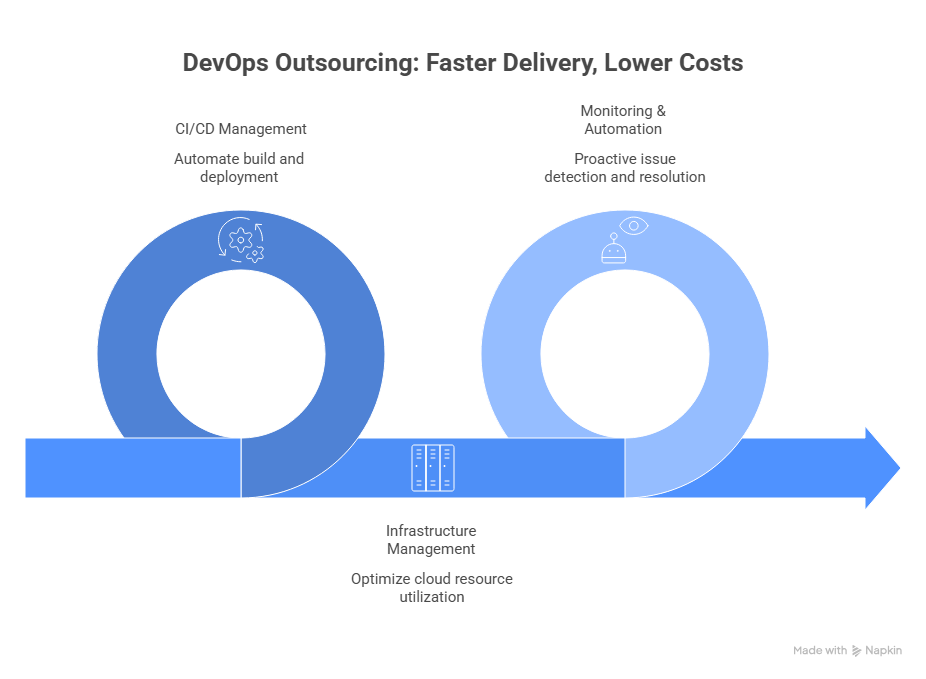
DevOps Outsourcing Services: Reduce Cloud Costs and Ship Faster In today’s competitive software landscape, companies strive to deliver features rapidly while keeping infrastructure expenses under control. DevOps outsourcing services have emerged as a powerful solution, enabling teams to ship software faster and significantly reduce cloud costs without building expensive in-house capabilities. DevOps outsourcing services involve partnering with specialized providers who manage your CI/CD pipelines, infrastructure, monitoring, automation, and cloud optimization. This approach delivers immediate expertise, scalability, and efficiency—often transforming months-long internal efforts into days or weeks of progress. The Dual Challenge: Speed vs. Cost in Modern Development Many organizations face exploding cloud bills from over-provisioned resources, idle instances, and inefficient scaling. At the same time, slow release cycles hinder market responsiveness—leading to delayed features, lost revenue, and frustrated customers. Traditional in-house DevOps teams require heavy investment: high salaries for skilled engineers, ongoing training, tools licensing, and time to hire (often 3-6 months). DevOps outsourcing services flip this model by providing access to pre-vetted experts on flexible terms, allowing focus on core product innovation rather than operational overhead. How DevOps Outsourcing Services Reduce Cloud Costs Cloud waste remains a top concern—Gartner estimates organizations waste up to 30-40% of cloud spend on unused or misconfigured resources. DevOps outsourcing services tackle this head-on through proven optimization practices. Outsourced teams implement: FinOps practices — Tagging resources, setting budgets, and using tools for real-time visibility to identify waste. Right-sizing and auto-scaling — Analyzing usage patterns to downsize instances, leverage spot/reserved pricing, and automate shutdowns for non-production environments. Infrastructure as Code (IaC) — Using Terraform or Pulumi to provision efficiently, avoiding manual errors that lead to over-provisioning. Container orchestration — Migrating to Kubernetes or serverless setups that dynamically allocate resources, often cutting bills by 30-50%. Real-world examples show dramatic results. One SaaS provider reduced AWS costs by 34% through strategic right-sizing and storage optimization after partnering with a DevOps provider. Another fintech client achieved 30% savings by shifting to managed Kubernetes with automated cost controls. These outcomes stem from external specialists who bring battle-tested playbooks across multiple clients and clouds (AWS, Azure, GCP), spotting inefficiencies internal teams often miss. Beyond direct savings, DevOps outsourcing services eliminate hidden costs like benefits, office space, recruitment fees, and tool sprawl. Providers often operate on pay-as-you-go or fixed-scope models, turning unpredictable CapEx into predictable OpEx. Accelerating Software Delivery with DevOps Outsourcing Speed wins markets. High-performing teams deploy multiple times per day with low failure rates, per DORA reports. DevOps outsourcing services enable this velocity by automating the entire delivery pipeline. Key accelerators include: CI/CD mastery — Automated builds, tests, and deployments reduce lead times from weeks to minutes. Continuous testing and feedback — Shift-left security and quality checks catch issues early, minimizing rework. 24/7 monitoring and incident response — Outsourced teams provide always-on support, slashing mean time to recovery (MTTR). Scalable expertise — Access to specialists in advanced tools (Kubernetes, GitOps, observability stacks) without lengthy hiring. Companies report 2x faster delivery after outsourcing DevOps. One example saw release cycles drop from quarterly to weekly through automated pipelines. Another achieved 100% faster application delivery per AWS benchmarks by leveraging outsourced automation. This speed translates to quicker feature launches, faster customer feedback loops, and stronger competitive positioning. Complementary Models: Contract DevOps Engineer and Managed Services For targeted needs, a contract DevOps engineer offers on-demand help—ideal for migrations, optimizations, or short-term projects. Rates are higher hourly but avoid full-time overhead, with quick onboarding via platforms or agencies. DevOps managed services take it further: dedicated ongoing support for your entire DevOps ecosystem. This includes proactive optimization, compliance, and scaling—perfect for sustained growth without internal team expansion. Many blend approaches: start with a DevOps engineer contract for urgent wins, then transition to DevOps outsourcing services or DevOps managed services for long-term efficiency. Integrating Security: The Rise of DevSecOps Companies Security can’t be an afterthought. Leading DevSecOps companies embed security into pipelines via automated scans, compliance checks, and policy-as-code. Outsourcing to these providers reduces breach risks while maintaining velocity—critical as regulations tighten and threats evolve. The Future: GenAI for DevOps Emerging technologies amplify these benefits. GenAI for DevOps automates script generation, pipeline optimization, anomaly detection, and troubleshooting. Tools like GitHub Copilot, AWS CodeGuru, and agentic AI platforms handle repetitive tasks, predict failures, and suggest cost-saving configurations—boosting outsourced team productivity. In 2026, GenAI for DevOps enables proactive engineering: AI agents manage workflows from natural language prompts, self-heal issues, and optimize resources autonomously. This supercharges DevOps outsourcing services, delivering even greater speed and savings. Conclusion: Unlock Efficiency Today DevOps outsourcing services provide a proven path to reduce cloud costs by 30-50%+ while shipping software dramatically faster. By leveraging expert teams, automation, and optimization, companies eliminate waste, accelerate delivery, and focus on innovation. Whether through a contract DevOps engineer, full DevOps managed services, or comprehensive DevOps outsourcing services, the ROI is clear: lower overhead, higher velocity, and stronger resilience. For teams prioritizing secure, AI-enhanced operations, forward-looking DevSecOps companies like devseccops.ai offer cutting-edge platforms that automate DevSecOps, CI/CD, compliance, and observability—empowering organizations to scale securely and efficiently in the AI era. Embracing DevOps outsourcing services isn’t just cost management—it’s strategic acceleration for sustainable growth.