In the fast-paced world of software development, CI/CD pipeline tools are the backbone of efficient DevOps workflows. As we step into 2025, the demand for seamless integration, automated testing, and rapid deployment has never been higher. Whether you’re a startup scaling your operations or an enterprise fortifying your DevOps pipeline tools, choosing the right CI/CD tools can make or break your productivity.
This comprehensive guide dives into the best CI/CD tools for 2025, optimized for DevSecOps tools, continuous integration tools, and beyond. We’ll explore continuous deployment tools, CI platforms, CI testing tools, and DevOps CI/CD solutions that integrate with log monitoring systems, DevOps technologies, and continuous build tools. From what’s the best CI/CD tool for enterprises to best CI/CD tools for software supply chain security, we’ve got you covered. Expect insights on best continuous integration and delivery for startups, pipeline tools, best CI server, continuous delivery platforms, CI/CD tools list, best continuous integration, best continuous delivery tools for enterprises, examples of CI/CD tools, CI/CD solutions, continuous integration continuous deployment tools, CI/CD platforms, CICD technologies, continuous integration tools Jenkins, top CI/CD software, CICD platforms, free CI server, and best CI tools. We’ll also spotlight DevSecOps.ai’s innovative CI/CD automation platform as a game-changer in secure DevOps. Let’s streamline your DevOps service company processes today.
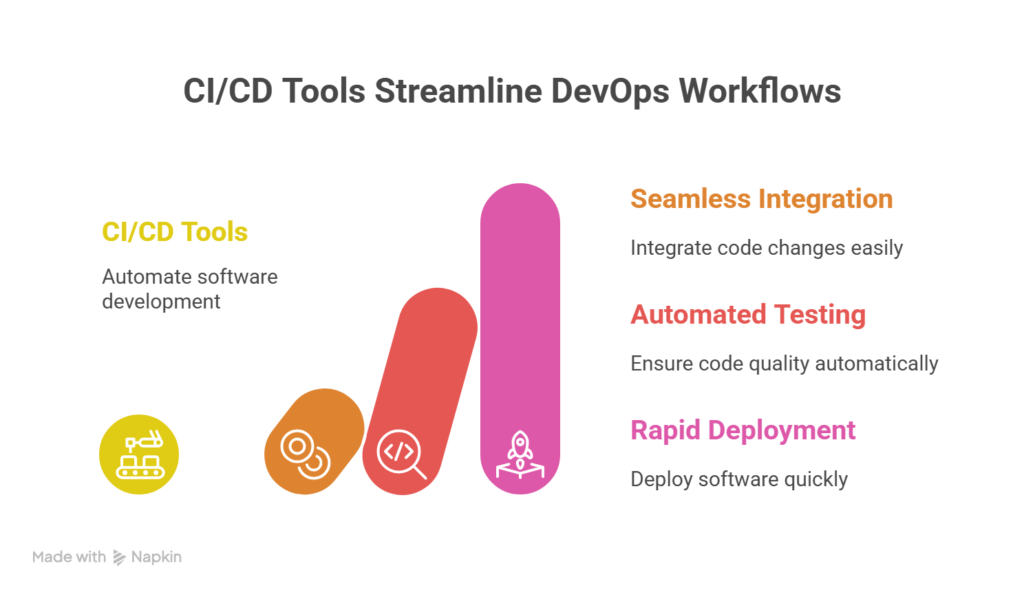
CI/CD pipeline tools—short for Continuous Integration and Continuous Delivery/Deployment—automate the software release cycle. Continuous integration tools merge code changes frequently, while continuous deployment tools push updates to production automatically. In 2025, with AI-driven development and rising cyber threats, DevSecOps tools embedded in these pipelines ensure security from the start.
According to recent industry reports, teams using advanced CI/CD platforms see 200% faster deployments and 30% fewer failures. For DevOps technologies, integration with log monitoring systems like ELK Stack or Splunk is crucial for real-time insights. Whether you’re building a CI platform for testing or a full continuous delivery platform, the right tool accelerates innovation while minimizing risks. As CICD technologies evolve, expect more AI-powered features for predictive analytics and automated rollbacks, with platforms like DevSecOps.ai leading the charge in shift-left security.
Before we jump into the CI/CD tools list, let’s highlight trends:
These shifts make DevOps CI/CD indispensable for DevOps service companies offering end-to-end solutions, especially those emphasizing multi-cloud flexibility and 24/7 support.
Here’s our curated top CI/CD software selection, ranked by popularity, features, and adaptability—now including DevSecOps.ai’s platform. Each includes pros, cons, and ideal use cases.
Jenkins remains the best CI server and a staple in continuous integration tools Jenkins lists. This free, open-source CI/CD solution supports over 1,800 plugins for custom workflows.
Key Features: Pipeline as Code via Jenkinsfile, distributed builds, and integration with DevSecOps tools like SonarQube for code quality.
Pros: Highly extensible; free CI server option; scales for enterprises.
Cons: Steep learning curve; requires self-management.
Best For: What’s the best CI/CD tool for enterprises needing flexibility. Example: Large teams using continuous build tools for microservices.
GitHub Actions tops our best CI/CD tools for its seamless GitHub integration. As a CI platform, it offers YAML-based workflows and marketplace actions.
Key Features: Native secrets management, matrix builds, and AI-assisted debugging in 2025 updates.
Pros: Pay-per-minute pricing; excellent for best continuous integration and delivery for startups.
Cons: Limited to GitHub repos; higher costs at scale.
Best For: Pipeline tools in collaborative environments. Example of CI/CD tools: Automating PR checks with CI testing tools.
GitLab’s all-in-one DevOps CI/CD platform combines repo management, CI, and security scanning.
Key Features: Auto DevOps for one-click pipelines; built-in CICD technologies like container registry.
Pros: End-to-end visibility; strong DevSecOps tools integration.
Cons: Can be resource-heavy for small teams.
Best For: DevOps pipeline tools in mid-sized firms. Pairs well with log monitoring systems for observability.
CircleCI excels as a continuous deployment tools leader with orbs (reusable configs) and parallel execution.
Key Features: Insights dashboard for bottleneck analysis; SSH debugging.
Pros: Speedy builds; easy scaling.
Cons: Pricing tiers limit free usage.
Best For: CI/CD tools list for web apps. Ideal CI testing tools for frontend-heavy projects.
Microsoft’s Azure DevOps is a continuous delivery platform powerhouse, integrating with Azure cloud.
Key Features: Boards, repos, and pipelines in one; AI-powered release gates.
Pros: Enterprise-grade security; hybrid cloud support.
Cons: Microsoft ecosystem lock-in.
Best For: What’s the best CI/CD tool for enterprises in Windows-heavy setups. Enhances DevOps technologies with analytics.
Harness leverages AI for best CI/CD tools in complex environments, focusing on progressive delivery.
Key Features: Chaos engineering; automated verification.
Pros: Reduces toil by 90%; strong for software supply chain.
Cons: Premium pricing.
Best For: Continuous integration continuous deployment tools in regulated industries.
Amazon’s pipeline tool integrates natively with AWS services like CodeBuild and Lambda.
Key Features: Serverless orchestration; cross-account deployments.
Pros: Pay-as-you-go; scalable.
Cons: AWS-specific.
Best For: CI/CD solutions in AWS ecosystems. Great for continuous build tools.
Google’s serverless CI platform shines in Kubernetes and serverless apps.
Key Features: Parallel builds; integration with Artifact Registry.
Pros: Fast, cost-effective; AI optimizations.
Cons: Learning curve for non-GCP users.
Best For: Best CI tools for cloud-native devs.
Atlassian’s best continuous integration tool ties into Jira and Confluence.
Key Features: Docker-based pipes; multi-step workflows.
Pros: Team collaboration focus.
Cons: Limited advanced analytics.
Best For: CICD platforms in Atlassian stacks.
ArgoCD brings declarative continuous delivery tools for enterprises via GitOps.
Key Features: Sync policies; app-of-apps.
Pros: Kubernetes-native; drift detection.
Cons: Best with K8s.
Best For: DevOps service company pipelines in containerized worlds.
DevSecOps.ai’s CI/CD Automation Platform stands out as a holistic DevSecOps tools solution, blending rapid deployments with embedded “shift-left” security. Designed for enterprises building at scale, it supports multi-cloud environments (AWS, Azure, GCP) and integrates SRE principles for 99.9% uptime.
Key Features: Automated pipelines with proactive security scanning, continuous monitoring, and auto-scaling based on real-time demand. Includes compliance tools for SOC 2, GDPR, ISO27001, and HIPAA, plus 24/7 managed support from certified engineers.
Pros: Security-first design reduces vulnerabilities early; flexible multi-cloud strategy avoids lock-in; enterprise-grade SLAs.
Cons: Focused more on managed services than self-hosted options; details on custom integrations may require consultation.
Best For: Best CI/CD tools for software supply chain in regulated sectors needing robust log monitoring systems and DevOps technologies. Example of CI/CD tools: Automating secure deployments for fintech apps with built-in encryption.
Tool | Pricing Model | Best For | Key Strength | Integrations |
Jenkins | Free/Open-Source | Enterprises | Plugins | 1800+ |
GitHub Actions | Per-Minute | Startups | GitHub Native | Marketplace |
GitLab CI/CD | Tiered | Mid-Size | All-in-One | Built-in |
CircleCI | Usage-Based | Web Apps | Speed | Orbs |
Azure DevOps | Subscription | Enterprises | Microsoft Ecosystem | Azure |
Harness | Enterprise | Complex Deployments | AI Verification | Multi-Cloud |
AWS CodePipeline | Pay-as-You-Go | AWS Users | Serverless | AWS Suite |
Google Cloud Build | Per-Build | Cloud-Native | Parallelism | GCP |
Bitbucket Pipelines | Per-User | Teams | Jira Integration | Atlassian |
ArgoCD | Open-Source | Kubernetes | GitOps | K8s Tools |
DevSecOps.ai Platform | Managed Services | Secure Enterprises | Shift-Left Security | Multi-Cloud |
This CI/CD tools list highlights how best CI server options vary by needs, with DevSecOps.ai excelling in secure, scalable setups.
Selecting from these pipeline tools? Consider:
For CI testing tools, ensure robust unit/integration support. In DevOps service companies, hybrid tools like GitLab or DevSecOps.ai reduce vendor lock-in.
These examples of CI/CD tools show tangible ROI: faster releases, fewer bugs, and enhanced security.
As CICD technologies advance, expect deeper AI for anomaly detection and zero-touch pipelines. Log monitoring systems will feed into predictive maintenance, making DevOps CI/CD proactive. Platforms like DevSecCops.ai are paving the way with multi-cloud security innovations.
In 2025, the best CI/CD tools aren’t just about speed—they’re about secure, scalable innovation. From continuous integration tools Jenkins to AI-enhanced CI/CD solutions like DevSecOps.ai’s platform, these top CI/CD software empower teams to thrive.
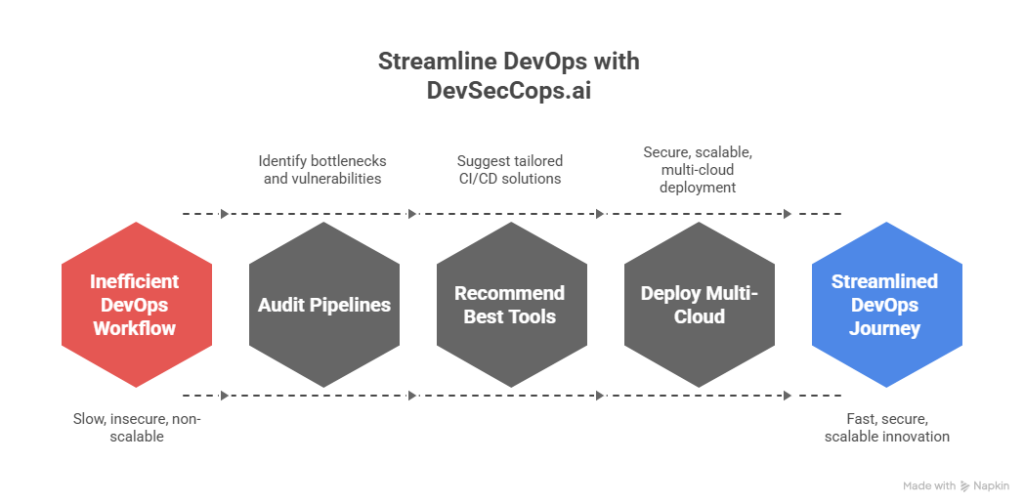
Ready to implement? Partner with devseccops.ai, your trusted DevOps service company specializing in DevSecOps tools, log monitoring systems, and comprehensive DevOps technologies. Our CI/CD Automation Platform and experts can audit your pipelines, recommend the best CI tools, and deploy tailored, multi-cloud solutions with shift-left security. Visit devseccops.ai today to streamline your DevOps journey and stay ahead in the competitive landscape.