
Being in the digital era means flexibility, scalability, and the capacity to change. Make no mistake, organizations that fail to adapt will get consumed. Cloud migration services allow organizations to take their legacy environment into the cloud in a quick, secure, and cost-effective manner.
Whether you are utilizing new DevOps genai, MLOps platforms, including a log monitoring tool and security monitoring system in order to increase your security level, your cloud migration services will also most likely be a enhancement in support for your digital transformation.
In this blog, we’ll explore:
Let’s dive in!

Migrating to the cloud is not simple and it takes expertise in infrastructure, security, and compliance. A cloud migration service will allow for a smooth transition with as little downtime as possible. Important benefits of using a cloud migration service are:
✅ Cost Optimization – Transform capital expenditures to opex with pay-as-you-go cloud models.
✅ Scalability – Scale seamless based on demand.
✅ Enhanced Security – Leverage advanced security monitoring systems and compliance frameworks.
✅ Improved Performance – Cloud-native applications run faster with global availability.
✅ Disaster Recovery – Automated backups and failover mechanisms ensure business continuity.
For DevOps for beginners, cloud migration accelerates CI/CD pipelines, while MLOps platforms benefit from scalable AI/ML workloads.
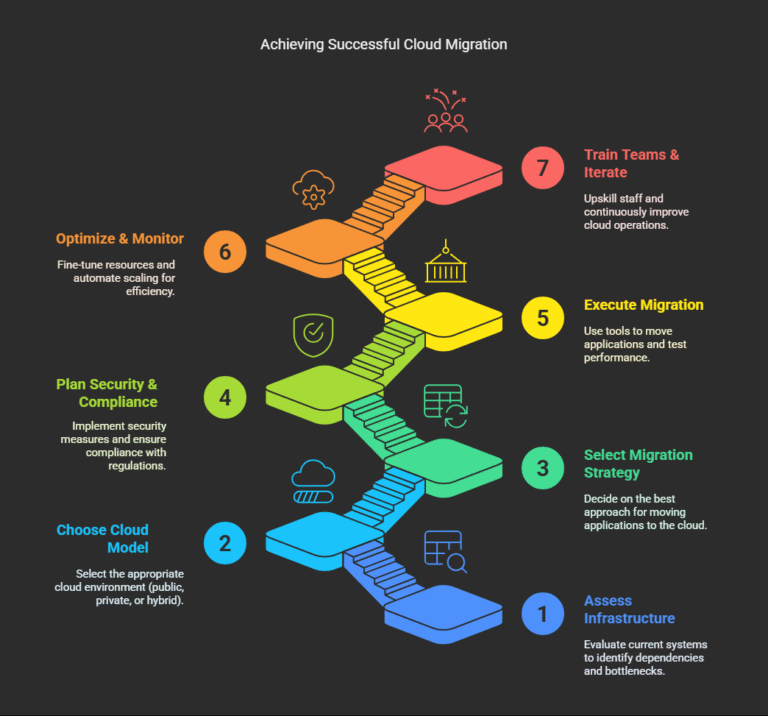
A structured approach ensures a successful migration. Here’s a proven 7-step cloud migration strategy:
Common cloud migration strategies include:
The right cloud migration tools simplify the process:
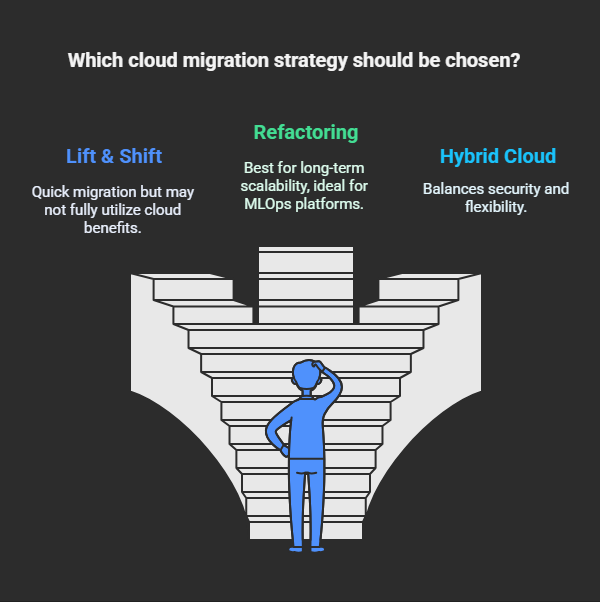
Choosing the right approach depends on business needs:
🔹 Lift & Shift (Rehosting) – Fast but may not leverage cloud-native benefits.
🔹 Refactoring – Best for long-term scalability (ideal for MLOps platforms).
🔹 Hybrid Cloud – Balances security and flexibility.
🔹 Multi-Cloud – Avoids vendor lock-in.
For DevOps teams, refactoring enables microservices and Kubernetes deployments.

A Cloud migration service isn’t just a nice-to-have anymore; it’s a must-have to stay competitive. The cloud offers the capability for innovation at scale – whether it’s DevOps & GenAI or MLOps platforms.
By following the 7 steps to cloud migration, using the right cloud migration tools, and implementing solid security monitoring, organizations can easily drive digital transformation.
If you’re in the market for a single tool, check out DevSecCops.ai – an integrated toolset that includes cloud migration, DevOps automation and modern enterprise security powered by AI.
Are you ready to migrate? Let’s get started today and realized the full power of the cloud!