In 2025, DevSecOps companies are at the forefront of secure digital transformation, integrating security into every phase of the software development lifecycle (SDLC). Unlike traditional DevOps, which focuses on speed and collaboration, DevSecOps embeds security to address rising cyber threats and compliance demands. By leveraging DevOps AI tools, CI/CD with ArgoCD, log monitoring systems, and frameworks like MLOps, AIOps, LLMOps, DataOps, FinOps, and SRE engineering, these companies ensure secure, scalable, and efficient operations. This blog highlights the top 10 DevSecOps companies driving innovation, with insights into the DevOps vs DevSecOps debate and their role in app modernization and one-stop solutions in DevOps SRE.
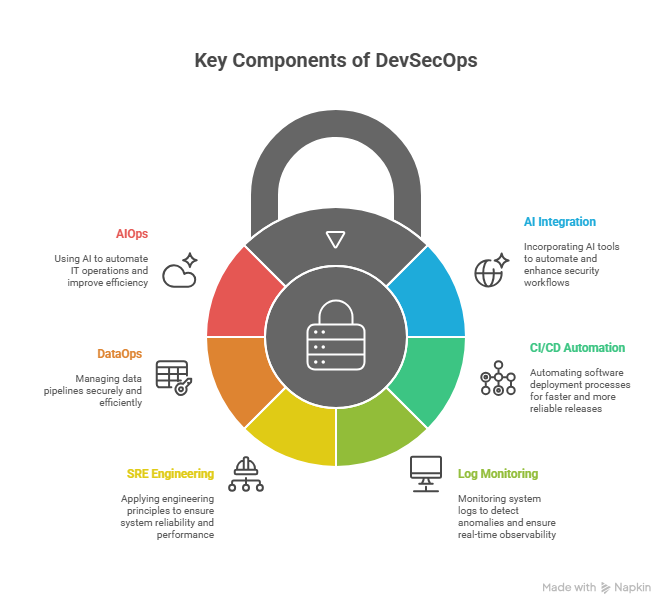
DevOps accelerates software delivery through collaboration and automation, using DevOps technologies like Kubernetes and Jenkins. DevSecOps extends this by prioritizing security, embedding tools like Snyk and Sysdig into CI/CD pipelines to mitigate vulnerabilities early. The DevOps vs DevSecOps debate centers on balancing speed with security, with DevSecOps emerging as the preferred approach for regulated industries like finance and healthcare, where compliance is critical.
DevSecCops.ai leads the pack with its AI DevOps platform, integrating DevOps AI tools, DevOps GenAI, and DevOps LLM agents to automate security workflows. Their expertise in CI/CD with ArgoCD and log monitoring systems like ELK Stack ensures real-time observability and 50% fewer deployment failures. Serving global enterprises, they excel in app modernization and SRE engineering, offering a one-stop solution in DevOps SRE.
Capgemini, a global DevOps service company, delivers large-scale DevSecOps transformations. With a 4.6/5 Clutch rating, they integrate DevOps AI tools and log monitoring systems to enhance deployment speed and compliance in sectors like retail and telecom. Their expertise in MLOps and AIOps supports secure AI-driven operations.
Wipro’s “DevSecOps as a Service” framework leverages DevOps technologies and AIOps for multi-cloud deployments. They excel in SRE engineering, using AI for anomaly detection in logs and automating incident response, making them ideal for app modernization in banking and utilities.
Based in Texas, Veritis specializes in DevSecOps and SRE, modernizing government and BFSI systems with Infrastructure as Code (IaC) and zero-downtime pipelines. Their integration of DataOps ensures secure data pipelines, while FinOps optimizes cloud costs.
Entrans, an AI-first DevOps service company, uses its Thunai platform to integrate DevOps AI tools and DevSecOps practices. Their focus on MLOps and LLMOps supports secure AI model deployments, with CI/CD with ArgoCD ensuring efficient workflows.
InfraCloud, recently acquired by Improving, empowers enterprises with DevSecOps consulting. Their expertise in Kubernetes, GitLab CI, and SRE engineering supports secure cloud-native transformations across BFSI and healthcare, with tailored DevOps LLM solutions.
Synopsys provides cutting-edge DevSecOps tools for static and dynamic code analysis, securing software supply chains. Their integration with AIOps platforms enhances vulnerability detection, making them a leader in secure app modernization.
GitLab offers a complete DevSecOps platform with built-in CI/CD, security scanning, and log monitoring systems. Its support for DevOps GenAI and DevOps LLM agents ensures secure, automated workflows, ideal for multi-cloud environments.
IBM’s DevSecOps solutions integrate AIOps and MLOps for self-healing infrastructures. Their expertise in hybrid cloud and SRE ensures reliable, secure deployments, with DataOps supporting compliant data workflows.
OpsTree excels in DevSecOps and Kubernetes orchestration, focusing on Infrastructure as Code and compliance automation. Their AIOps-driven monitoring reduces downtime, making them a trusted partner for mid-to-large enterprises.
What is automation in DevOps? It involves using DevOps automation tools to eliminate manual tasks in the SDLC, from code integration to
DevSecOps companies use DevOps AI tools like Datadog and New Relic to automate monitoring and anomaly detection. DevOps GenAI and DevOps LLM agents enhance code reviews and security scans, reducing vulnerabilities by 30%. For example, DevSecCops.ai uses DevOps LLM to flag prompt injection risks in LLM deployments.
CI/CD with ArgoCD streamlines secure deployments by syncing infrastructure with Git repositories. DevSecOps companies like Veritis integrate ArgoCD with security tools like Snyk, ensuring zero-downtime deployments and compliance.
Log monitoring systems like Splunk and Prometheus provide real-time observability. AIOps integration, as seen in Capgemini and Wipro, correlates logs to detect security threats, reducing MTTR by 25%.
App modernization transforms legacy systems into cloud-native architectures. DevSecOps companies like InfraCloud use Kubernetes and Terraform to secure modernized applications, reducing vulnerabilities by 65%.
MLOps and LLMOps manage AI and LLM lifecycles. Entrans and IBM secure these pipelines with DevSecOps practices, using DevOps AI tools to monitor model performance and ensure ethical outputs.
DataOps ensures secure, high-quality data pipelines, while FinOps optimizes cloud costs. Veritis and OpsTree integrate these frameworks to support compliant, cost-efficient operations, critical for LLM workloads.
SRE engineering enhances reliability through automation. A one-stop solution in DevOps SRE, as offered by DevSecCops.ai, integrates DevSecOps, AIOps, MLOps, LLMOps, DataOps, and FinOps, ensuring holistic, secure operations.
deployment and monitoring. DevSecCops.ai excels in automation tools in DevOps, leveraging AI DevOps tools for predictive analytics and orchestration tools in DevOps like Kubernetes for infrastructure management. The benefits of DevOps automation include:
Adopt SRE Principles: Work with companies offering SRE engineering to ensure high availability and scalability.
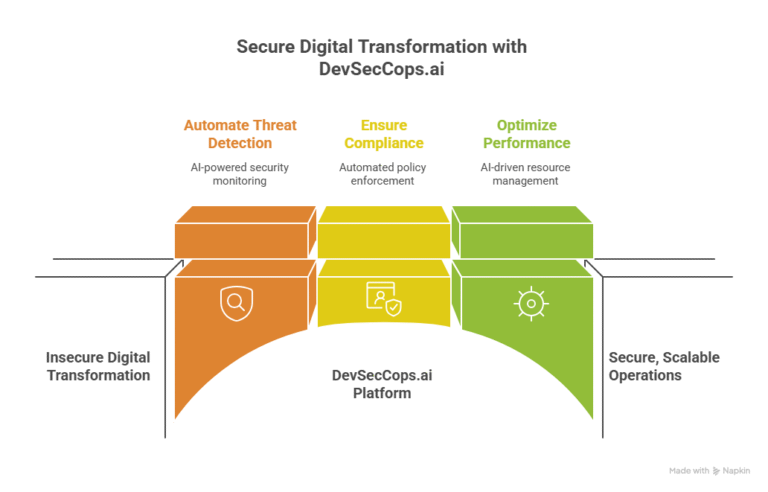
The top 10 DevSecOps companies are driving secure digital transformation by integrating DevOps technologies, DevOps AI tools, CI/CD with ArgoCD, log monitoring systems, MLOps, LLMOps, AIOps, DataOps, FinOps, and SRE engineering. DevSecCops.ai stands out as a one-stop solution in DevOps SRE, offering an AI DevOps platform that automates threat detection, ensures compliance, and optimizes performance. By partnering with DevSecCops.ai, organizations can achieve secure, scalable, and cost-effective operations, leading the way in 2025’s digital landscape.