In the rapidly evolving landscape of artificial intelligence, MLOps (Machine Learning Operations) has emerged as a critical framework for organizations aiming to deploy machine learning (ML) models efficiently, reliably, and securely. By integrating DevOps technologies with ML workflows, MLOps addresses the complexities of machine learning in IT operations, ensuring faster model delivery, better outcomes, and reduced risks. This 1200-word blog explores the business case for MLOps, its benefits, MLOps challenges, and MLOps best practices, while weaving in insights on DevOps vs DevSecOps, app modernization, DevOps AI tools, DevOps service company, log monitoring system, AI DevOps platform, AWS MLOps, LLMOps vs MLOps, MLOps security, MLOps platforms, machine learning pipeline tools, MLOps frameworks, and DevSecCops.ai as a transformative solution.
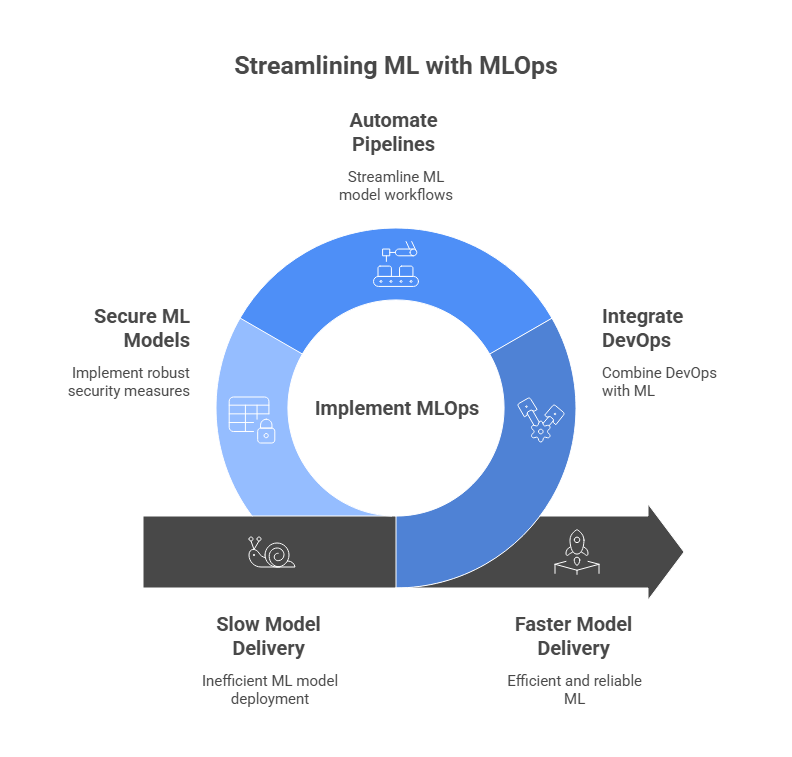
MLOps, or Machine Learning Ops, is a methodology that combines machine learning, DevOps, and data engineering to streamline the MLOps lifecycle—from data preparation to model deployment, monitoring, and retraining. Unlike traditional software development, ML workflows involve unique challenges like data drift, model versioning, and regulatory compliance. MLOps adapts DevOps technologies such as CI/CD pipelines, containerization, and orchestration to address these issues, fostering collaboration among data scientists, ML engineers, and IT operations.
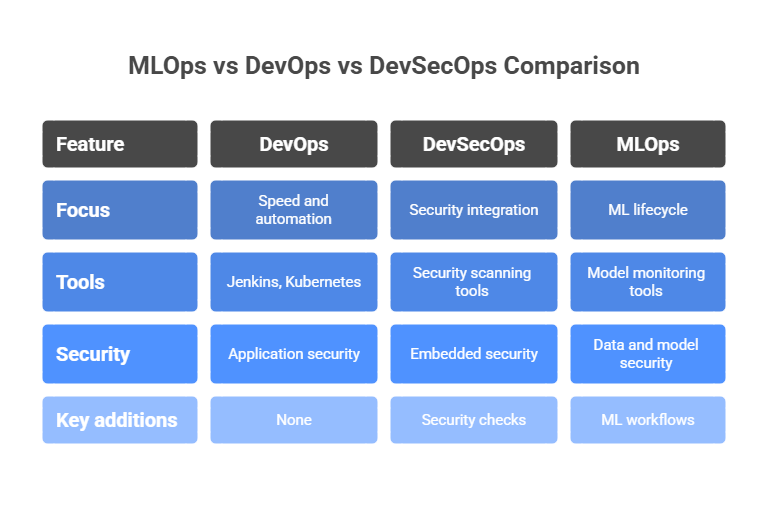
DevOps focuses on integrating development and operations to accelerate software delivery using tools like Jenkins and Kubernetes. DevSecOps extends this by embedding security throughout the software development lifecycle (SDLC), addressing vulnerabilities early. MLOps, or DevOps for machine learning, builds on these principles but tailors them for ML-specific challenges, such as model retraining and data drift.
LLMOps (Large Language Model Operations) is a subset of MLOps tailored for large language models like GPT. While MLOps covers general ML workflows, LLMOps addresses unique challenges like fine-tuning massive models, managing high computational costs, and ensuring ethical outputs. Both leverage machine learning pipeline tools and AI DevOps platforms, but LLMOps requires specialized governance for bias and hallucination risks.
Manual ML workflows are slow and error-prone, often taking months to deploy models. MLOps automates the MLOps lifecycle using machine learning pipeline tools like Kubeflow and CI/CD with ArgoCD, reducing deployment time by up to 60%. For example, a retail company in 2024 used AWS MLOps tools like SageMaker to deploy a recommendation model in weeks, boosting sales by 15%.
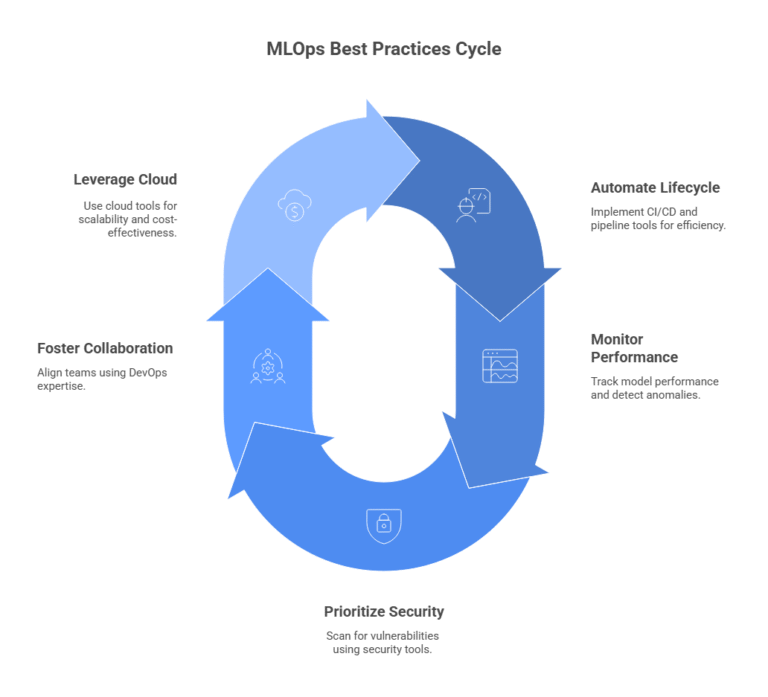
MLOps best practices, such as automated retraining and A/B testing, ensure models remain accurate despite data drift. A log monitoring system like Datadog detects performance degradation in real time, enabling proactive updates. A 2025 study found that organizations using MLOps platforms improved model accuracy by 20% compared to manual workflows.
MLOps security integrates vulnerability scanning and compliance checks into pipelines. Tools like Snyk and Sysdig, combined with AWS MLOps services, protect data and models from breaches. A financial firm avoided a $10 million loss in 2024 by using an AI DevOps platform to detect a data pipeline vulnerability early.
Manual ML processes are resource-intensive. MLOps frameworks like MLflow streamline experimentation, reducing compute costs. A DevOps service company can optimize cloud resources, with AWS MLOps tools like SageMaker saving up to 40% on infrastructure costs.
MLOps supports app modernization by integrating ML into cloud-native applications. Tools like Kubernetes and CI/CD with ArgoCD enable scalable deployments, while MLOps platforms like DevSecCops.ai ensure seamless integration with modern architectures.
Poor data quality or drift can degrade model performance. Solution: Use machine learning pipeline tools like Apache Airflow for data validation and log monitoring systems for drift detection.
Teams often lack expertise in machine learning in IT operations. Solution: Partner with a DevOps service company for training in MLOps frameworks and tools. Online MLOps courses like those on Coursera can bridge gaps.
Disparate tools can create inefficiencies. Solution: Adopt an AI DevOps platform like DevSecCops.ai to integrate MLOps software with DevOps technologies.
Regulatory requirements like GDPR demand robust governance. Solution: Implement MLOps security practices with tools like Sysdig to ensure compliance.
The MLOps market is projected to reach $20 billion by 2027, driven by demand for scalable ML solutions. Industries like finance, healthcare, and retail are adopting MLOps platforms to stay competitive. AWS MLOps dominates due to its comprehensive tools, but open-source MLOps frameworks like Kubeflow are gaining traction.
To master machine learning ops, consider:
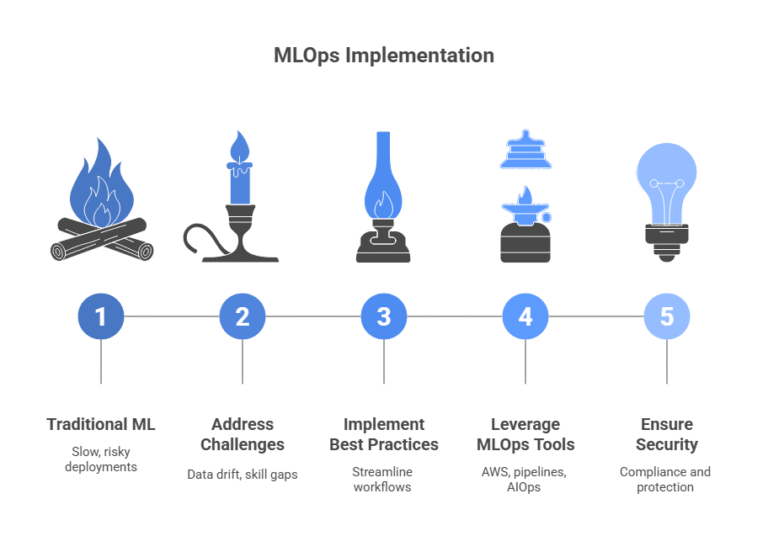
MLOps is a game-changer for organizations deploying ML at scale, offering faster model delivery, better outcomes, and lower risks. By addressing MLOps challenges like data drift and skill gaps, and leveraging MLOps best practices, businesses can unlock significant value. Tools like AWS MLOps, machine learning pipeline tools, and best AIOps tools streamline workflows, while MLOps security ensures compliance. Compared to DevOps vs DevSecOps, MLOps uniquely tackles ML complexities, making it essential for app modernization and machine learning in IT operations. Partnering with a DevOps service company like DevSecCops.ai revolutionizes this process. Its AI DevOps platform integrates MLOps software, log monitoring systems, and CI/CD, delivering up to 50% faster deployments and 40% cost savings. Embrace MLOps to stay ahead in the competitive landscape of 2025.